
Light Protocol and Helius Labs introduce 'ZK Compression' to further scale Solana apps

Quick Take Light Protocol and Helius Labs have introduced “ZK Compression” to further scale applications on the Solana network. ZK Compression utilizes state compression to store data in Solana’s cheaper ledger space instead of the more expensive account space.
Solana SOL -6.56% -based developers Light Protocol and Helius Labs have launched a new way for applications on Solana to scale using a technology dubbed "ZK Compression," the two firms announced.
ZK Compression works through a process known as state compression, allowing developers to store certain types of data using Solana's cheaper ledger space rather than its more expensive account space. A "hash" or fingerprint of off-chain data is stored on-chain for verification using "sparse state trees," according to ZK Compression's documentation .
Light Protocol claims that ZK Compression will allow developers to store 100 compressed token accounts for around 4 hundred-thousandths of one sol, rather than a typical cost of around .2 sol, a 5000x reduction in price. A compressed PDA account can be up to 160x cheaper, according to the documentation. The protocol employs small zero-knowledge proofs (validity proofs) to ensure the integrity of the compressed state. "Take an airdrop to 1,000,000 users / this today would cost over $260,000 for state alone / now, it's $50 — 5,200x cheaper," wrote Helius Labs founder Mert Mumtaz on X.
Some members in the Ethereum community were critical of the new primitive, including ZKsync founder Alex Gluchowski, who wrote on X: “The whole monolithic Solana thesis is gone at once. Impressive. Meanwhile, ZKsync has been quietly building asynchronously composable ZK future for Ethereum. Big reveal this week.”
Ethereum investor Ryan Berckmans critiqued the announcement for not characterizing the new approach as a Layer 2 network, calling it "unethical BS" in an X post. "Their new product is actually an L2. L2s are a winning model," Berckman wrote .
In response, Solana co-founder Anatoly Yakovenko replied , "Sure. It’s an L2 that doesn’t need a security council multisig, users don’t need to switch chain ids, doesn’t need a governance token, doesn’t need an external sequencer, solana validators still get all the transaction fees. It’s like an L2 without all the things that people complain about L2s."
Disclaimer: The content of this article solely reflects the author's opinion and does not represent the platform in any capacity. This article is not intended to serve as a reference for making investment decisions.
You may also like
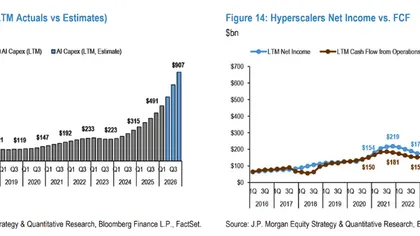
From the Token Frenzy to the $1.3 Trillion AI Server Blue Ocean: AI Inference Computing Power Fully Explodes, Industry Leaders like Dell Usher in the Golden Era of "Volume, Price, and Market Share"
Leading global AI server cluster manufacturers such as Dell are simultaneously benefiting from two major growth dividends: the accelerated expansion of the AI server market and a significant increase in the order shares from core AI cloud computing customers, including large enterprises and new cloud providers. They are not merely passively profiting from hardware price increases.

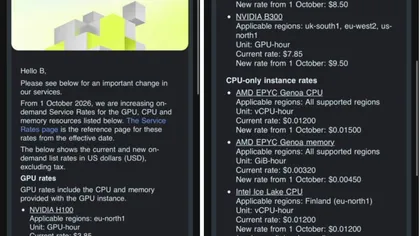
GPU Cloud Services Surge in Price: Nebius Raises Prices Again by 20%, Computing Power Supply Side Gains Bargaining Power
From October 1st, Nebius will raise prices for its entire GPU cloud service line by approximately 20%, with multiple chips from H100 to B300 seeing increases. This marks the second round of price hikes in recent months, and the cumulative increase for B300 has reached 56%. Demand visibility extends beyond 24 months, with customers eager to purchase Blackwell computing power, even willing to pay a premium in auctions. The supply-demand imbalance for AI computing power is reshaping the entire industry’s negotiation landscape, as bargaining power is quietly shifting to the supply side.
Crypto prices
More


