
Is Crypto Top In? Trader Says People Severely Underestimating How Close the Market Peak Is – Here’s His Outlook

A widely followed cryptocurrency analyst and trader is leaning bearish on crypto assets.
The analyst and trader pseudonymously known as Bluntz tells his 311,100 followers on the social media platform X that the top could be in for crypto asset prices.
“I think many people are severely underestimating how close we are to topping out if we haven’t already.”
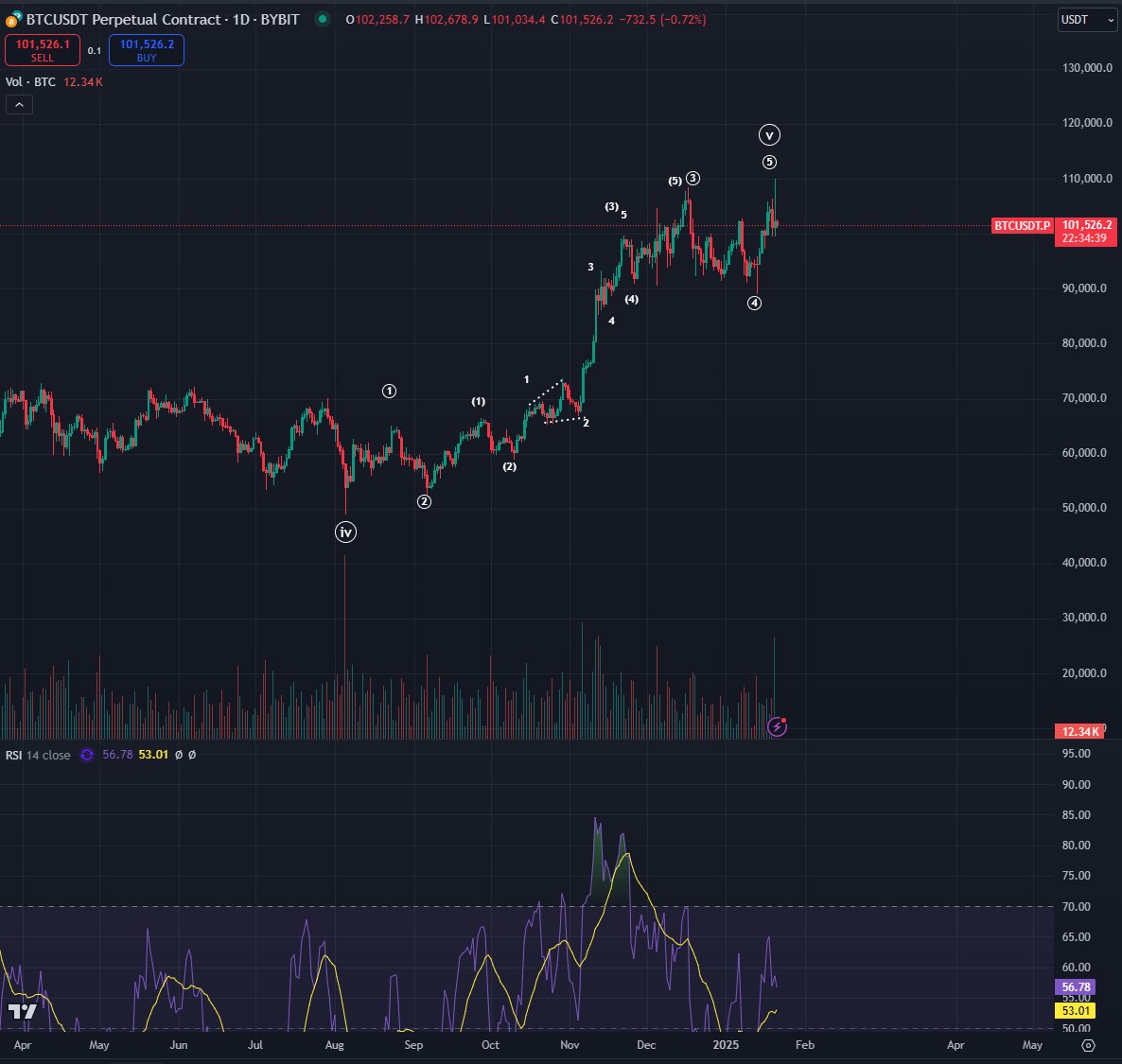
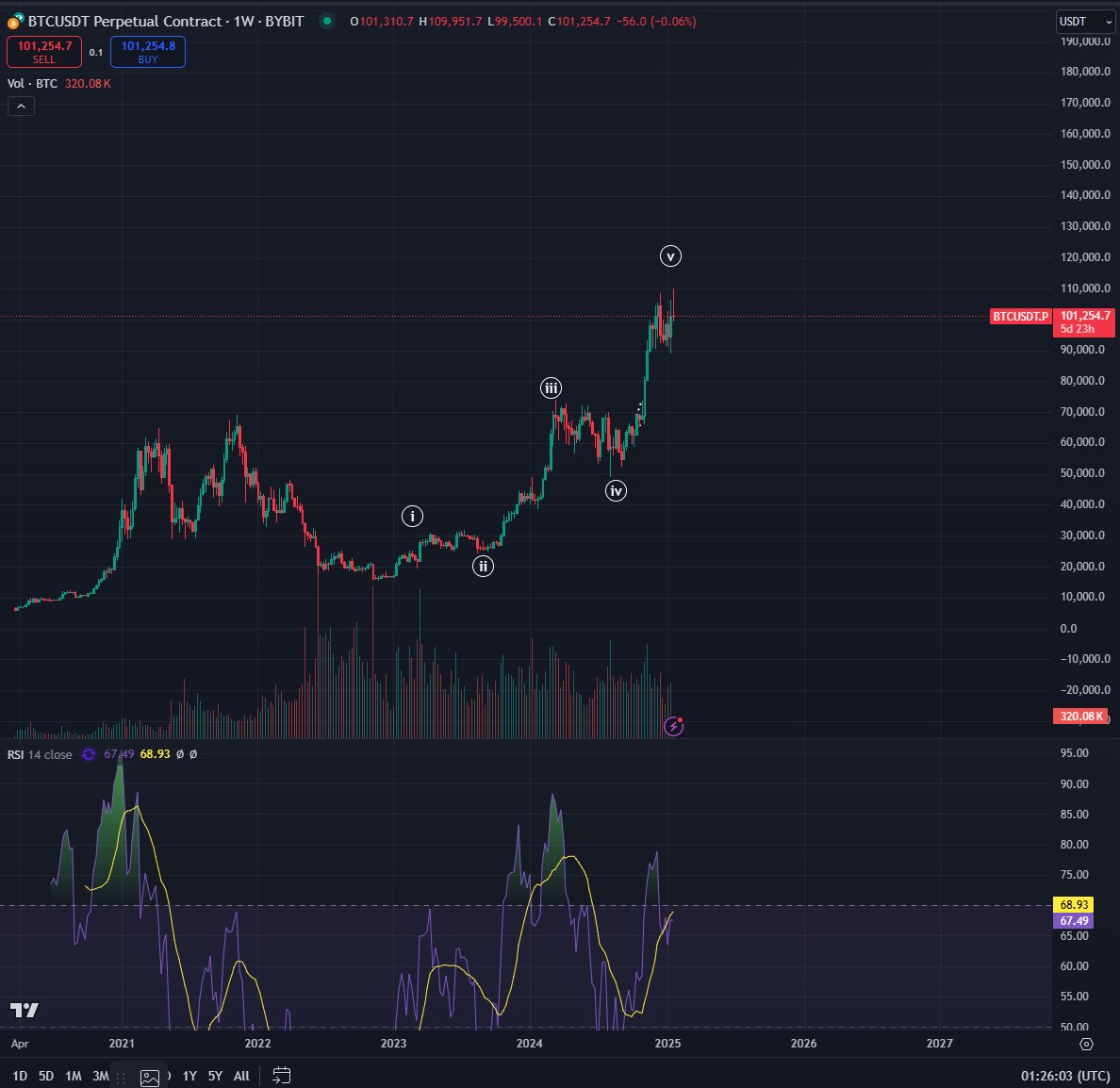
In the case of Bitcoin ( BTC ), the analyst who regularly applies the Elliott Wave theory in his technical analysis says that the crypto king has nearly completed the last wave of a bullish five-wave rally that started months ago with the implication that the flagship digital asset could be on the verge of a correction.
According to the Elliott Wave theory, the main trend of the price of an asset moves in a five-wave pattern while a correction occurs in a three-wave pattern.
“From an Elliott Wave theory perspective every single wave within this bull run on BTC can potentially be accounted for now in my opinion.
Every subwave within the fifth wave that started back in August AND five waves from within the cycle bottom lows.”
 Source: Bluntz/X
 Source: Bluntz/X
On what could happen next, the pseudonymous analyst and trader says,
“Can we go higher from here? Sure it’s possible, does this mean you should 100% cash out? Probably not, because you’ll likely just FOMO (Fear Of Missing Out) back in at any sign of strength.
As I said yesterday though, at least taking some chips off the table would be wise.”
Bitcoin is trading at $105,310 at time of writing.
Don't Miss a Beat – Subscribe to get email alerts delivered directly to your inboxCheck Price Action
Follow us on X , Facebook and Telegram
Surf The Daily Hodl Mix
Generated Image: Midjourney
Disclaimer: The content of this article solely reflects the author's opinion and does not represent the platform in any capacity. This article is not intended to serve as a reference for making investment decisions.
You may also like
US Treasury yield curve approaches inversion! Is the bond market questioning the outlook for the US economy?
The U.S. Treasury yield curve is rapidly approaching the inversion threshold—the spread between the 10-year and 2-year yields has narrowed to historic lows, and bank stocks have responded with a technical correction. This warning signal, regarded as a "hard rule" for recession, is tearing apart market consensus: some are betting the curve will soon invert, while others firmly believe economic resilience will mitigate the risk. Amid ongoing Federal Reserve rate hikes, the outcome of this bond market game may reshape the narrative logic of the entire asset market.

From ICU to KTV! The Polarized "AI Narrative" Leaves Investors "Exhausted"
In just two weeks, the Nasdaq 100 experienced an extreme rollercoaster: first losing $600 billion in market value due to “AI threat” concerns, then rebounding to reclaim $3 trillion thanks to the viral Meta assistant. Analysts believe that market sentiment is swinging violently between fear and greed, detached from fundamentals. The turmoil has driven Nvidia’s valuation to a ten-year low, intensified the bull-bear divide, and the high volatility driven by narratives has become a long-term norm for investors. This week, Micron will release its financial report; regardless of the outcome, the sharp swings in market sentiment are unlikely to subside.
Weekly Preview: Micron (MU.US) earnings test the quality of AI infrastructure, OpenAI and White House AI meeting resonance, PCE and Nonfarm Payrolls set the tone for October interest rates
This week, the market's focus will shift from politics and product launches to financial reports and macroeconomic data.
"Over 5% 10-Year US Treasury Yield" Fails to Crush AI Investment Frenzy—Is the Real "AI Kill Line" an Inverted Yield Curve?
The bond market is gradually sending warning signals to the economy, indicating that the Federal Reserve's series of interest rate hikes will begin to shift market sentiment, making people increasingly concerned that the US economy may fall into stagnation.

Crypto prices
More


