
US Treasury Bonds: When the University of Tokyo Tightens Its US Treasury Exposure

Since the beginning of the year, US Treasuries have been moving in a rather tangled manner. In fact, there are some downward factors for US Treasury yields, such as JOLTS/ADP coming in below expectations, or US stock market volatility and corrections. In a bull market, this would be enough to push yields down by 20 basis points.
However, in reality, US Treasury yields have not declined.The 10-year US Treasury yield has hovered around 4.2% for two months, and the 30-10Y and 10-2Y yield spreads seem to be further widening. Essentially, US Treasury investments are facing some risk factors beyond the fundamentals, which increases investment risk and difficulty (refer to "Dollar: Europe Sells Bonds, Financial Nuclear Bomb").
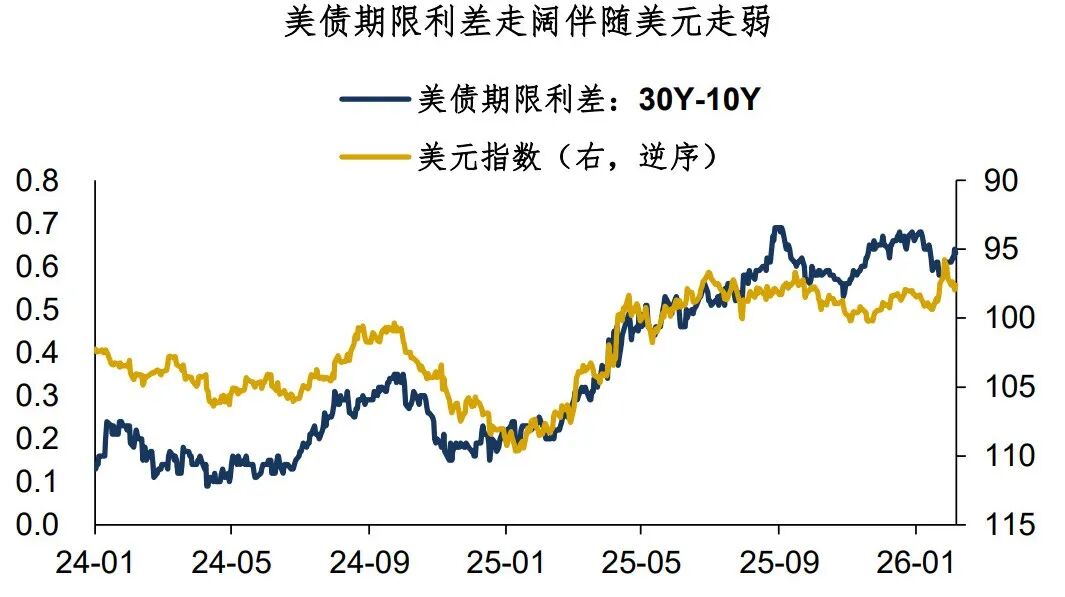
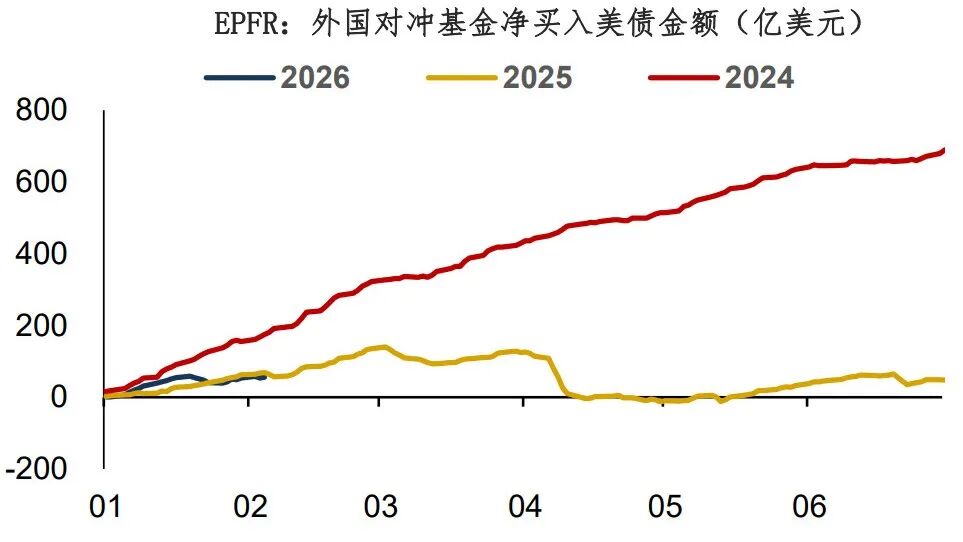
Regarding US Treasuries at this stage, the essential question is: Under the influence of geopolitical risks, has Real Money actually flowed out of US Treasuries?Previously, Bank of America had a cross-border capital flow report, but that series of reports has been discontinued this year... A relatively good proxy data source is EPFR. According to the data, since the beginning of the year, foreign funds have had a net purchase of $5.6 billion in US Treasuries. Considering the significant positive carry of US Treasuries, this net purchase is clearly not much, so it cannot be ruled out that some Real Money is indeed flowing out of US Treasuries.
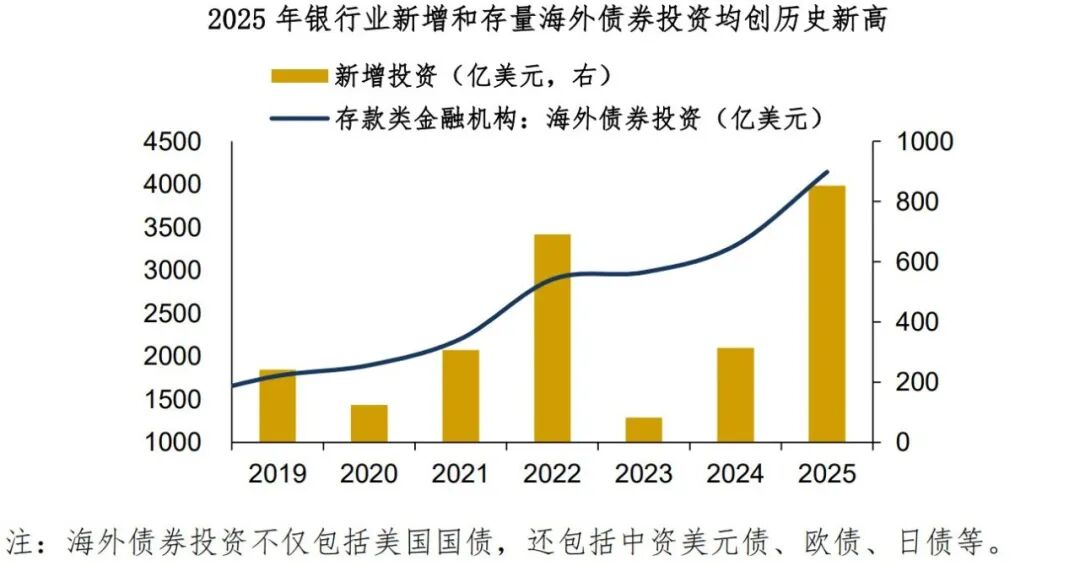
During yesterday's trading session, multiple foreign media reported that the Ministry of Finance plans to guide banks to control their US Treasury exposure.Why provide window guidance on financial institutions' US Treasury investments? Essentially, it's because too much has been bought.According to the foreign exchange credit balance sheet disclosed by Yumin, in 2025, China's banking sector will add $80 billion in overseas bond investments, bringing the total to $410 billion, both hitting record highs.
In the author's opinion, overseas investment is definitely the general direction, but investment targets should focus more on diversification and dispersion to avoid potential country-specific risks. When the national team as a whole is reducing its holdings of US Treasuries, yet financial institutions are still charging ahead, it is definitely risky...
Undoubtedly, tightening US Treasury investment exposure by the Ministry of Finance is bearish for the entire dollar system.The negative impact on the dollar is greater than that on US Treasuries, and in the long run, this is bullish for precious metals. Rumor has it that Trump will visit China in April. Negotiations will happen, and some achievements or "Trump-style wins" cannot be ruled out. However, a global Bipolar System is likely to remain a major trend.
Today's summary:
1. Since the beginning of the year, US Treasuries have been quite volatile, and US Treasury investments face some risk factors beyond the fundamentals;
2. Regarding US Treasuries at this stage, the key question is: Under geopolitical risks, has Real Money actually flowed out of US Treasuries? According to EPFR data, even though US Treasuries have a positive carry, net foreign capital inflows are limited, so it cannot be ruled out that some Real Money is flowing out of US Treasuries;
3. Why does the Ministry of Finance provide window guidance for financial institutions' US Treasury investments? Essentially, it's because too much has been bought. In the author's view, overseas investment is the general direction, but investment targets should focus more on diversification and dispersion to avoid potential country-specific risks.Undoubtedly, tightening US Treasury investment exposure by the Ministry of Finance is bearish for the entire dollar system.It is rumored that Trump will visit China in April. Negotiations will happen, but a global Bipolar System is likely to remain the major trend.
Disclaimer: The content of this article solely reflects the author's opinion and does not represent the platform in any capacity. This article is not intended to serve as a reference for making investment decisions.
You may also like
Trump Rejects Iran's Proposal for Talks; Global Stocks and Bonds Under Pressure, Oil Prices Up Over 2%, Gold Falls Below 4200
Trump rejected Iran's latest proposal to reopen the Strait of Hormuz, causing the optimistic sentiment in the market last Friday to quickly reverse amidst the Middle East diplomatic stalemate. Brent crude oil rose over 2%, gold fell below $4,200, and silver dropped more than 4%. Asia-Pacific stock markets broadly declined, with South Korea's KOSPI falling over 2%. Global bond markets came under pressure, and the yield on the US 2-year Treasury rose to 4.90%. Market focus will shift to this week's PCE inflation data and the non-farm payroll report.
Indian Rupee starts the week negatively amid higher oil prices
AI demand drives TSMC to accelerate capacity expansion, 2nm monthly production aims for 120,000 wafers by year-end
According to reports, industry giants such as Apple, Nvidia, and AMD have collectively increased their orders by 10% to 20%, directly boosting TSMC's 2nm monthly production capacity to 120,000 wafers by the end of the year, which exceeds the previous estimate by more than 20% and brings forward the 2027 target by two years. For the first time in history, five factories will ramp up production simultaneously, and the annual compound growth rate of capacity from 2026 to 2028 will reach as high as 70%.
Long-term US Treasury Sell-off Continues! 10-Year Treasury Yield Breaks 5.2% Again, “AI Boom vs. Rising Financing Costs” Narrative Showdown Intensifies
On Monday, oil prices rose and US Treasury bonds were sold off again as former US President Donald Trump rejected Iran's latest proposal to reopen the Strait of Hormuz, heightening concerns about inflation.
Crypto prices
More


