
Crypto takeaways from Davos: Politics and money collide

While geopolitical tensions and the Greenland standoff set the tone at Davos 2026, crypto resurfaced as a secondary but consequential theme.
US President Donald Trump used a few minutes of his Davos speech to double down on his ambition to turn the US into the world’s crypto capital and voice support for crypto-friendly legislation.
His tone was different from central banks. In a panel with crypto bigwigs, the governor of the Bank of France criticized private money and yield-bearing stablecoins while promoting central bank digital currencies (CBDC).
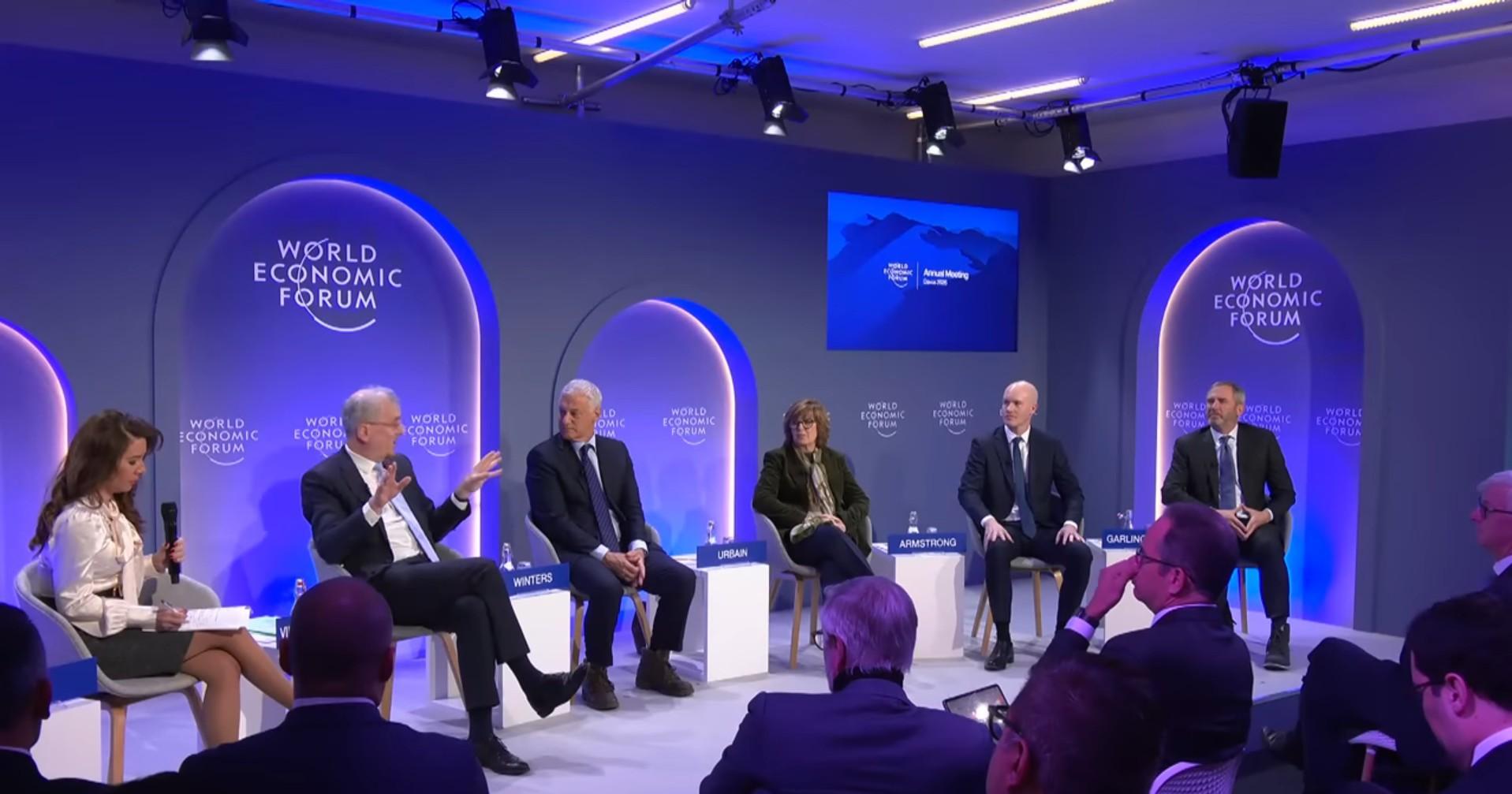 Crypto executives debated money sovereignty with France’s central bank governor at Davos 2026. Source:
World Economic Forum
Crypto executives debated money sovereignty with France’s central bank governor at Davos 2026. Source:
World Economic Forum
Crypto consensus did not emerge in Davos, but a visible point of disagreement did. US political messaging framed crypto as a geopolitical asset, while at least one major European central banker warned that private money threatens financial stability and sovereignty.
Here are the crypto takeaways from Davos 2026.
Trump frames crypto regulation as a geopolitical race
Trump said in his Davos speech on Wednesday that he hopes to sign a crypto market structure bill “very soon.”
Also known as the CLARITY Act, the bill was due for a US Senate markup last week but was delayed after crypto giants like Coinbase pulled support.
Trump treated the US crypto regulation as a matter of geopolitical urgency.
“It is politically popular but much more importantly, we have to make it so that China doesn’t get the hold of it, and once they get that hold, we won’t be able to get it back. So I’m honored to have done it,” Trump said, referring to his signing of the GENIUS Act. He linked the legislation to the importance of the pending market structure bill.
Related: US crypto market structure bill in limbo as industry pulls support
The White House wants the US to be the crypto capital of the world and sees regulation as a competitive weapon. Trump acknowledged that the bill remains in Congress but spoke as if its passing were a matter of timing.
The US president’s special address was introduced by BlackRock’s Larry Fink, the CEO of the world’s largest asset manager. Trump spoke for more than an hour; crypto accounted for only a small section of his speech.
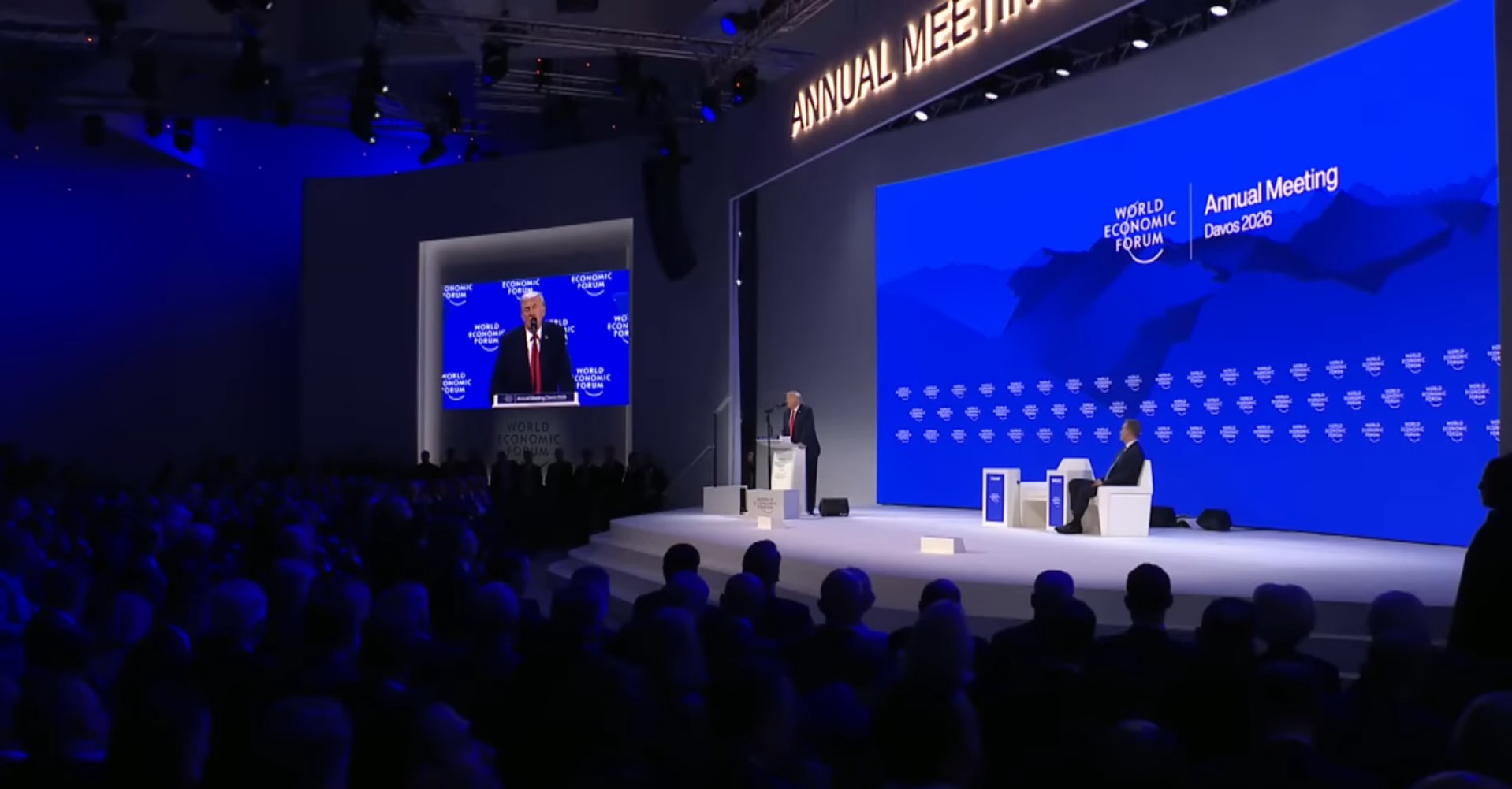 Trump’s soliloquy took up most of his time on stage, even though he was scheduled for a fireside chat with WEF CEO Børge Brende. Source:
World Economic Forum
Trump’s soliloquy took up most of his time on stage, even though he was scheduled for a fireside chat with WEF CEO Børge Brende. Source:
World Economic Forum
Coinbase CEO and French central banker clash over money sovereignty
One of the most widely shared crypto moments at Davos came when France’s top central banker pushed back against crypto, even as he praised tokenization in a Wednesday panel discussion.
Banque de France Governor François Villeroy de Galhau said tokenization and stablecoins are likely to be “the name of the game” in 2026, stating that they can modernize financial infrastructure. He acknowledged tokenization as a meaningful financial advance, particularly for wholesale markets, and cited Europe’s CBDC efforts as a global frontrunner.
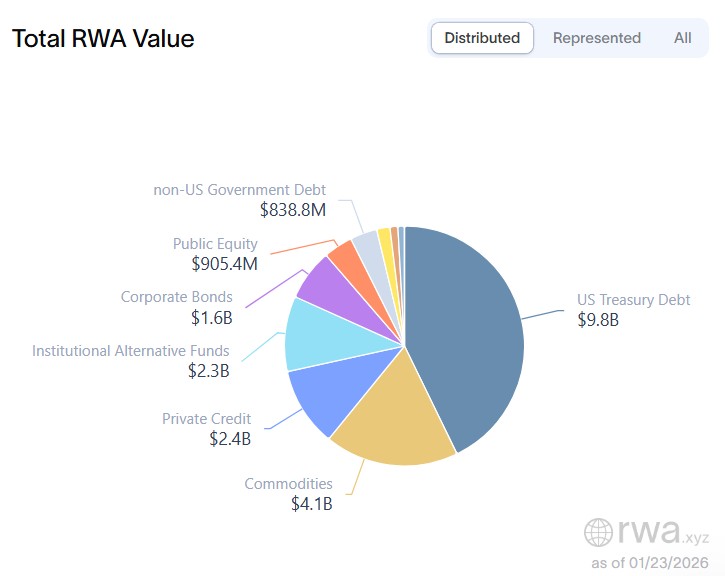 Real-world asset token value is closing in on $23 billion. Source:
RWA.xyz
Real-world asset token value is closing in on $23 billion. Source:
RWA.xyz
That enthusiasm faded as the discussion turned to monetary sovereignty. Coinbase CEO Brian Armstrong described Bitcoin (BTC) as a modern successor to the gold standard and a check on democratic deficit spending.
Villeroy de Galhau clapped back by saying that money is inseparable from sovereignty. Handing monetary control to private systems would amount to surrendering a function of democracy, he said.
Armstrong responded by pointing to Bitcoin’s decentralized structure to claim that it is even more independent than fiat systems and called the tension a “healthy competition,” which got a chuckle from Villeroy de Galhau.
Villeroy de Galhau also drew a line against interest-bearing stablecoins, which he said could destabilize the existing financial system. US crypto executives argued that rewards are necessary to keep stablecoins competitive with China’s CBDC.
Related: Bitcoin offers ‘no haven’ from Trump’s Greenland dreams
Binance leaves door open to US return
Binance co-CEO Richard Teng did not rule out a return to the US. He said the company is taking a “wait-and-see” approach in an interview with CNBC on the sidelines of the Davos forum.
Teng avoided commitments while leaving the door open, but Ripple CEO Brad Garlinghouse was more explicit in a separate interview with the outlet. Garlinghouse predicted that Binance would eventually return to the “very large” market.
Binance launched Binance.US in 2019 as a separate entity to serve US customers. But according to US regulators, Binance continued to service “VIP” customers through its offshore platform, leading to a 2023 Department of Justice settlement. Founder Changpeng Zhao pleaded guilty to failing to maintain an effective Anti-Money Laundering program, served a jail sentence and was later pardoned by President Trump.
Zhao was also present at Davos and took part in a panel discussion on Thursday, where he claimed that crypto has proven that it is not going away.
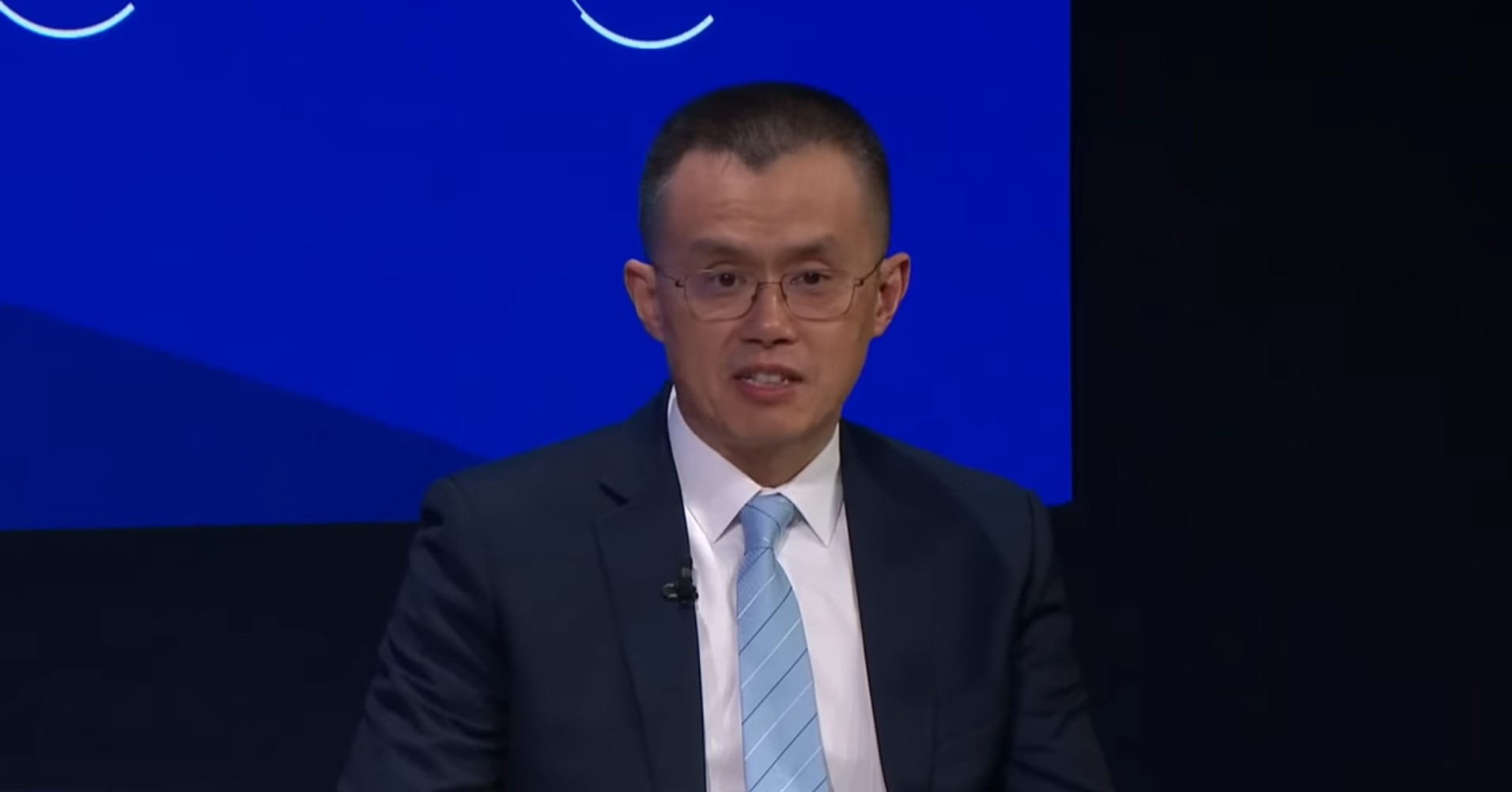 Zhao claimed to be in talks with about a dozen governments about tokenizing assets. Source:
World Economic Forum
Zhao claimed to be in talks with about a dozen governments about tokenizing assets. Source:
World Economic Forum
Though they were in separate panels, Zhao aligned with Bank of France’s Villeroy de Galhau on tokenization, calling it the next phase of the industry, along with artificial intelligence and payments.
He said he is in discussions with multiple governments about tokenizing state-owned assets as a way to unlock value and reinvest it into economic development.
Circle’s Allaire calls bank run fears absurd
Circle CEO Jeremy Allaire dismissed fears that interest-paying stablecoins could destabilize the banking system in a Thursday panel in Davos.
Allaire called bank run concerns “totally absurd,” arguing that the incentives involved are too small to threaten monetary policy or drain deposits.
He added that interest payments function primarily as customer retention tools rather than systemic disruptors.
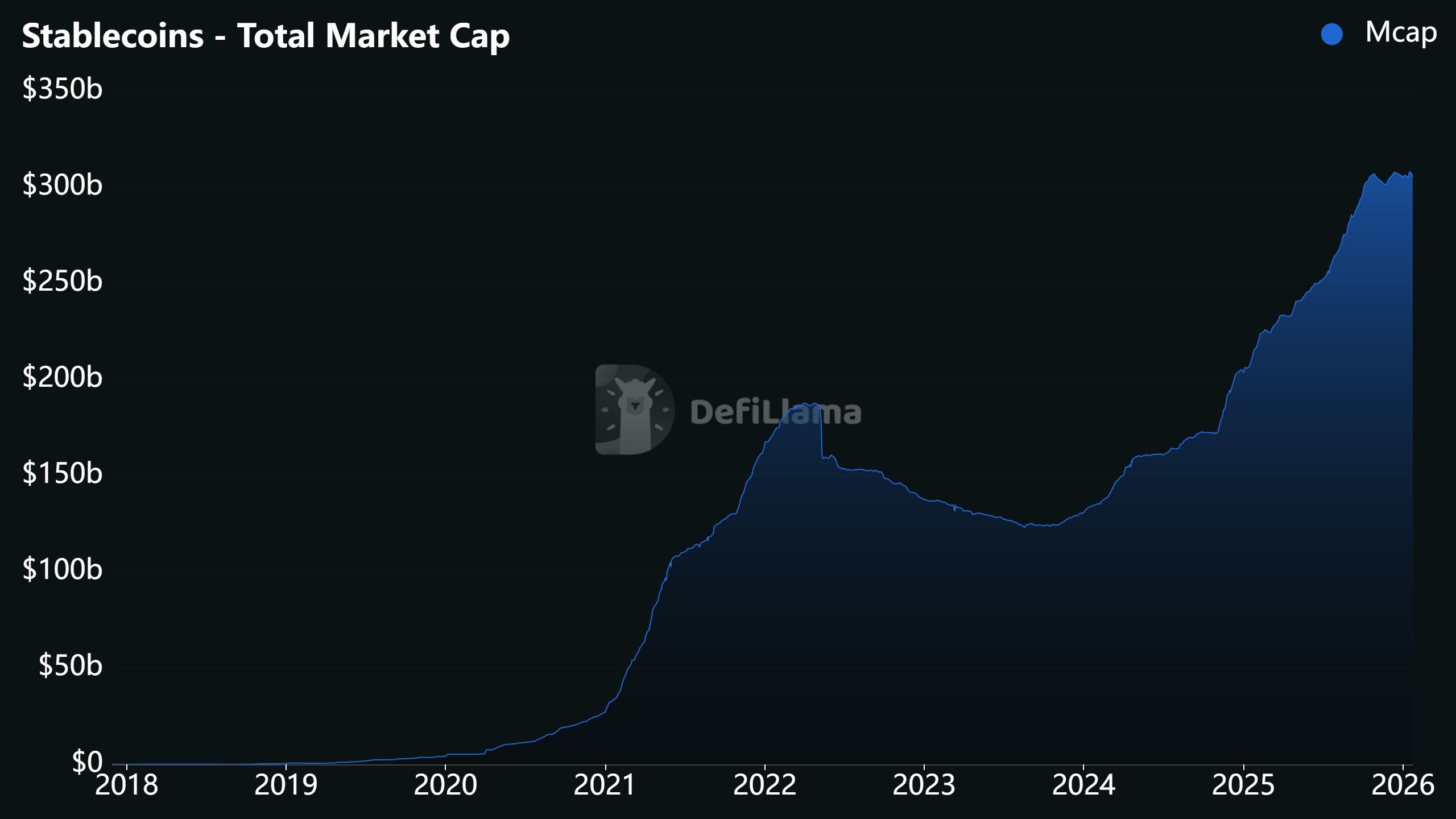 Stablecoins have an estimated market capitalization of over $300 billion. Source:
DefiLlama
Stablecoins have an estimated market capitalization of over $300 billion. Source:
DefiLlama
Allaire then cited government money market funds as a historical comparison. Despite repeated warnings over the years, roughly $11 trillion has flowed into money market funds without collapsing bank lending, he said.
Lending, he argued, is already shifting away from banks toward private credit and capital markets, independent of stablecoins.
What Davos revealed about crypto priorities
Public image for stablecoins was badly tarnished in 2022, when the Terra ecosystem suffered a multibillion-dollar collapse. The failure began with TerraUSD (UST), an algorithmic stablecoin backed by the network’s native token, LUNA.
Stablecoins have since flipped the narrative. It’s now an important topic in the annual meeting of the world’s most powerful voices in geopolitics and economy. Even central bankers who are generally critical of the crypto industry acknowledge them as core themes to watch alongside tokenization.
Davos 2026 reinforced stablecoins and tokenization as part of the year’s policy conversation. The US executive branch and Europe’s banking sector remain philosophically divided on approach, and regulatory developments are still constrained by domestic politics.
Magazine: The critical reason you should never ask ChatGPT for legal advice
Disclaimer: The content of this article solely reflects the author's opinion and does not represent the platform in any capacity. This article is not intended to serve as a reference for making investment decisions.
You may also like
AI demand drives TSMC to accelerate capacity expansion, 2nm monthly production aims for 120,000 wafers by year-end
According to reports, industry giants such as Apple, Nvidia, and AMD have collectively increased their orders by 10% to 20%, directly boosting TSMC's 2nm monthly production capacity to 120,000 wafers by the end of the year, which exceeds the previous estimate by more than 20% and brings forward the 2027 target by two years. For the first time in history, five factories will ramp up production simultaneously, and the annual compound growth rate of capacity from 2026 to 2028 will reach as high as 70%.
Long-term US Treasury Sell-off Continues! 10-Year Treasury Yield Breaks 5.2% Again, “AI Boom vs. Rising Financing Costs” Narrative Showdown Intensifies
On Monday, oil prices rose and US Treasury bonds were sold off again as former US President Donald Trump rejected Iran's latest proposal to reopen the Strait of Hormuz, heightening concerns about inflation.
Banks Have Been Earning Effortlessly from Idle Funds for Years—Will AI Agents Change Everything?
For years, banks have profited from customers' idle funds, but AI agents may be about to change this situation.
Goldman Sachs: US stocks are showing a "strong index, weak confidence" pattern; catch-up rally may become the main theme of the next phase
Goldman Sachs stated that the current U.S. stock market is showing an unusual pattern: while index performance is strong, investor confidence remains weak. This suggests that the market still has further upside potential, and stocks that previously lagged behind leading AI stocks may soon experience a catch-up rally.

Crypto prices
More


