
Friedman Stock Declines Post Q3 Earnings Despite Sales Surge

Shares of Friedman Industries, Incorporated FRD have lost 3.9% since the company reported its earnings for the quarter ended Dec. 31, 2025. This compares with the S&P 500 Index’s 1.6% decline over the same time frame. Over the past month, the stock slipped 0.3%, faring better than the S&P 500’s 1.9% decline.
FRD’s Earnings Snapshot
For the third quarter of fiscal 2026 ended Dec. 31, 2025, Friedman reported net earnings of $3 million, or $0.43 per diluted share, against a net loss of $1.2 million, or $0.17 per diluted share, in the year-ago quarter. Net sales surged 78.6% year over year to $167.9 million from $94.1 million, while sales volume increased 36%. Earnings from operations improved to $3.9 million from a loss of $1.2 million a year earlier.
By segment, flat-roll sales increased 77.6% to $153 million from $86.1 million a year earlier, with average selling prices climbing 24.9% to $1,016 per ton from $813 per ton. Flat-roll earnings from operations improved to $7.3 million from $1.3 million.
Tubular segment sales jumped 88.4% to $14.9 million from $7.9 million, as tons sold increased from 8,000 to 12,500 and average selling prices rose 18.6% to $1,201 per ton from $1,013 per ton. The tubular business generated operating earnings of $1.4 million against a $0.2 million operating loss in the prior-year quarter.
Friedman’s Other Key Business Metrics
For the first nine months of fiscal 2026, net sales increased 44.3% to $455.1 million from $315.4 million in the prior-year period, while net earnings rose to $10.3 million from $0.7 million. Friedman recognized a $1.4 million gain on economic hedges in the fiscal third quarter, compared with $0.3 million in the year-ago quarter, reflecting its use of hot-rolled coil derivatives to manage commodity price risk.
Balance sheet expansion was notable following the Century acquisition. Total assets increased to $311.9 million as of Dec. 31, 2025, from $226.8 million as of March 31, 2025, while total liabilities rose to $169.6 million from $94.4 million over the same period. Stockholders’ equity rose to $142.2 million from $132.4 million.
Friedman Industries Inc. Price, Consensus and EPS Surprise
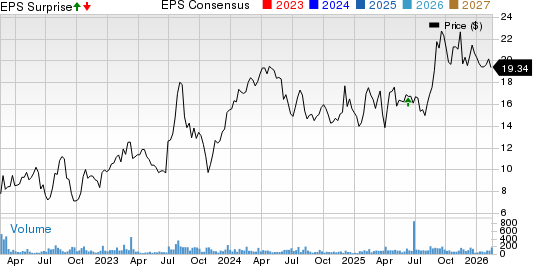
Friedman Industries Inc. price-consensus-eps-surprise-chart | Friedman Industries Inc. Quote
FRD’s Management Commentary
President and Chief Executive Officer Michael Taylor attributed the quarter’s performance to improved capacity utilization, disciplined commercial execution and the contribution from the Century acquisition. Taylor noted that average selling prices improved as the quarter progressed, contributing to margin gains late in the period, while hedging activities mitigated commodity price volatility. Management emphasized a strong balance sheet and expressed confidence in FRD’s ability to capitalize on near-term opportunities and longer-term industry demand.
Factors Influencing Friedman’s Results
Higher average selling prices played a key role in the flat-roll segment, where per-ton pricing increased 24.9% to $1,016 from $813 a year ago. Sales volumes benefited from both organic growth and the Century acquisition, with same-facility year-over-year growth accounting for roughly 31,000 additional tons and Century contributing about 11,000 tons.
FRD’s Outlook
Management expects fourth-quarter fiscal 2026 sales volumes to remain generally consistent with fiscal third-quarter levels and anticipates sequential improvement in sales margins driven by higher average selling prices. Taylor reiterated confidence in Friedman’s strategy and operational discipline to navigate current market conditions and build long-term shareholder value.
Friedman’s Other Developments
On Aug. 29, 2025, Friedman acquired certain assets and liabilities of Century Metals & Supplies for total consideration of approximately $52.7 million, including $45.6 million in cash, a five-year seller’s note valued at about $3.5 million and contingent consideration with a fair value of roughly $3.6 million. The acquisition expanded FRD’s presence in the southeastern United States and Latin America and broadened its product offerings to include cold-rolled, coated and stainless steels as well as non-ferrous materials.
Disclaimer: The content of this article solely reflects the author's opinion and does not represent the platform in any capacity. This article is not intended to serve as a reference for making investment decisions.
You may also like
British Pound gains as US Dollar weakens despite hawkish Fed, geopolitical tensions
Volatility Divergence Between Individual Stocks and Index! Popular US Stock Trading: Go Long on Stock Options, Hedge with Index Options
With the divergence in the AI narrative, drastic fluctuations in oil prices, and U.S. Treasury yields soaring to a 20-year high, the degree of dispersion among S&P 500 constituents has risen to the 95th percentile in 30 years. As single-stock volatility continues to compress, entry costs have become relatively low, and the volatility gap between individual stocks and the index has widened again. This has opened a rare window for dispersed trading strategies such as "long single-stock options + short index options."
US Treasury yield curve approaches inversion! Is the bond market questioning the outlook for the US economy?
The U.S. Treasury yield curve is rapidly approaching the inversion threshold—the spread between the 10-year and 2-year yields has narrowed to historic lows, and bank stocks have responded with a technical correction. This warning signal, regarded as a "hard rule" for recession, is tearing apart market consensus: some are betting the curve will soon invert, while others firmly believe economic resilience will mitigate the risk. Amid ongoing Federal Reserve rate hikes, the outcome of this bond market game may reshape the narrative logic of the entire asset market.

From ICU to KTV! The Polarized "AI Narrative" Leaves Investors "Exhausted"
In just two weeks, the Nasdaq 100 experienced an extreme rollercoaster: first losing $600 billion in market value due to “AI threat” concerns, then rebounding to reclaim $3 trillion thanks to the viral Meta assistant. Analysts believe that market sentiment is swinging violently between fear and greed, detached from fundamentals. The turmoil has driven Nvidia’s valuation to a ten-year low, intensified the bull-bear divide, and the high volatility driven by narratives has become a long-term norm for investors. This week, Micron will release its financial report; regardless of the outcome, the sharp swings in market sentiment are unlikely to subside.
Crypto prices
More


