
BTC Market Pulse: Week 11

Overview
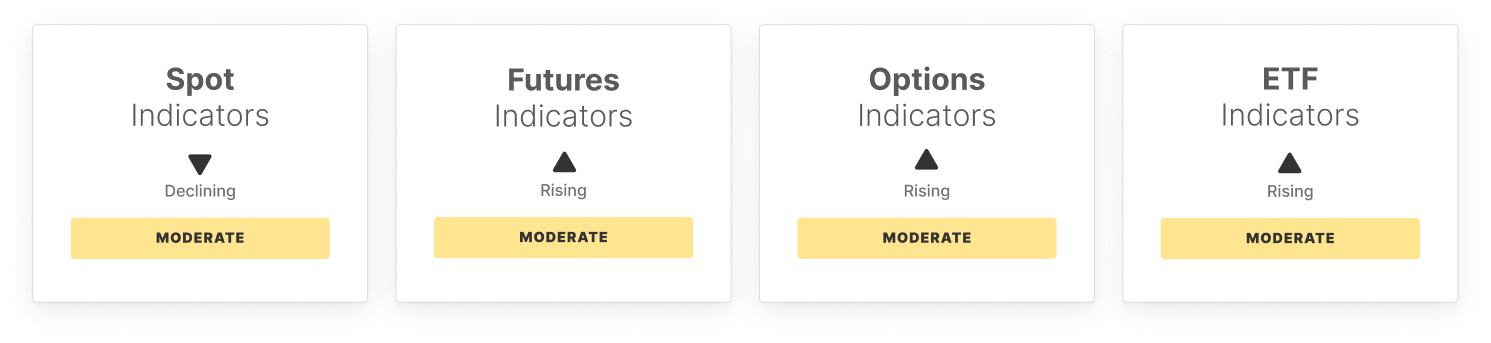
Bitcoin pulled back from $74k, while internals showed tentative signs of improvement. Momentum has firmed modestly, with RSI lifting from recent lows, but price action still lacks the strength of a decisive bullish shift. Spot activity remains subdued, with lower trading volume pointing to softer participation even as conditions begin to stabilize.
Derivatives positioning is mixed. Futures open interest increased, signalling modest leverage build-up, while long-side funding turned sharply negative, reflecting stronger demand for short exposure. Perpetual CVD rose aggressively, suggesting buy-side activity is returning in leveraged markets, though conviction remains limited.
Options markets have become less defensive. The volatility spread narrowed meaningfully as implied volatility moves closer to realised conditions, while 25-delta skew declined, pointing to softer demand for downside hedging and a more balanced near-term backdrop.
ETF activity remains a relative area of strength. Net inflows accelerated and trading volumes picked up, highlighting continued traditional finance engagement. However, the ETF MVRV ratio fell sharply into negative territory, showing the average ETF holder is now underwater and positioning stress remains elevated.
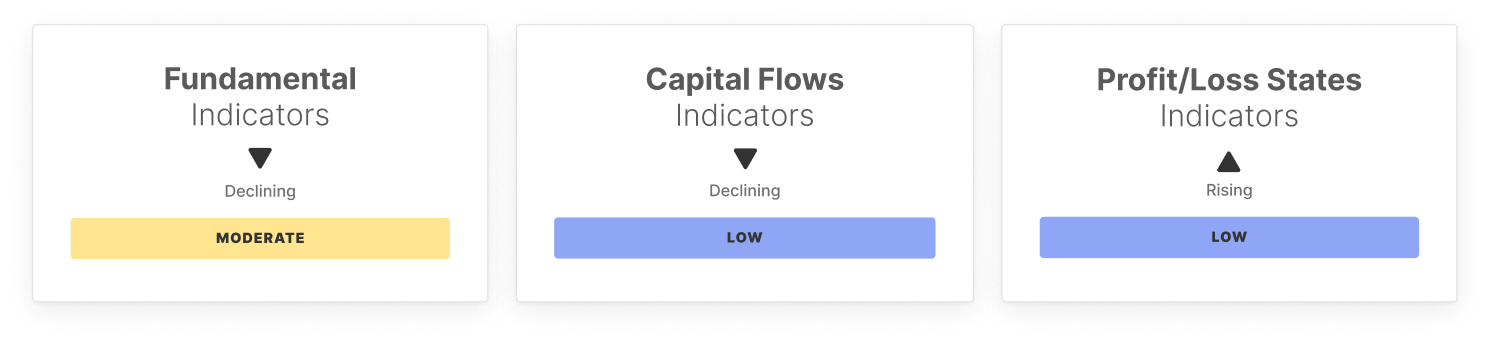
On-chain signals are mixed but slightly constructive. Transfer volume improved, pointing to firmer capital movement, while active addresses and fee volume remain soft, consistent with a quieter network backdrop. Realized cap change is still negative, though outflows are easing slightly, suggesting capital pressure may be starting to stabilize.
Positioning and profitability metrics still reflect a fragile but improving structure. The STH/LTH supply ratio remains elevated, showing short-term participation is still high, while hot capital share stays suppressed, signalling limited speculative churn. Meanwhile, supply in profit, NUPL, and the realized profit-to-loss ratio all improved modestly, suggesting market stress is easing.
Overall, conditions are stabilizing, with momentum, ETF demand, and profitability metrics improving modestly. However, capital flows remain soft, speculative participation is limited, and broader conviction has yet to fully return.
Off-Chain Indicators
On-Chain Indicators

Don't miss it!
Smart market intelligence, straight to your inbox.
Disclaimer: The content of this article solely reflects the author's opinion and does not represent the platform in any capacity. This article is not intended to serve as a reference for making investment decisions.
You may also like
Dow Jones Industrial Average bounces on Iran's latest Hormuz offer
U.S. stocks opened higher and fluctuated, the Japanese yen rebounded more than 1% intraday, 10-year U.S. Treasury yields broke above 5.22% again, and U.S. crude oil once fell nearly 3%.
After the release of U.S. consumer confidence data, the S&P and Nasdaq turned negative, while the Dow is poised to break a three-day losing streak but is set for a fourth consecutive weekly decline. Meta pulled back, falling more than 3% during the session. The U.S. 10-year Treasury yield surpassed 5.22% again, marking a new high for the third day in a row since 2007, while the 30-year yield reached its highest level since 2004. The yen/dollar pair surged 1.2% intraday, as Japanese and U.S. officials successively signaled concerns over the weak yen. Expectations for a diplomatic resolution between the U.S. and Iran are rising, halting crude oil's two-day climb.
US Treasury volatility surges, triggering alarms! BofA’s Hartnett warns of rising deleveraging risks as higher yields become main threat to the market
Bank of America strategist Michael Hartnett warns that the recent sharp rise in volatility in the US bond market is increasing the risk of broader deleveraging in financial markets.
U.S. diesel prices surge 83% this year! Apollo Chief Economist warns: Cost pass-through may make core inflation more stubborn, Federal Reserve can't ignore it
Torsten Slok, Chief Economist at Apollo Global Management, has warned that the inflation threat posed by the surge in U.S. diesel prices to historic highs may be more serious than the Federal Reserve currently realizes.
Crypto prices
More


