
Middle East Tensions Show Signs of Easing, US Stocks Make V-shaped Rebound! "China Golden Dragon" Rises 1.76%, Tech Stocks Surge Across the Board, Semiconductors Become Biggest Winner

Monday's US stock market provided investors with a true "roller coaster" experience full of thrills and excitement.
During the morning session, all three major US stock indexes fell together, with the Dow Jones plunging over 800 points at one stage as investors worried that escalating tensions in the Middle East might trigger an energy price surge, further exacerbating inflationary pressure. However, investor sentiment abruptly shifted in the afternoon after US President Trump hinted that US military action against Iran was "largely over" and that Iran's military power had suffered major losses. This statement quickly alleviated market panic, attracting buying capital and driving the indexes sharply back into positive territory.
At the close, the Dow Jones Industrial Average rose 239.25 points, an increase of 0.50%, to 47,740.80 points; the Nasdaq Composite Index performed particularly well, closing up 1.38% at 22,695.95 points; the S&P 500 also rebounded 0.83% to 6,795.99 points.
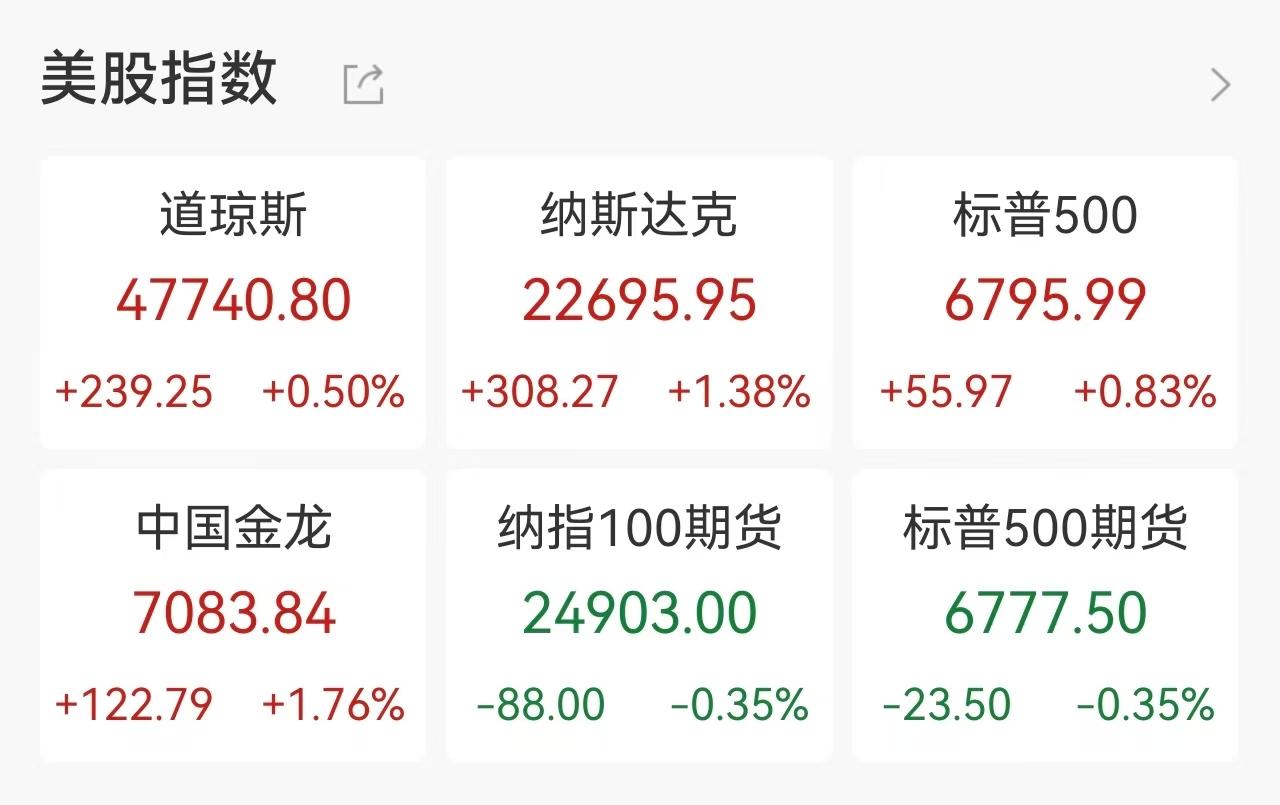
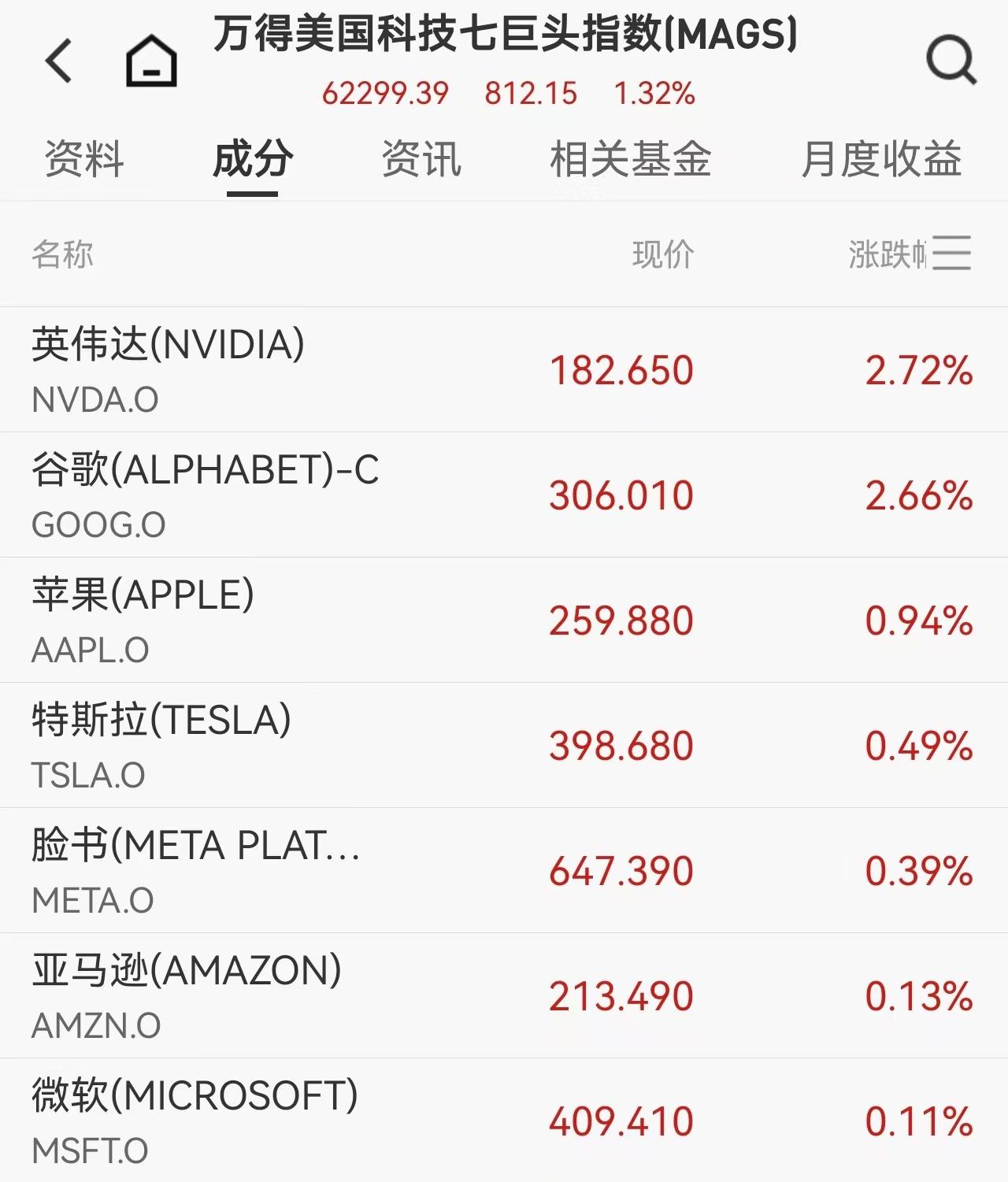
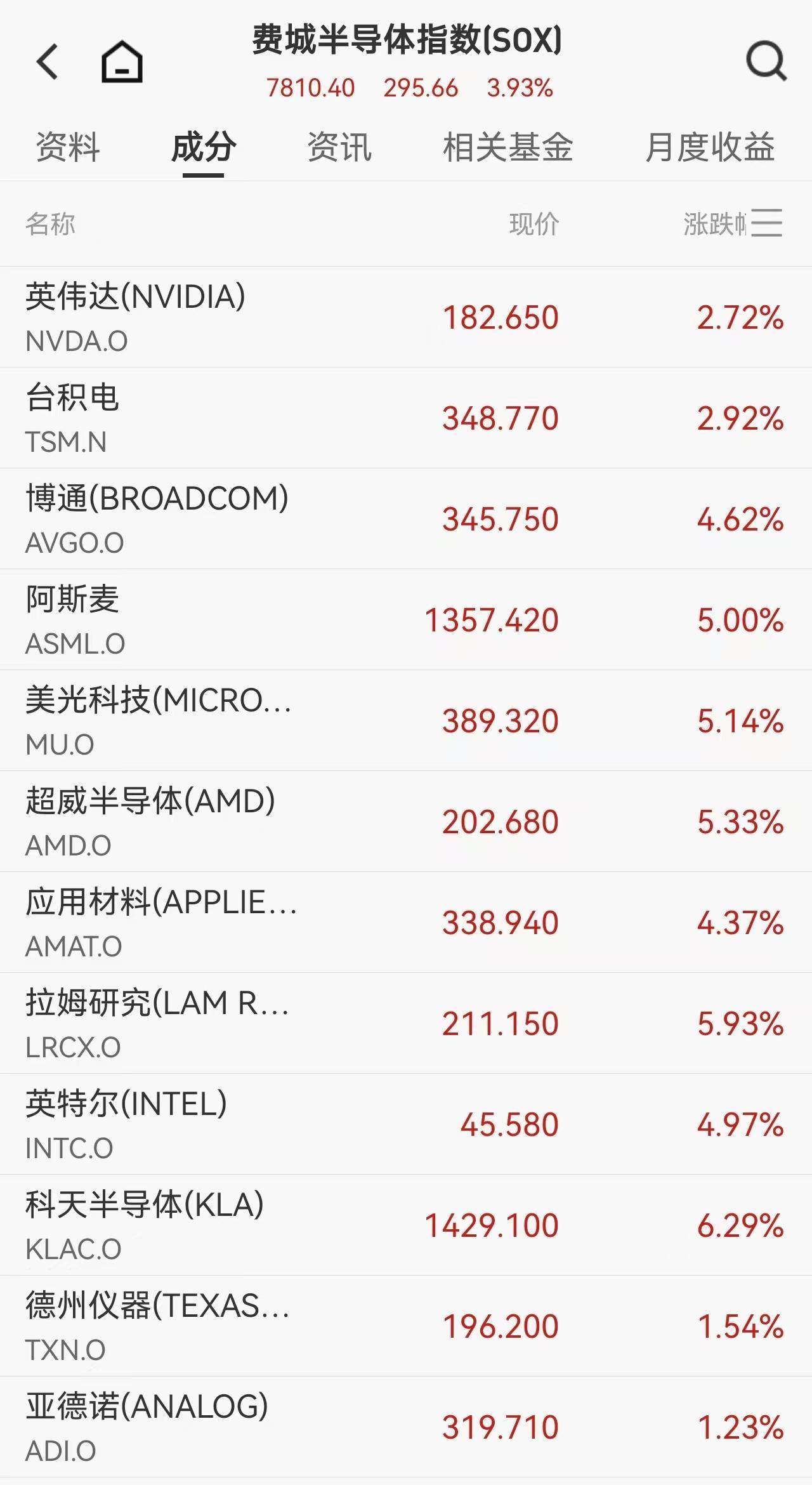
Technology stocks became the main force of the rebound, and the chip sector saw a full outbreak. The Philadelphia Semiconductor Index closed up sharply by 3.93%, Nvidia surged 2.72%, AMD exceeded a 5% gain, and other heavyweights like Broadcom and TSMC also posted significant increases. Storage stocks were similarly robust, with Western Digital and Micron Technology both gaining more than 5%. Among star tech companies, Alphabet (Google's parent company) rose 2.66%, while Apple and Tesla posted modest gains, with market funds clearly shifting towards the growth sector.
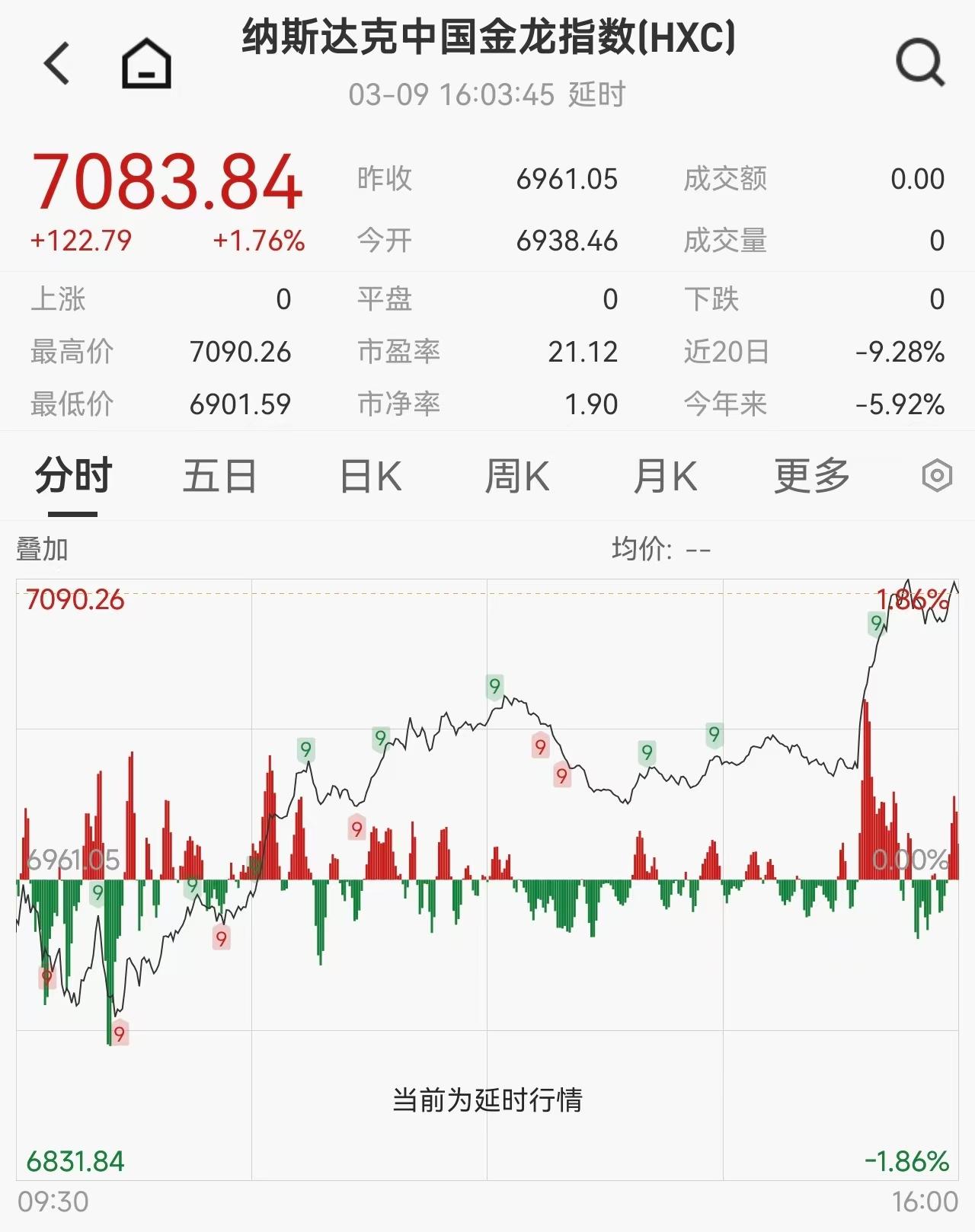
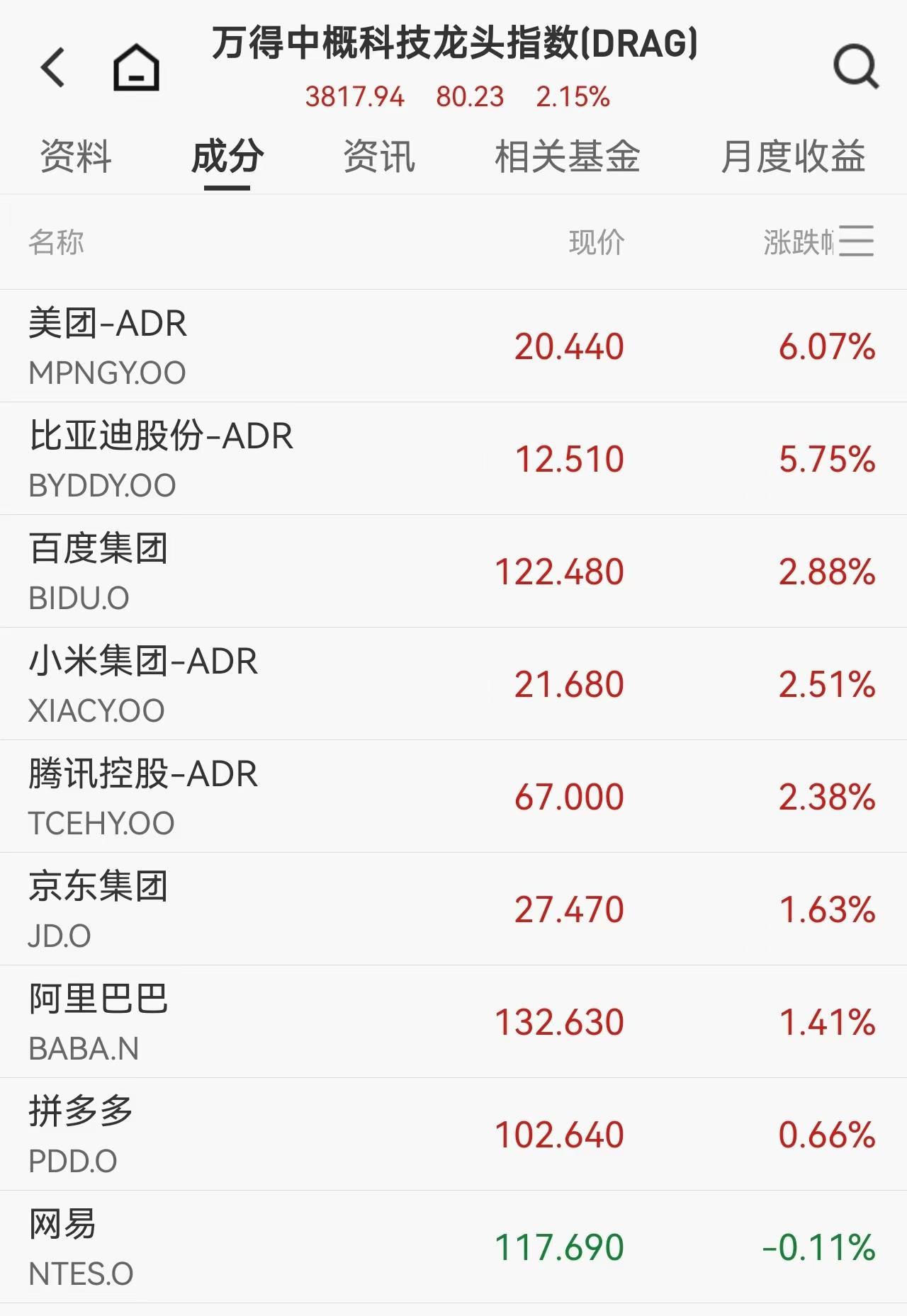
US-listed Chinese stocks also rallied, with the Nasdaq Golden Dragon China Index rising 1.76%. Baidu, JD.com, and Alibaba all gained over 1%, while Kingsoft Cloud soared 19% on optimistic earnings expectations, and popular stocks like Bilibili and XPeng Motors both climbed more than 6%. Market analysis suggests that marginal improvement in China-US relations, together with better fundamentals for certain companies, jointly supported sentiment for US-listed Chinese equities.
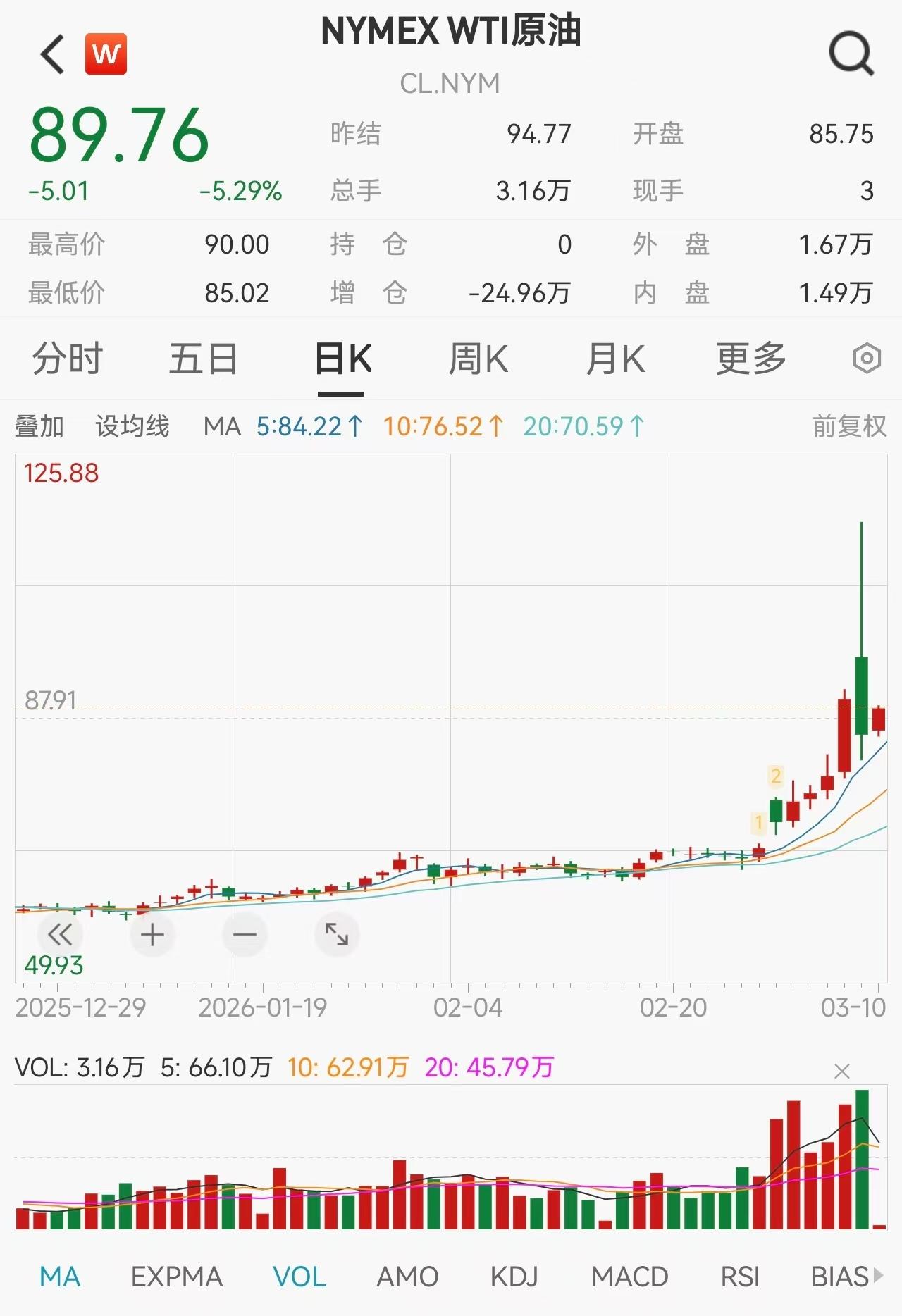
The commodities market saw even greater volatility. After Trump's remarks, oil prices staged a "free fall", with WTI crude futures' post-market losses rapidly widening to 10%, momentarily breaching the $85/barrel mark, and Brent crude also falling below $90. As of this morning, WTI crude opened significantly lower, and at the time of writing, was priced at $89.76/barrel, down 5.29% on the day.
During yesterday’s early session, oil prices had touched their highest levels since 2022 due to shipping disruptions in the Strait of Hormuz caused by geopolitical conflict. Yet, as expectations for de-escalation grew, supply concerns eased notably. G7 finance ministers held an emergency meeting to discuss a potential joint release of strategic oil reserves, further capping oil price upside.
The precious metals market showed a bottoming-out and rebound trend. COMEX gold futures once tumbled intraday but narrowed losses to 0.10% at the close, at $5,153.10/ounce; silver performed even more strongly, with futures soaring by 3.52%. Analysts noted that although diminished geopolitical risks weakened safe-haven demand, stagflation concerns continue to provide medium- and long-term support for gold and silver.
On the policy front, Trump explicitly stated at the press conference that he would lift certain oil sanctions on Iran to stabilize oil prices, while Russian President Putin called for resolving the conflict through diplomatic means during a phone call with Trump. Market attention has shifted to Federal Reserve policy directions, as recent weak employment data and high energy prices may place the central bank in a dilemma over interest rate decisions. Futures market pricing currently shows investors generally expect the Fed to hold rates steady in the first half of the year.
Disclaimer: The content of this article solely reflects the author's opinion and does not represent the platform in any capacity. This article is not intended to serve as a reference for making investment decisions.
You may also like
AI memory demand continues to surge: Micron (MU.US) surpasses expectations in Q4, with quarterly data center core business revenue increasing by over 10 times year-over-year
Storage chip giant Micron Technology released its financial results for the fourth quarter of fiscal year 2026 after the market closed on Wednesday. Both revenue and profit exceeded Wall Street expectations, and the company provided stronger-than-expected guidance for the next quarter.
Federal Reserve approves stress test reform by a 6-1 vote: Capital requirement volatility halved, sole dissenting vote warns of reduced resilience
The Federal Reserve has officially approved two final rules aimed at increasing transparency and reducing capital requirement volatility by approximately 50%. The new regulations will seek public comments on stress test scenarios and will calculate the capital buffer based on the average of the results from two consecutive years of testing. This averaging mechanism will take effect in 2028. The reforms are the result of years of negotiation within the banking sector and have been welcomed by industry groups. However, critics such as Governor Barr warn that the reforms will weaken the constraints of stress testing and reduce the overall resilience of the banking system.

Metals fade as long yields offset cooler inflation, lower Fed odds - Kitco PM Report
Bitwise brings NEAR to Wall Street – But the chart isn’t impressed
Crypto prices
More


