
VersaBank expands tokenized deposits with cross-border FX use case

VersaBank, a federally chartered Canadian digital bank focused on institutional lending, is adding foreign exchange functionality to its tokenized deposit platform, allowing users to convert between US and Canadian dollars within a blockchain-based system.
Announced Tuesday, the upgrade enables real-time, 24/7 currency conversion using Real Bank Tokenized Deposits (RBTDs), that is, digital representations of fiat deposits issued and backed by the Ontario-based institution.
The feature is designed to improve cross-border transactions by reducing reliance on traditional foreign exchange rails, which are often slower and limited by banking hours.
The update marks an incremental step toward commercialization rather than a full product launch. VersaBank has been piloting its tokenized deposit system since last year, and the addition of US dollar and Canadian dollar conversion expands its functionality for cross-border payments, particularly between the two countries.
RBTDs are tokenized versions of bank deposits that can be transferred on blockchain infrastructure while remaining liabilities of the issuing bank and backed 1:1 by customer deposits, according to the American Bankers Association. Unlike stablecoins, which are typically issued by nonbank entities, they operate within the traditional banking system.
Related: Columbia Business professor casts doubt on tokenized bank deposits
Financial institutions explore tokenized deposits
Banks are increasingly exploring tokenized deposits as a way to combine blockchain-based speed and programmability with the safety of traditional deposits, particularly for use cases like cross-border payments and financial settlement, as outlined by KPMG.
One notable example is BNY’s launch of tokenized deposits for institutional clients, aimed at supporting collateral and margin requirements. BNY said the move comes as institutions seek “faster and more efficient ways to move assets.”
Globally, Singapore’s Project Guardian is exploring asset tokenization in financial markets, including pilot programs involving tokenized deposits and other digital assets.
The push comes as tokenization emerges as one of blockchain’s fastest-growing use cases. Industry data shows more than $27 billion in tokenized assets across products ranging from private credit to US Treasury bonds and equities.
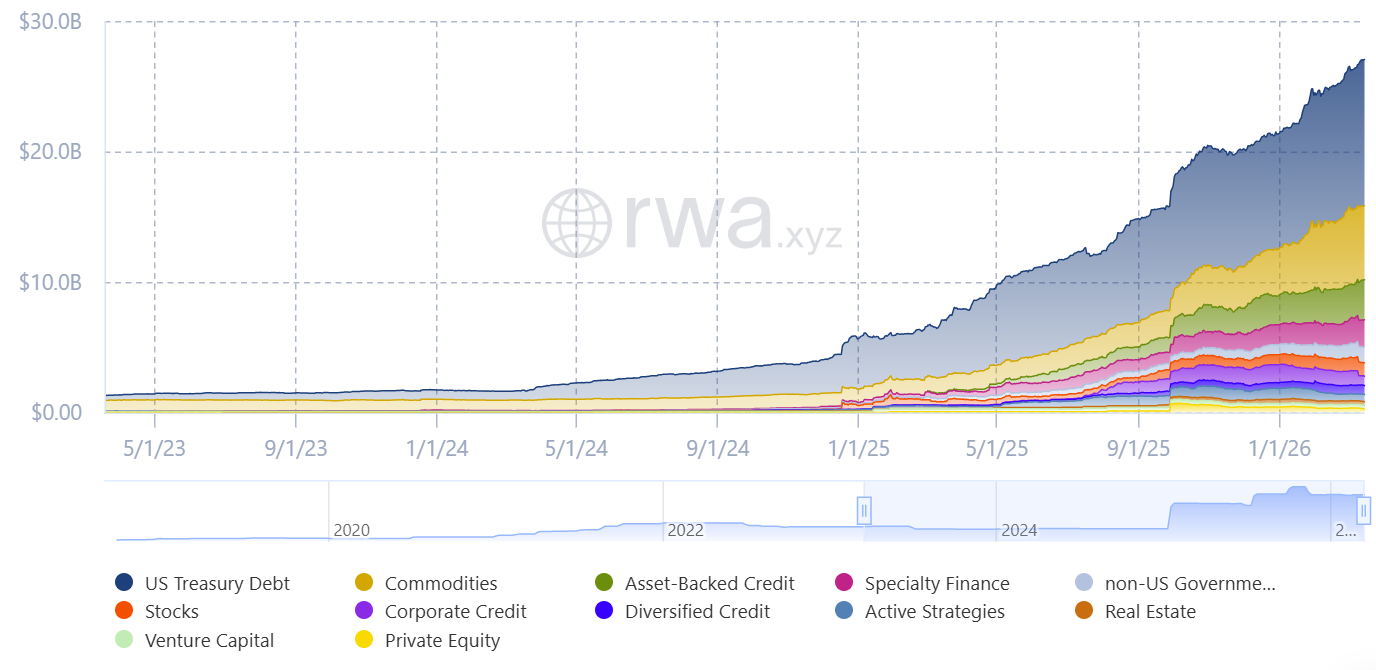 The growth of tokenized assets, excluding stablecoins. Source:
RWA.xyz
The growth of tokenized assets, excluding stablecoins. Source:
RWA.xyz
Related: Crypto’s 2026 investment playbook: Bitcoin, stablecoin infrastructure, tokenized assets
Disclaimer: The content of this article solely reflects the author's opinion and does not represent the platform in any capacity. This article is not intended to serve as a reference for making investment decisions.
You may also like
Meta AI Director Alexandr Wang: Why I Want to Create Muse
Muse reached 2.8 million downloads within 12 days of launch, surpassing ChatGPT's performance in the same period, and set a single-day US record with 264,000 downloads—driving Meta's market value up by $234 billion. Behind this is an open letter from Chief AI Officer Alexandr Wang discussing "human desires," and the $14.3 billion acquisition by Zuckerberg that was once mocked as "crazy": now, it may be the most worthwhile talent acquisition in Silicon Valley history.
Crypto ETF Flows Are Near Record Highs: 5 Altcoins Poised for Fresh Institutional Demand
NEAR Protocol Prints Inverse H&S Breakout — $6.00 Target in Focus
Altseason Setup Is Taking Shape: 5 Altcoins to Consider Before the Next Market Surge
Crypto prices
More


