
US Dollar: Crisis Rehearsal

Is there an economic crisis? It's unclear, but the financial markets are already rehearsing for a crisis.
The conflict among the US, Iran, and Israel has once again exceeded expectations, escalating from military confrontation to a composite standoff of "energy strangulation + high-level assassinations + total blockade". The sunk costs committed by all three parties have become so high that none can easily withdraw.
With oil prices surging like a whale rising and everything else falling, the USD exchange rate is one of the very few beneficiaries. However, it's important to note that the position structure of the USD is now very different compared to a month ago—the USD 25D RR implied volatility against a basket of currencies has risen to nearly a two-year high, indicating crowded long sentiment towards the dollar.
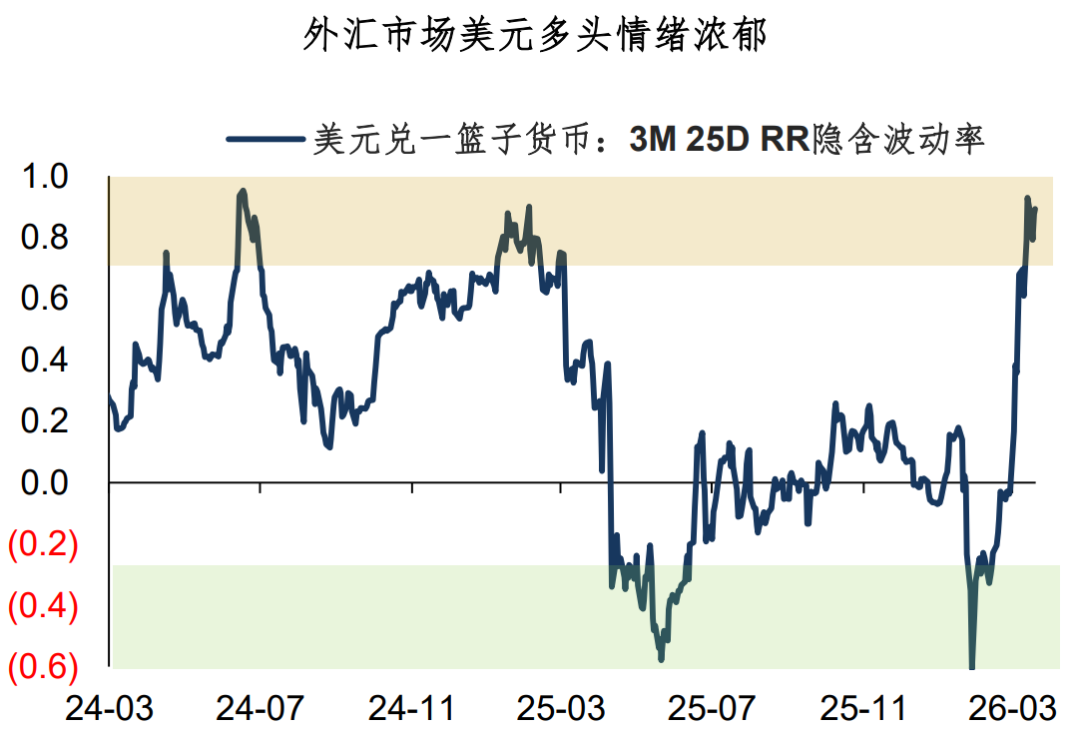
Why is the market so bullish on the USD? First, from an energy security perspective, the US is both an oil producer and a net oil exporter, making its energy structure relatively safer. Second, from a financial liquidity standpoint, since the onset of the war, both global risk and safe-haven assets have fallen simultaneously, making cash (USD) the only safe haven.
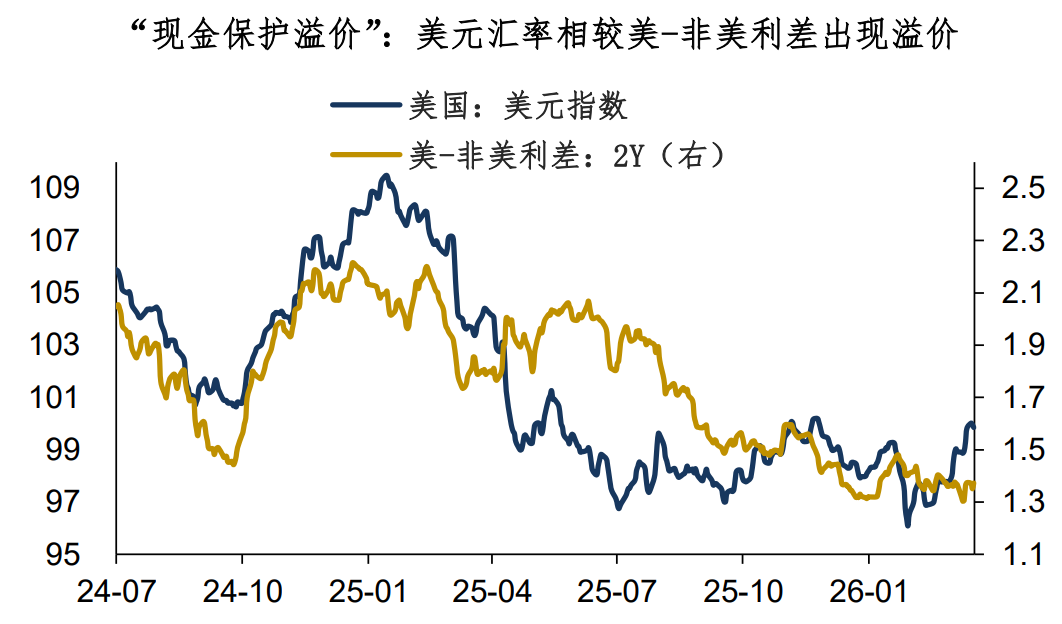
The author notes that there is now a premium in USD exchange rates relative to the US-non-US interest rate differential. This premium can be interpreted as a cash protection premium offered by the FX market.
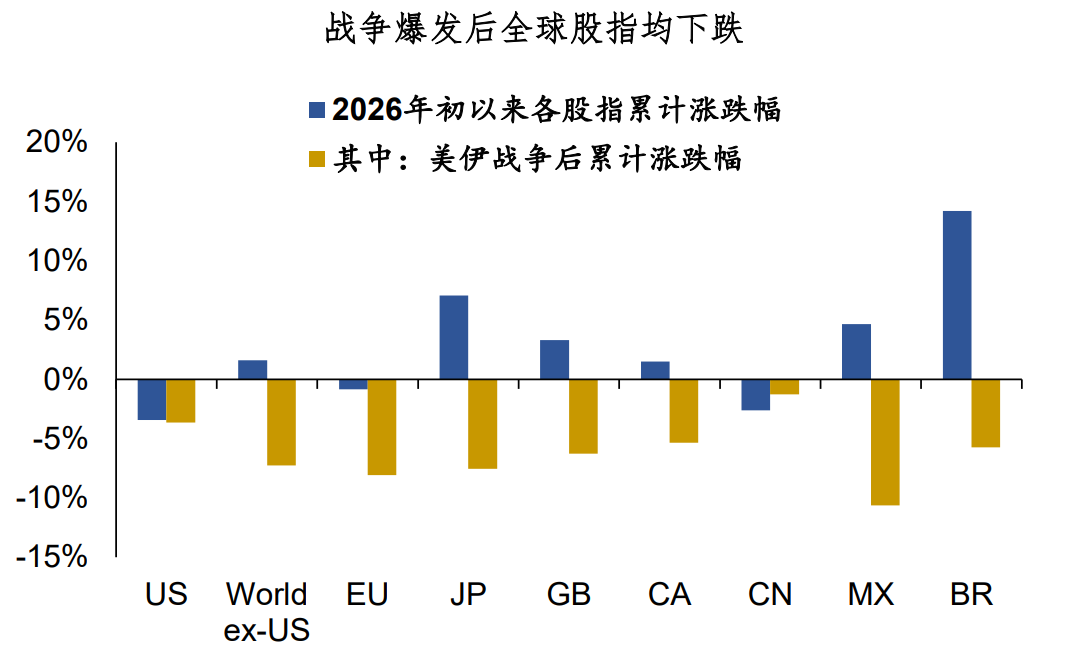
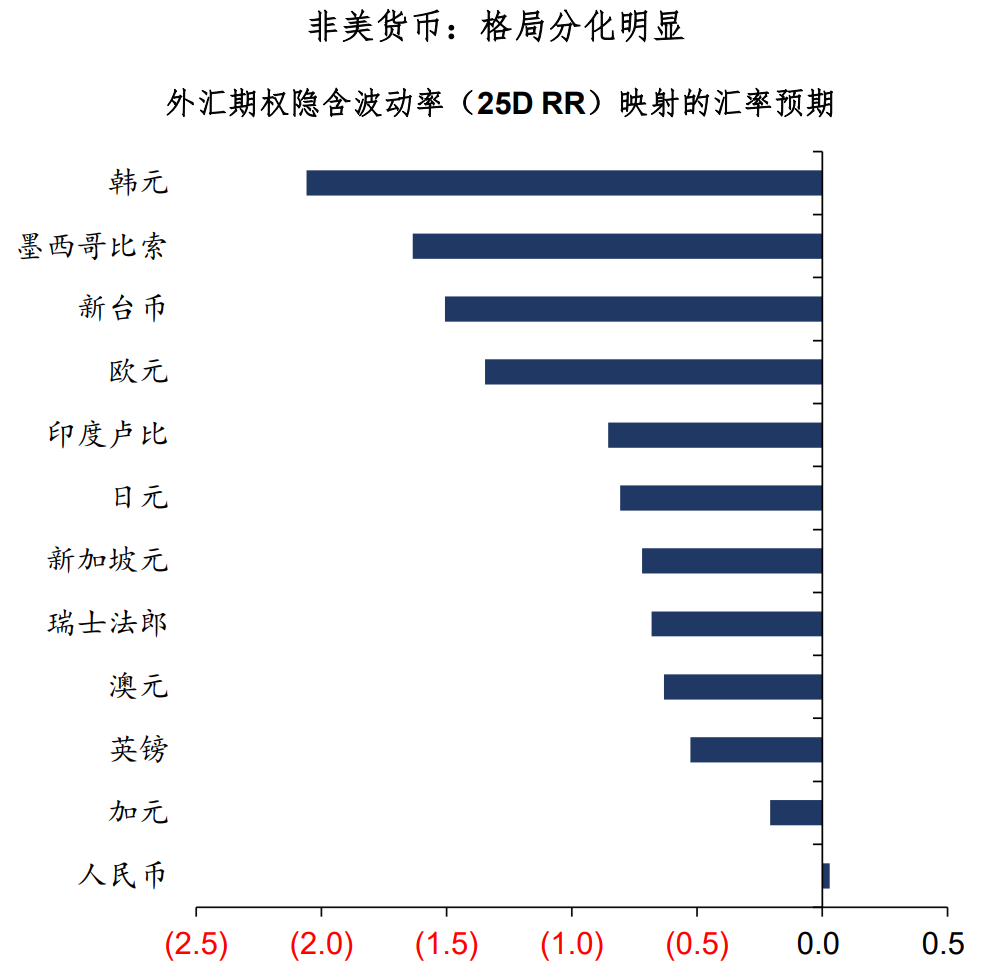
In this crisis rehearsal, the differentiation among non-USD currencies is also clear. Overall, currencies with secure energy structures declined less, while those with fragile energy structures fell more. For example, 25D RR implied volatility shows a significant increase in bearish expectations for the Korean won, New Taiwan dollar, euro, and Japanese yen; while expectations for the RMB, Canadian dollar, and Australian dollar remain generally stable.
What about the future? The author believes there are two main points:
1. In the short term, the USD will enjoy a "cash protection premium," but crowded positions make trading more challenging. With persistently high oil prices, financial market turmoil will allow the USD to enjoy a "cash protection premium". However, compared to a month ago, long positions in the USD are now quite crowded, so attention must be paid to two-way volatility and position management.
2. In the medium and long term, as high oil prices and low employment persist, the probability of an economic recession has risen significantly. I don't know when the recession will come, but its probability has definitely increased substantially (we'll discuss recession issues further in future updates). Investment portfolios need to prepare for the possibility of a recession.
To summarize today's discussion:
1. Is there an economic crisis? Uncertain, but the financial markets are already rehearsing for a crisis. With oil prices surging like a whale rising and everything else falling, the USD exchange rate is among the very few beneficiaries. The USD bullish sentiment implied by the FX options market has reached crowded levels, and the USD exchange rate is showing a premium over the US-non-US interest rate differential.
2. In this crisis rehearsal, the divergence among non-USD currency pairs is also clear. Overall, currencies with secure energy structures are falling less, while those with fragile structures are falling more. In the short term, the USD will benefit from the "cash protection premium," but there is a need to focus more on two-way volatility and position sizing.
3. In the medium to long term, as high oil prices and low employment continue, the probability of an economic recession has increased significantly. Investment portfolios need to be prepared for the possibility of a recession.
Disclaimer: The content of this article solely reflects the author's opinion and does not represent the platform in any capacity. This article is not intended to serve as a reference for making investment decisions.
You may also like
Dow Jones Industrial Average bounces on Iran's latest Hormuz offer
U.S. stocks opened higher and fluctuated, the Japanese yen rebounded more than 1% intraday, 10-year U.S. Treasury yields broke above 5.22% again, and U.S. crude oil once fell nearly 3%.
After the release of U.S. consumer confidence data, the S&P and Nasdaq turned negative, while the Dow is poised to break a three-day losing streak but is set for a fourth consecutive weekly decline. Meta pulled back, falling more than 3% during the session. The U.S. 10-year Treasury yield surpassed 5.22% again, marking a new high for the third day in a row since 2007, while the 30-year yield reached its highest level since 2004. The yen/dollar pair surged 1.2% intraday, as Japanese and U.S. officials successively signaled concerns over the weak yen. Expectations for a diplomatic resolution between the U.S. and Iran are rising, halting crude oil's two-day climb.
US Treasury volatility surges, triggering alarms! BofA’s Hartnett warns of rising deleveraging risks as higher yields become main threat to the market
Bank of America strategist Michael Hartnett warns that the recent sharp rise in volatility in the US bond market is increasing the risk of broader deleveraging in financial markets.
U.S. diesel prices surge 83% this year! Apollo Chief Economist warns: Cost pass-through may make core inflation more stubborn, Federal Reserve can't ignore it
Torsten Slok, Chief Economist at Apollo Global Management, has warned that the inflation threat posed by the surge in U.S. diesel prices to historic highs may be more serious than the Federal Reserve currently realizes.
Crypto prices
More


