
Bond Market: Allocation Behavior Reappears

On January 7 this year, we discussed the possibility of a shift in the bond market (see "Discussion on the Bond Market at the Beginning of the Year"). Looking back, that was a good buying opportunity. Notably, as long-term interest rates rose, allocation activities from banks and insurance institutions have recently reappeared.Does the return of allocation activities indicate that interest rates are near a stage high?
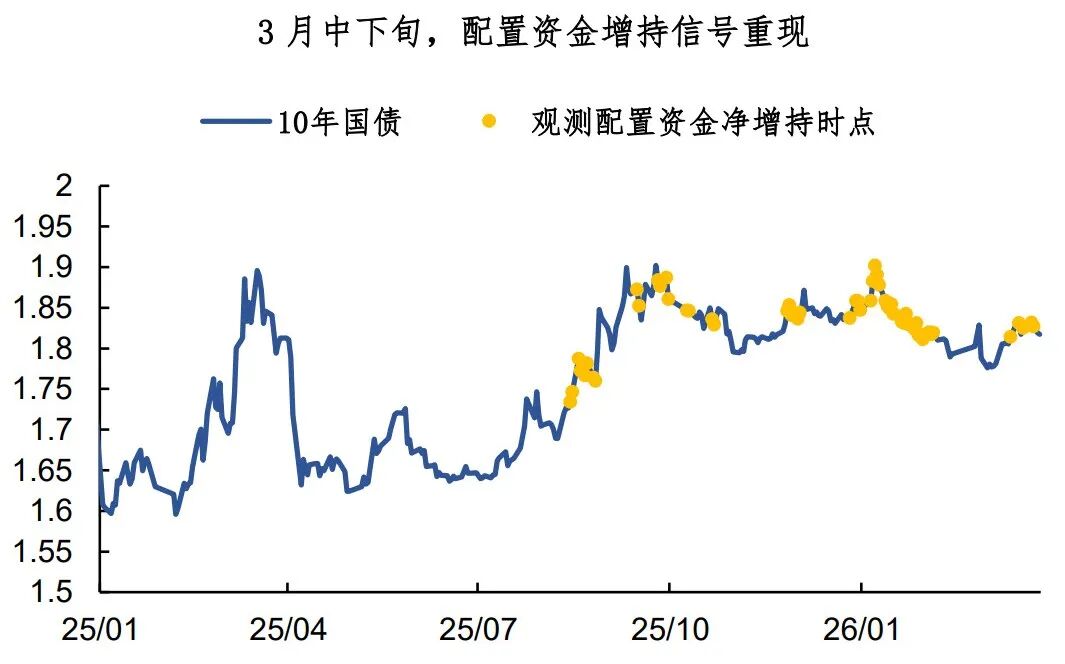
To resolve this question, it's first necessary to understand the reasons behind this round of bond market adjustments.Since March, the rise in long-term interest rates mainly reflects the pricing in of inflation expectations.As the impact of soaring oil prices since the Iran-Israel conflict gradually manifests, there is further room for industrial goods prices to rise. It is expected that the PPI year-on-year will likely turn positive around April or May.
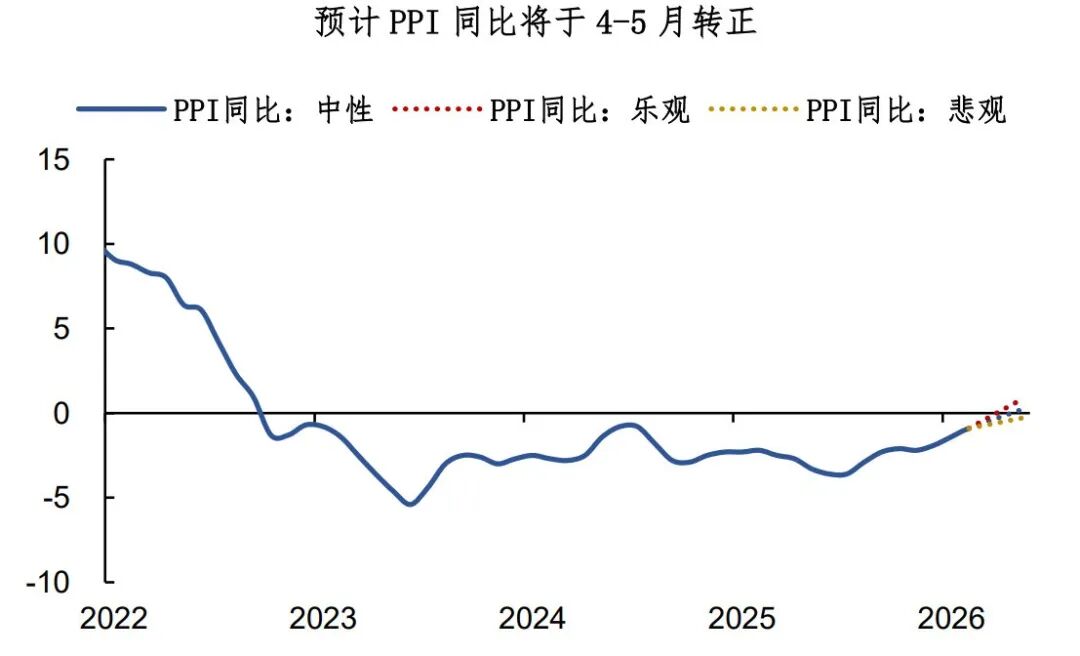
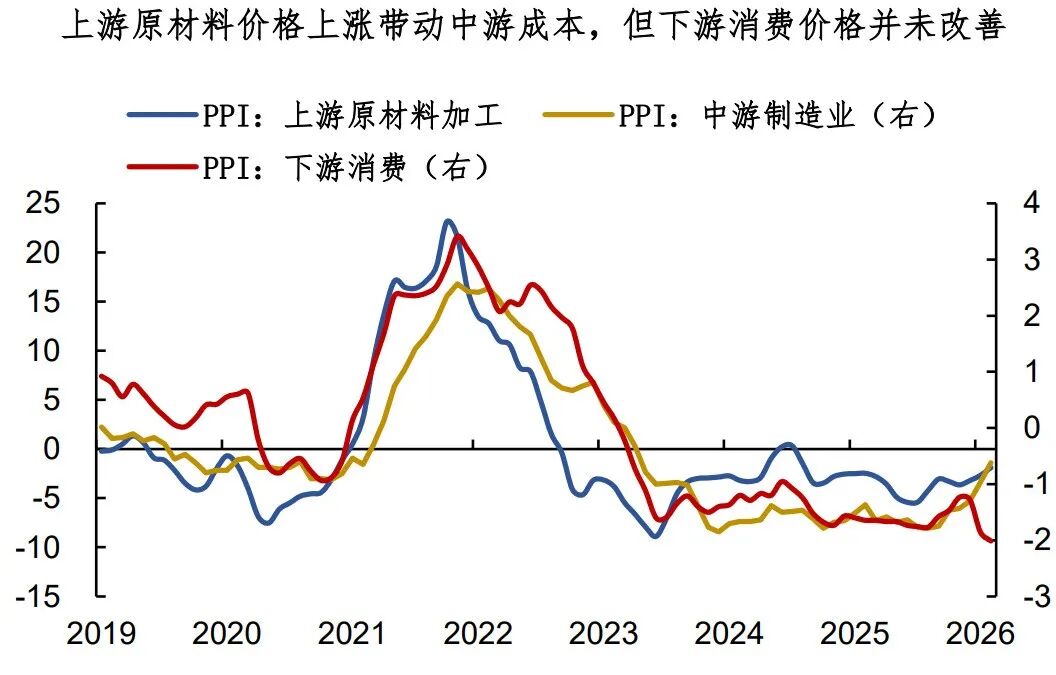
However, from a medium-term perspective, “imported inflation” has yet to drive up consumer goods prices, making it hard for monetary policy to influence the interest rate center.Looking at the household sector, the current data across income, employment, retail, real estate sales, and credit are all neutral to slightly weak, so a supportive monetary policy stance needs to continue. Overall easing is just a matter of time.
Since the direction of monetary policy is unchanged and bond yields remain within a range, the return of allocation behavior is still an important signal.In terms of relative value, the 10-year government bond yield of 1.8%-1.9% is already close to the actual return on loans, so the allocation value has rebounded. Of course, the sustainability of allocation activities under cross-quarter effects remains to be seen, but at least the current long-end prices are somewhat attractive.
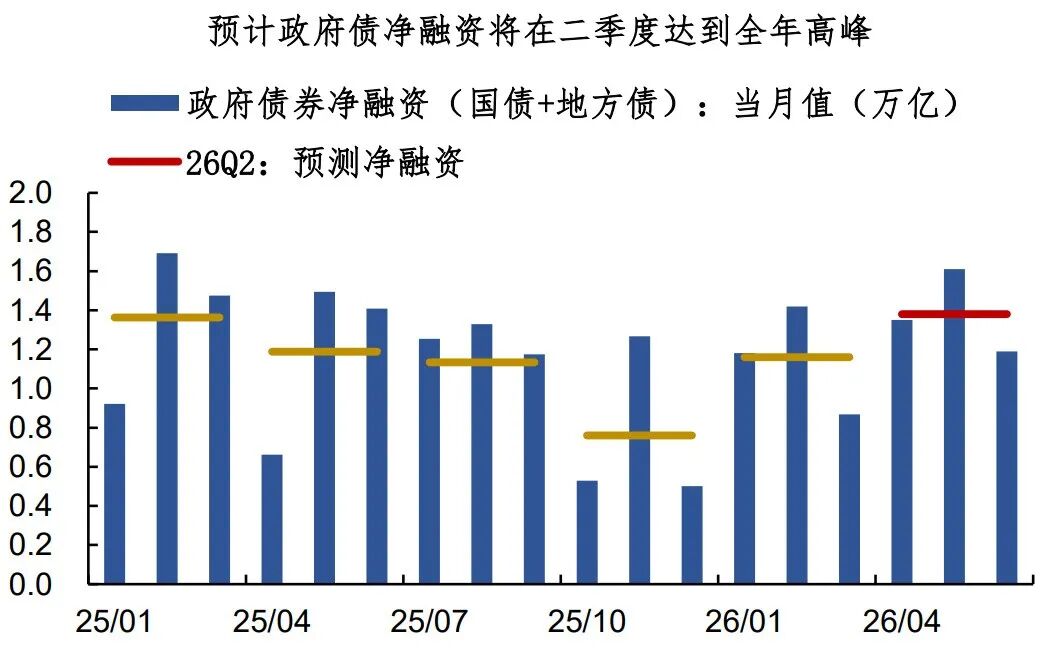
In terms of timing, the next wave of fiscal stimulus is worth watching, especially as the issuance of ultra-long special government bonds begins, with fiscal strength possibly peaking around May.For 2025 and 2026, fiscal moves have been somewhat brought forward. Analyzing based on issuance plans and maturity volumes, net government bond financing in Q2 (expected to be 4.2 trillion RMB) is likely to reach an annual high.
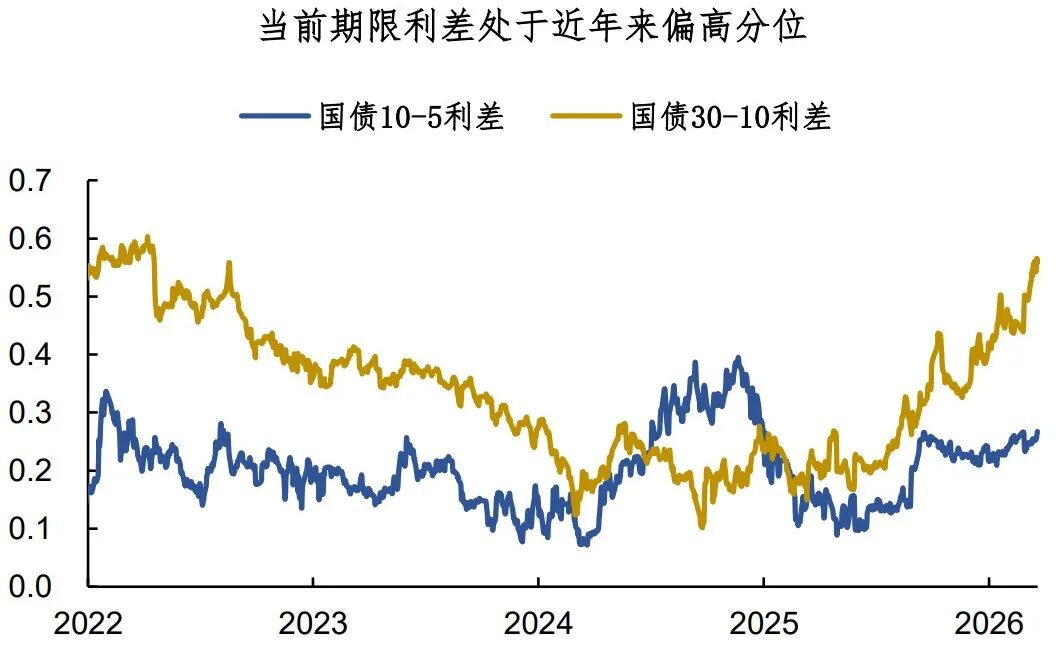
Overall, we believe that inflation and fiscal factors will provide medium-term support for a relatively high term spread, but in terms of pace, the bond market is not pessimistic in April.The monetary policy stance remains unchanged, so carry trades in medium-term maturities (such as 5-7Y policy bank bonds) are a good choice.
To summarize today's discussion:
1. As long-term interest rates rise, institutions have recently resumed allocation activities. Since the direction of monetary policy has not changed and bond yields are still oscillating in a range, allocation behavior remains an important signal;
2. We expect year-on-year PPI to possibly turn positive in April-May, and fiscal strength may peak around May. Both these factors structurally support term spreads, with the current 30-10 and 10-5 year spreads at relatively high levels in recent years;
3. In terms of timing, the bond market is not pessimistic in April overall. With the monetary policy stance unchanged, carry trades in medium-term maturities (like 5-7Y policy bank bonds) are a good choice.
Disclaimer: The content of this article solely reflects the author's opinion and does not represent the platform in any capacity. This article is not intended to serve as a reference for making investment decisions.
You may also like
U.S. Treasury sell-off intensifies! 7-year Treasury auction sees weak demand, Treasury buyback falls short of the cap again, municipal bond yields hit highest in 15 years
On Thursday, the yield on the U.S. Treasury Department's $44 billion 7-year note auction soared to 5.085%, marking a historical high for this maturity. The allocation ratio to overseas investors dropped to a near two-year low. The Treasury's expanded repurchase operations only reached 68% of the cap, lower than the previous 86%, indicating less liquidity support than expected. The pressure spread to the U.S. municipal bond market, with the 30-year yield breaking above 5%, the highest since 2011, and the scale of sell-off reaching levels unseen since the early days of the pandemic. On Thursday, the yield on the 10-year U.S. Treasury exceeded 5.2% for the first time since 2007.
Macron: France will provide military aid to Saudi Arabia to protect the Red Sea Yanbu oil facilities
Macron stated that France will deploy troops to Yanbu and provide radar systems and defense systems. He emphasized that the mission is to protect Yanbu facilities, not to intervene in regional conflicts. Last Friday, he mentioned that after the blockage of the Strait of Hormuz, Saudi Arabia's East-West oil pipeline temporarily became a key alternative transport route, but oil shipments through the pipeline dropped sharply due to attacks on Yanbu by Yemeni Houthi forces.
XRP $10 Target Remains Unmet Nearly Nine Years After 2017 Forecasts
Crypto prices
More


