
Tensions Rise Between the US and Iran, But These Central Banks Are Selling Gold? The Reasons May Not Be What You Think

Huitong Network, April 7th—— This article provides an in-depth analysis of the underlying logic behind the divergence in the movements of gold, crude oil, and the US dollar amid escalating US-Iran tensions. As the April 8th ultimatum approaches, the market is in a precarious "terrifying balance" on the eve of volatility.
On Tuesday (April 7th), the nerves of the global financial markets are tightly focused on the evolution of the Middle East situation. Since the escalation of US-Iran tensions on February 28, 2026, the conflict has entered its sixth week. Despite rumors last week that Pakistan’s mediation had entered a “critical stage,” the US’s “April 8th ultimatum” still hangs over the market like a Sword of Damocles.
Such an environment of extreme uncertainty would typically be the moment for gold to shine as a safe haven asset, yet the actual market performance displays a strange divergence: As US-Iran relations become increasingly tense, international gold prices recorded their worst monthly performance since 2008 in March. Meanwhile,
In reality, this divergence is not a failure of the risk-hedging logic, but rather a secondary disaster caused by war—liquidity crises and soaring energy costs are reshaping the short-term trends of major asset classes.
Why are some central banks selling gold even as tensions rise?
To understand this seemingly contradictory phenomenon, it is necessary to look beyond appearances: The reason some countries are selling gold is not because they are “bearish” but because they are in “emergency mode.”
The stalemate in US-Iran relations has directly resulted in shipping disruptions in the Strait of Hormuz, leading to
Gold is a “strategic reserve” for de-dollarization in times of peace, but in war-driven inflation crises, it becomes “doomsday survival cash.” With the
It should be clarified that central banks overall have not changed direction. According to well-known institutions, global central banks are still expected to be net buyers of 850 tons of gold in 2026. Major countries like China have increased their holdings for 17 consecutive months. This divergence in actions between major and minor economies, and between importers and exporters, precisely illustrates the uneven impact of war on the global economy.
In-depth technical analysis and range forecasts for each asset
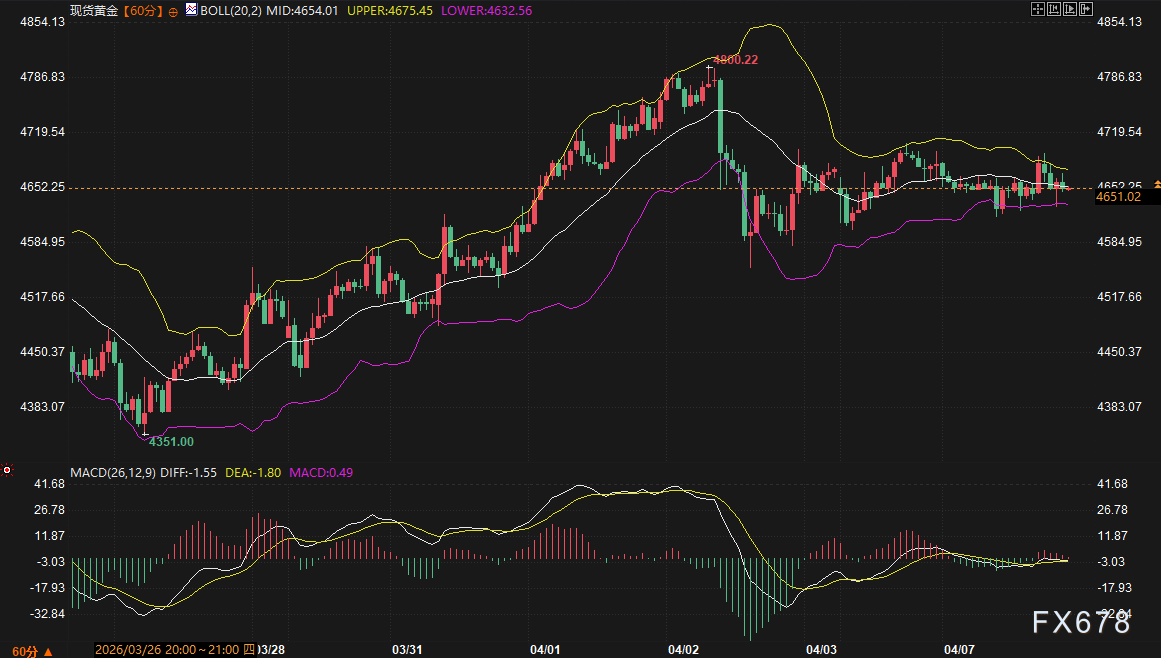
On the 60-minute chart, spot gold is currently quoted at
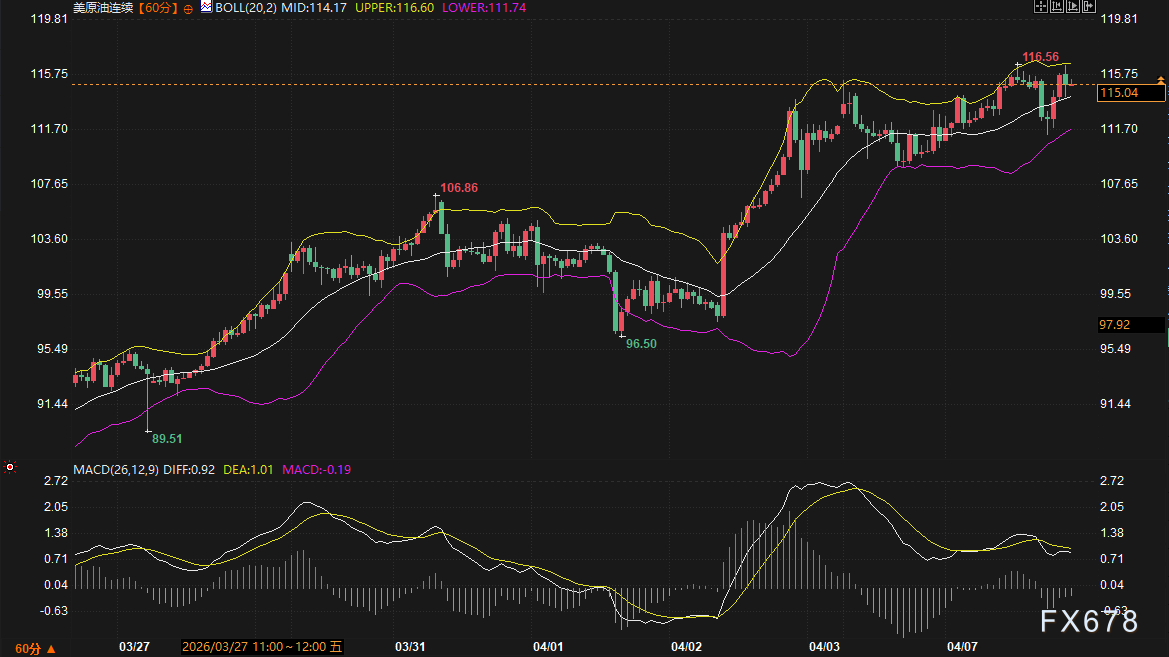
Crude oil prices have shown great strength recently, forming a V-shaped rebound. On the 60-minute chart, prices are at
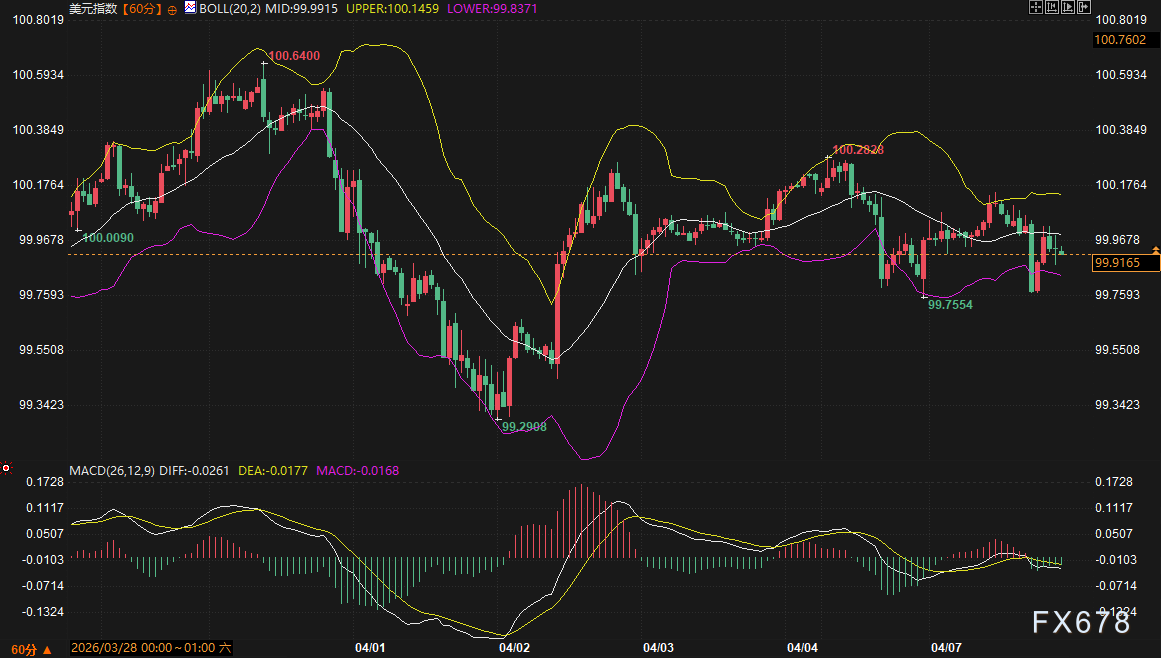
Outlook for the next 2-3 days
The next 48-72 hours will be a window period for determining short-term trends.
First,
Second,
Lastly,
【Frequently Asked Questions】
Answer: Not at all. The current selling is mainly a forced liquidity operation by countries like Turkey due to currency crises and energy deficits triggered by war. Meanwhile, countries like China and India are still accumulating, indicating that gold’s strategic role as a hedge against US dollar credit risk remains intact.
Answer: The current mild correction is technical. Since oil prices surged from around
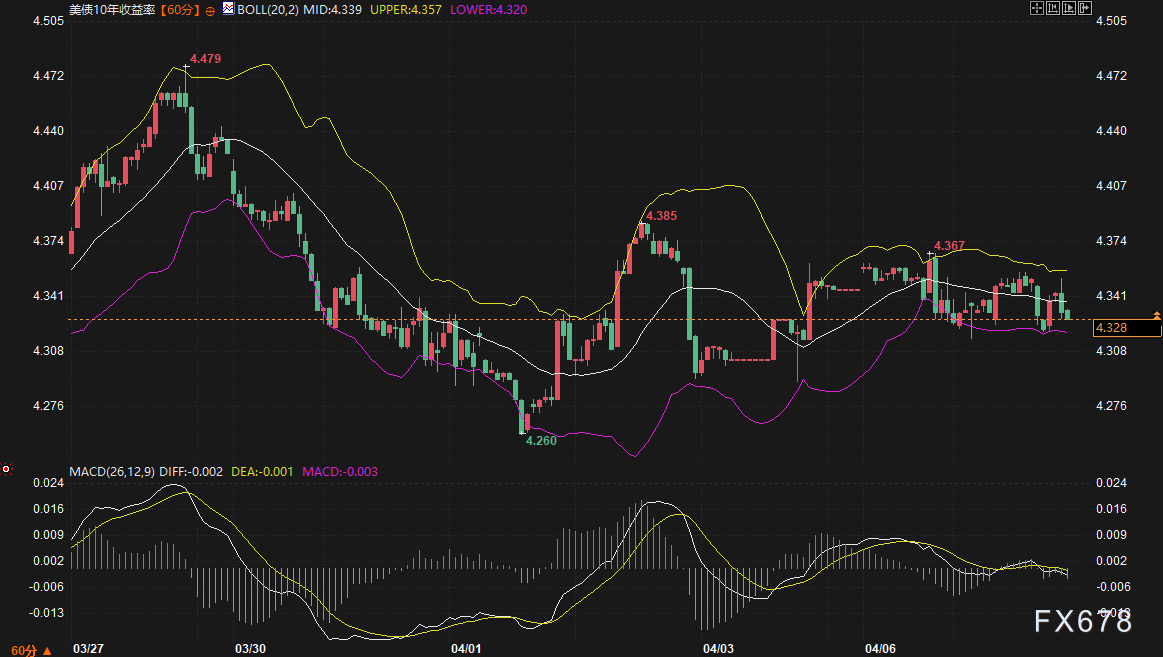
Answer: It acts as a “ceiling” effect. High yields mean holding non-interest-bearing gold incurs large opportunity costs. Unless risk-aversion can outweigh the yield pressure, gold prices will have difficulty breaking previous highs.
Answer: Tariff remarks usually boost inflation expectations and benefit the US dollar. In the current war context, such comments further reinforce market expectations that "high interest rates will persist longer," indirectly suppressing gold’s valuation.
Answer: The most critical factor is Iran's response to the US April 8th ultimatum and the actual navigation status of the Strait of Hormuz. Any news of an escalation in the blockade or an unexpected ceasefire could instantly break the current volatility ranges for all related asset classes.
Disclaimer: The content of this article solely reflects the author's opinion and does not represent the platform in any capacity. This article is not intended to serve as a reference for making investment decisions.
You may also like
Agent "reshapes" the service industry! Muse reignites "panic" and financial stocks "take a hit"
On Tuesday, the US stock market's financial sector plunged about 2% in a single day. Institutions such as JPMorgan Chase, Wells Fargo, and Charles Schwab saw their largest declines in months. Insurer Allstate and travel booking platform Booking Holdings were also affected. Analysts pointed out that AI agents can automatically perform price comparisons and bill management, directly disrupting business models that rely on "consumer inertia."
OpenAI and Anthropic Launch "Low-Cost Models" on the Same Day, Kicking Off a "Price War"
Anthropic launched Claude Opus 5.5, with costs 40% lower than the previous generation; OpenAI released Sol and Luna, priced 50% lower than the previous series. The driving force behind these price reductions is the continued market share expansion of Chinese open-weight models. Additionally, Anthropic is using this opportunity to lay the groundwork for the largest tech IPO in history, while OpenAI aims to reverse its sluggish growth from earlier this year.
From "Shovel Sellers" to "Shovel Makers": How Innodata (INOD.US) Achieved a Transformation with the Tailwind of Meta AI
Overnight, U.S. stock Innodata surged 15% in a single day, directly triggered by a research report from Hunterbrook Capital. The report indicated that Meta's newly launched personal AI agent, Muse, is likely to achieve significant success, and Innodata is likely one of Meta's largest data service clients.
ECB Governing Council Member Nagel: If energy prices remain high, interest rates may need to be raised to a moderately restrictive level
Joachim Nagel, a member of the European Central Bank's Governing Council and President of the German Bundesbank, said that if energy prices remain high, the European Central Bank may have to raise interest rates to levels that restrain economic growth.
Crypto prices
More


