
The Strait of Hormuz blockade enters the seventh week; Goldman Sachs: This is not a repeat of 2022 inflation, there is still room for two rate cuts this year

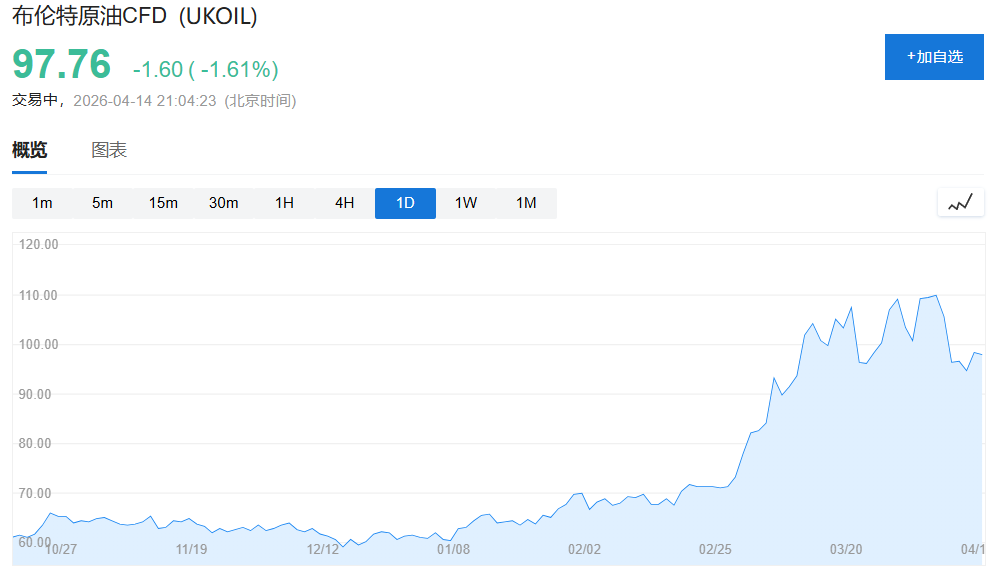
The US-Iran conflict continues to escalate. Goldman Sachs believes that this round of energy price shocks will not repeat the nightmare of the inflation surge in 2022, and maintains its forecast for two rate cuts within the year.
Talks between the United States and Iran failed to reach a peace agreement last weekend in Islamabad. According to reports, a US-led blockade operation involving 15 warships began in the Strait of Hormuz early Monday morning. Against this backdrop, Goldman Sachs analyst Jessica Rindels provided clients with an economic analysis framework to address the current "fog of war" and energy turmoil. The core judgment is that the conflict will bring a mild stagflation shock, but its intensity will be far less than that of the Russia-Ukraine war.
The direct implication of Rindels’ framework for the market is: inflation will rise somewhat, economic growth will slow, and the unemployment rate will climb slightly. However, the shock is not strong enough to trigger a comprehensive supply chain crisis, nor will it force Federal Reserve Chairman Powell to resort to panic hikes. Based on this, Goldman Sachs has raised its inflation forecast, reduced its GDP forecast, and slightly raised its unemployment rate forecast.
Oil Price Shock Mechanism: Erodes Purchasing Power but Does Not Trigger a Capital Expenditure Boom
Rindels’ analytical framework first clarifies the transmission path of rising oil prices. Higher oil prices will erode household purchasing power, push up overall inflation, and compress consumer spending—which is the core logic behind Goldman Sachs’ inflation upgrade and GDP downgrade.
Notably, Rindels explicitly points out that she does not expect rising energy prices to trigger a capital expenditure boom in the US shale sector. She believes oil and gas producers remain too cautious and will not respond to what is expected to be only a temporary period of high oil prices with aggressive capacity expansion. This means that the impact of this round of energy shocks on the economy will be more evident as downward pressure on the consumption side, rather than upward support from industry. Thus, the economy receives less cushioning and bears more drag.
Rate Cut Path: 25 Basis Points Each in September and December
Within the macro framework above, Goldman Sachs maintains its forecast for two rate cuts within the year. Rindels states that a rising unemployment rate and a moderate further decline in core inflation—where the effect of tariffs gradually fades from year-on-year calculations, which is expected to more than offset the upward pressure transmitted from energy prices—will together serve as strong grounds for the Federal Reserve to cut rates by 25 basis points each in September and December.
However, Rindels also acknowledges the uncertainty. She says she wouldn’t be surprised if, by then, some FOMC members oppose the rate cuts on the grounds that inflation remains too high, and that the committee’s final decision will be hard to predict—especially considering the transition of leadership at the Federal Reserve and Powell’s possible departure.
Key Differences from 2022: Different Shock Intensity
A core judgment in Goldman Sachs’ current framework is to distinguish the present situation from the inflation shock triggered by the Russia-Ukraine war in 2022. Rindels believes that after seven weeks, the US-Iran conflict’s disturbance to global supply chains is not on the same level as the Russia-Ukraine war, and thus does not have the conditions to trigger a surge in comprehensive inflation similar to 2022.
In Goldman Sachs’ view, the nature of this shock is closer to "mild stagflation" rather than "out-of-control inflation," which is also the fundamental reason for maintaining a rate cut forecast instead of shifting to hike expectations. Meanwhile, another Goldman Sachs analyst, Shreeti Kapa, also pointed out in a separate report that the stock market's "final showdown" is approaching, reflecting a high degree of internal consensus about the market’s current critical juncture at Goldman Sachs.
Disclaimer: The content of this article solely reflects the author's opinion and does not represent the platform in any capacity. This article is not intended to serve as a reference for making investment decisions.
You may also like
Global bond market sell-off intensifies: 10-year JGB yield hits 30-year high, 10-year US Treasury continues to fall, US stock index futures decline, oil rises, gold falls
US stock index futures declined, with Nasdaq futures extending their intraday loss to 0.6%, and S&P 500 futures falling by 0.4%. Japan's 10-year government bond yield surged 10 basis points on Thursday to 3.075%, reaching its highest level since August 1996. Brent crude rose 0.2%, while gold edged down by 0.2%, trading near $4,280 per ounce.
Altcoin FET Sits Inside a Massive Macro Uptrend, Experts Expect Bullish Comeback for FET
Morgan Stanley and Dell (DELL.US) COO have an in-depth discussion: "This time is different"—AI agents are not just another refresh cycle, but a TAM expansion; the probability of a $756 bull market scenario is rising
Morgan Stanley released a research report stating that after a one-on-one meeting with Jeff Clarke, Chief Operating Officer at Dell headquarters, they have gained a deeper understanding of their bullish thesis on Dell. However, they still maintain a "neutral" rating and a target price of $511.
US Stock IPO Preview: Rapid Revenue Expansion, How Will TTG International (TTG.US) Seek New Growth Opportunities in Cross-Border Logistics?
In the future, changes in the company's business scale, customer structure, and profitability will be key dimensions to observe its growth potential.
Crypto prices
More


