
U.S. stocks close lower across the board: AI growth concerns resurface, geopolitical tensions drive up oil prices, and earnings season divergence intensifies

On April 29, 2026, in the Eastern Eighth District, the US stock market fluctuated and closed lower amid multiple adverse factors. Dragged down by rumors of underwhelming growth from star AI enterprise OpenAI, combined with surging energy prices triggered by escalating geopolitical tensions in the Middle East, market risk aversion sentiments rose, putting collective pressure on technology stocks, especially the semiconductor sector.
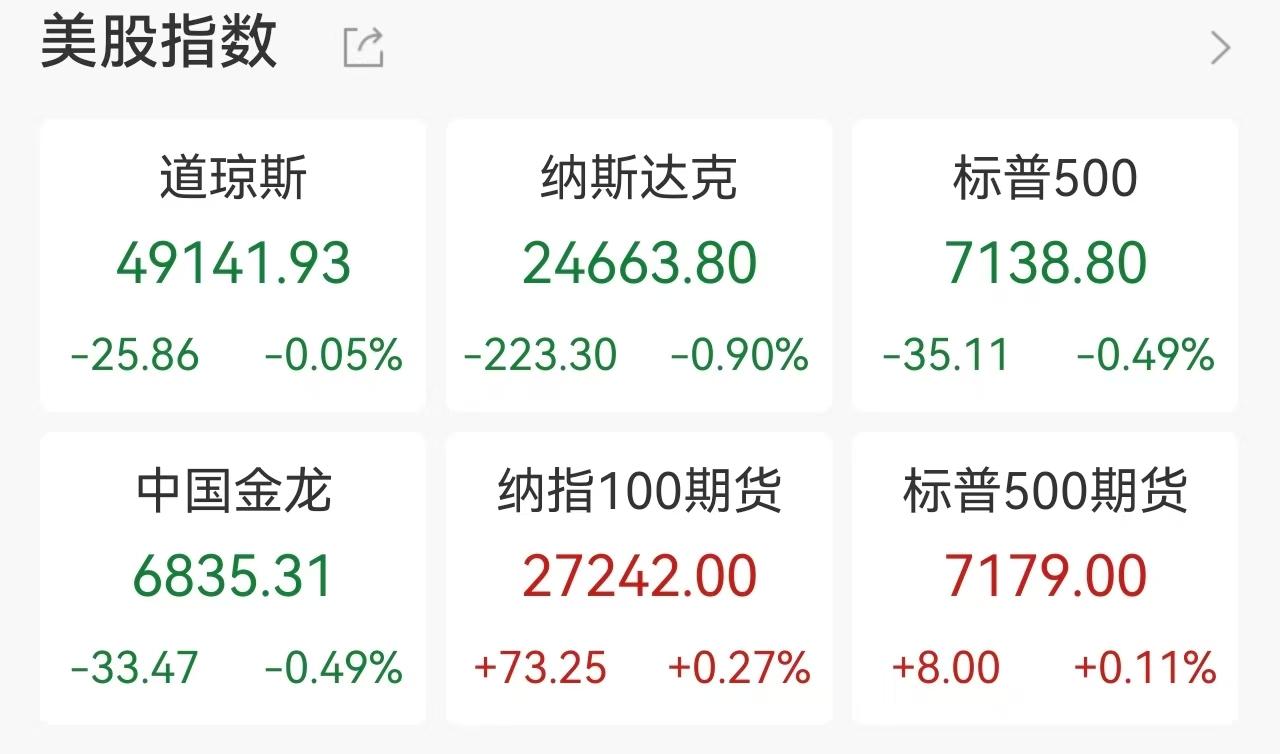
At the close, the Dow Jones Industrial Average fell 25.86 points, or 0.05%, to 49,141.93; the Nasdaq Composite Index slipped 223.30 points, or 0.90%, to 24,663.80; and the S&P 500 Index declined 35.11 points, or 0.49%, to 7,138.80.
Renewed Doubts Over AI Growth
The market’s focus centered on the artificial intelligence sector. Previous reports indicated that OpenAI had failed to hit internal sales and user growth targets, and CFO Sarah Friar expressed concerns regarding future revenue growth. This news directly triggered deep doubts about whether massive investment in AI could generate returns, resulting in a collective slump of related concept stocks.
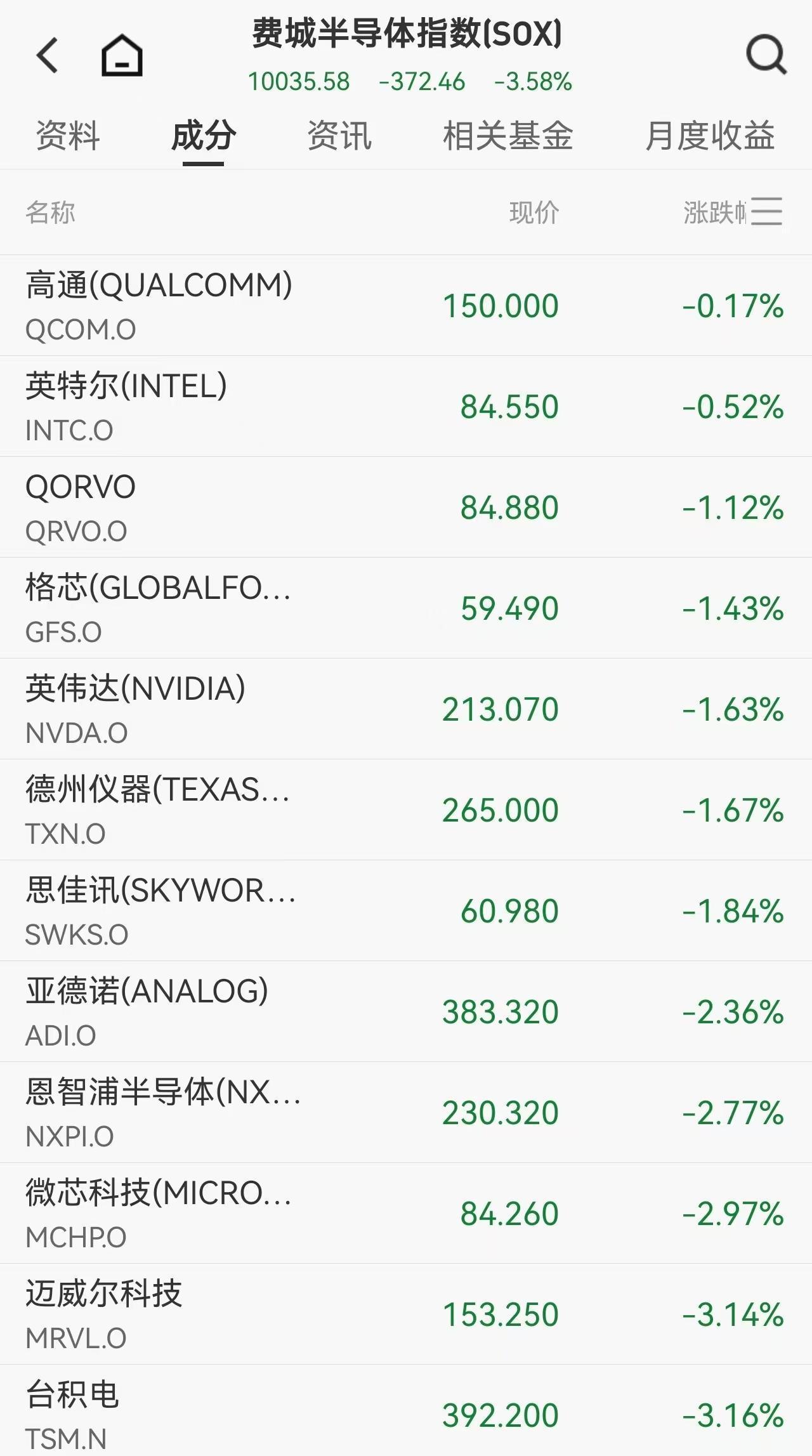
Chip giants plummeted: the Philadelphia Semiconductor Index (SOX) plunged 3.58%, marking the largest single-day decline in recent times, with none of its 30 constituents spared. Of these, Broadcom fell 4.39%, Rambus plummeted 21.26%, and Arm Holdings dropped 7.98%.
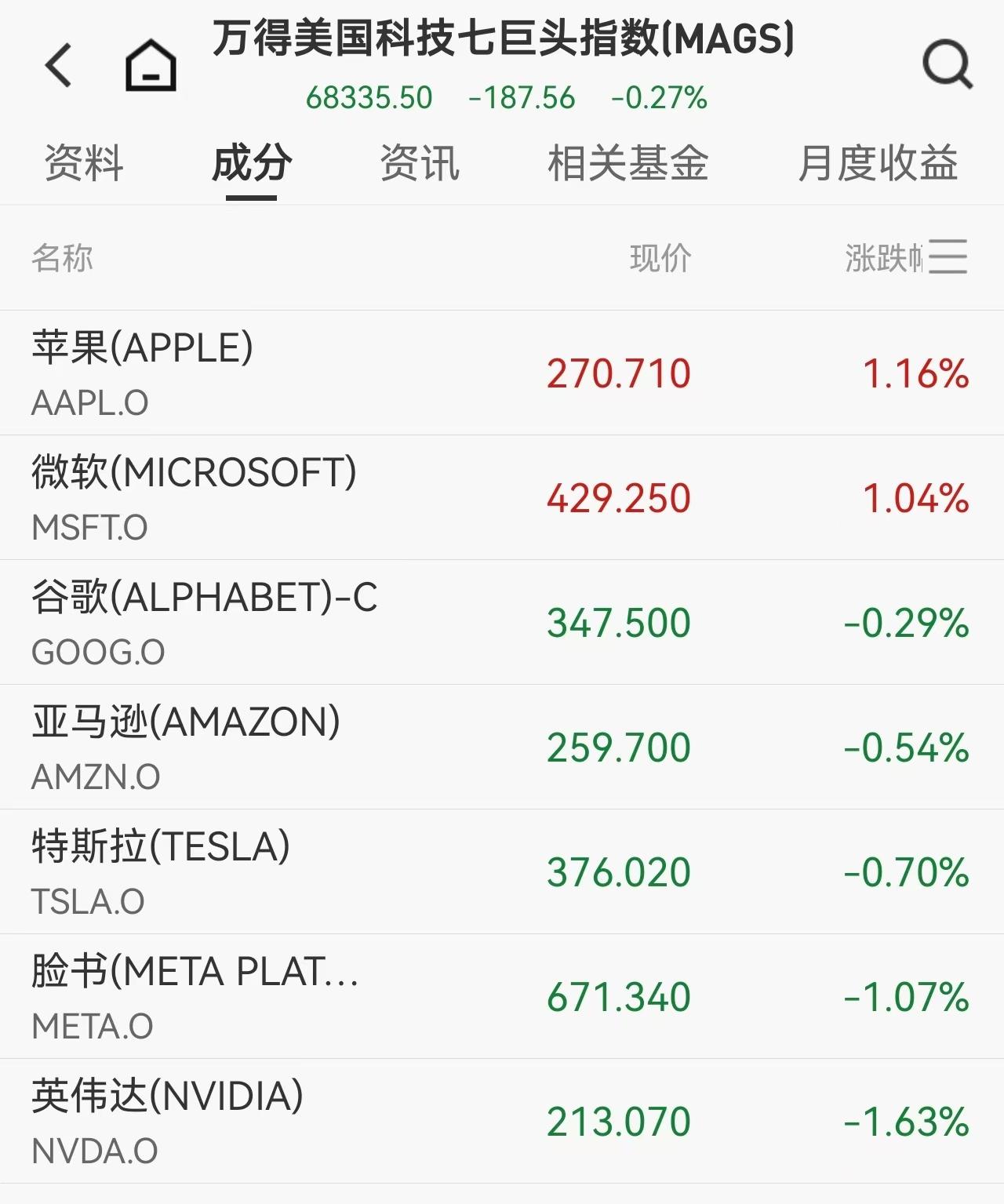
Technology Magnificent Seven saw a split: NVIDIA fell more than 1.5%, Meta dropped 1.07%, and Amazon declined 0.52%. However, Apple and Microsoft bucked the trend with solid fundamentals, both rising more than 1%.
SoftBank Group (ADR), as one of OpenAI’s main investors, saw its over-the-counter market price plunge 12.11%, becoming a market sentiment barometer.
Energy Stocks Buck the Trend While Most US-listed Chinese Stocks Pull Back
Due to geopolitical factors, international oil prices rose for a seventh consecutive trading day. Brent crude oil futures prices briefly broke the $110/barrel mark, closing up 2.80% at $111.26/barrel; WTI crude futures rose 3.69% to close at $99.93/barrel. As a result, energy stocks remained firm, as traditional energy giants like ExxonMobil and Chevron saw their share prices rise.
The Nasdaq Golden Dragon China Index fell 0.49%. Among popular US-listed Chinese stocks, Kingsoft Cloud tumbled over 6%, and GDS Holdings fell nearly 5%. Only certain new energy vehicle manufacturers and education stocks performed notably, with NIO and Huazhu Group rising against the trend.
After-hour Moves: “V-shaped” Reversal in the Storage Sector
Although storage stocks declined during regular trading, positive after-hours news reversed market expectations. Seagate Technology reported third-quarter results with both revenue and earnings per share hitting new records, vastly exceeding market expectations.
Boosted by this, Seagate’s after-hours stock price surged nearly 17%, sparking a collective rebound of storage concept stocks such as Western Digital (WDC) and SanDisk. This phenomenon suggests that despite doubts about the general-purpose AI computing power demand, some specific subsectors remain highly prosperous.
Geopolitics and Earnings Season: A Dual Shift
Geopolitical risk was another driving force behind market volatility. Iran announced it had achieved “absolute control” over the Strait of Hormuz and required passing vessels to pay a passage fee. Meanwhile, the UAE declared its official exit from OPEC and the OPEC+ mechanism effective May 1 (UTC+8), seeking to increase production independently. This “withdrawal” has heightened concerns about a reset in the global oil supply framework, leading to sharp short-term oil price swings.
This week is “Super Earnings Week” for US equities, with a heavy concentration of technology giants reporting results. Against the backdrop of negative news around OpenAI, the market is waiting for upcoming earnings from Alphabet, Amazon, Meta, and Microsoft to gauge whether the commercialization of AI technology is truly facing a bottleneck.
Currently, the market is in a tug-of-war between “AI belief” and “real-world returns.” On one hand, OpenAI’s performance concerns have stoked worries about an industry bubble; on the other hand, Seagate’s outperforming results have highlighted strong demand on the hardware side.
In the short term, with oil prices remaining high and the Federal Reserve policy meeting approaching, market volatility may remain elevated. Investors should closely monitor soon-to-be-released tech giant earnings reports and the evolving situation in the Middle East. Before key earnings drop, market sentiment will likely stay cautious, and investors are advised to focus on defensive sectors and leading players with strong performance certainty.
Disclaimer: The content of this article solely reflects the author's opinion and does not represent the platform in any capacity. This article is not intended to serve as a reference for making investment decisions.
You may also like
From ICU to KTV! The Polarized "AI Narrative" Leaves Investors "Exhausted"
In just two weeks, the Nasdaq 100 experienced an extreme rollercoaster: first losing $600 billion in market value due to “AI threat” concerns, then rebounding to reclaim $3 trillion thanks to the viral Meta assistant. Analysts believe that market sentiment is swinging violently between fear and greed, detached from fundamentals. The turmoil has driven Nvidia’s valuation to a ten-year low, intensified the bull-bear divide, and the high volatility driven by narratives has become a long-term norm for investors. This week, Micron will release its financial report; regardless of the outcome, the sharp swings in market sentiment are unlikely to subside.
Weekly Preview: Micron (MU.US) earnings test the quality of AI infrastructure, OpenAI and White House AI meeting resonance, PCE and Nonfarm Payrolls set the tone for October interest rates
This week, the market's focus will shift from politics and product launches to financial reports and macroeconomic data.
"Over 5% 10-Year US Treasury Yield" Fails to Crush AI Investment Frenzy—Is the Real "AI Kill Line" an Inverted Yield Curve?
The bond market is gradually sending warning signals to the economy, indicating that the Federal Reserve's series of interest rate hikes will begin to shift market sentiment, making people increasingly concerned that the US economy may fall into stagnation.


Crypto prices
More


