
When AI Begins to "Take Over Jobs": Has the Turning Point in the Job Market Already Arrived?

On April 19, the humanoid robot marathon in Beijing Yizhuang showcased a highly symbolic window into the current state of technological progress. Compared to last year, robots of the same type have made significant improvements in movement stability, adaptability to complex environments, and the ability to perform tasks continuously. In just one year, technological iteration has accelerated remarkably, and humanoid robots are moving from demonstrative technology toward being a productive element. The rapid iteration of robots and AI may impact the labor market at a speed far exceeding previous expectations.
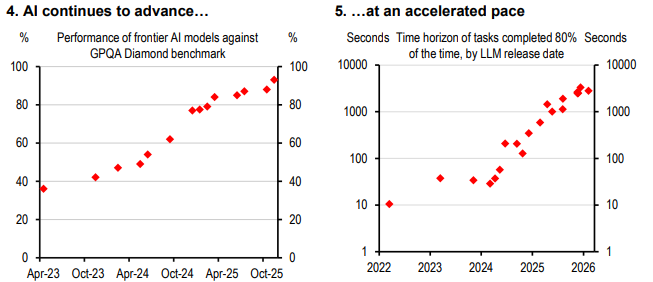
Since the launch of ChatGPT, AI capabilities have shown exponential growth and have been rapidly integrated into enterprise production processes, evolving from initial auxiliary tools to process automation and even partial decision-making replacement. At the enterprise level, AI adoption has shifted from pilot applications to system-wide deployments. Although AI's disruption of the workforce is currently more significant on a micro than a macro level, its impact is beginning to spread from efficiency improvements to the employment stage.
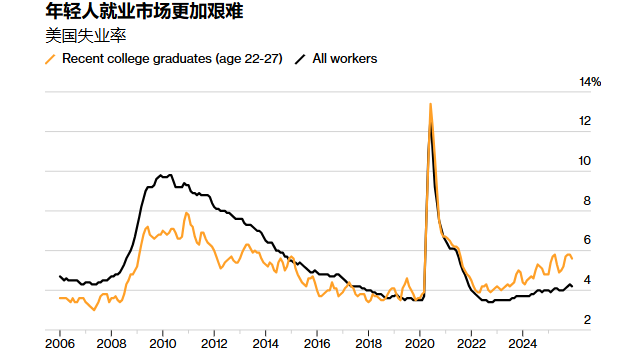
Data already shows a glimpse of this impact. For example, in the United States, positions with high AI exposure have seen a noticeable decline in employment numbers, with certain technical posts dropping by more than 10%. Entry-level positions, which form the base of the career ladder, are the first to be replaced. The unemployment rate for young workers aged 22-27 in high-exposure occupations has increased by 1.1 percentage points since 2023, while in low-exposure occupations, it has only risen by 0.2 percentage points.
Labor Market: From Cyclical Fluctuations to Structural Shocks
If AI adoption enters an exponential expansion phase, the labor market will no longer only exhibit cyclical fluctuations but will enter a more intense stage of structural reconfiguration.
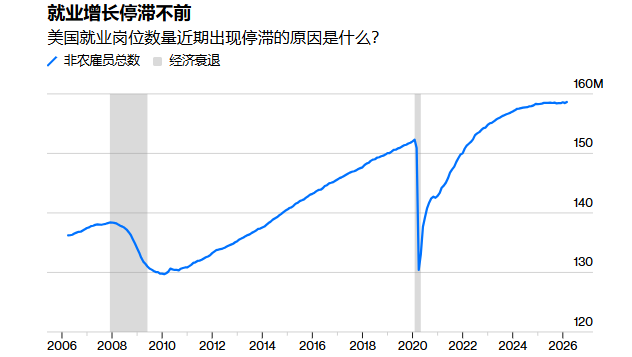
In the short term, AI will mainly increase frictional unemployment by replacing certain tasks. Displaced workers will require time to be redeployed to new positions, thereby pushing up the short-term unemployment rate. This impact will be most pronounced among young people and entry-level positions, as these jobs are often highly standardized, routine, and easily replaceable.
Disclaimer: The content of this article solely reflects the author's opinion and does not represent the platform in any capacity. This article is not intended to serve as a reference for making investment decisions.
You may also like
Here’s why BlackRock believes autonomous AI systems will drive next stablecoin boom
BlackRock expects exchange-traded compute futures as it pitches stablecoins for AI agents
Report: TSMC to Raise Wafer Foundry Prices by 3% to 6% Starting January Next Year, Order Visibility Extended to 2030
According to media reports, TSMC's advanced and high-priced processes such as 2nm and 3nm have seen the largest price increases; mature and specialty processes are subject to individual negotiation based on products, capacity utilization, and customer conditions. Currently, TSMC's 8-inch fabs have a capacity utilization rate exceeding 100%, and processes below 45nm are at full capacity. The construction of AI data centers is not only driving demand for GPU and HBM, but also boosting orders for mature processes such as PMIC, MCU, and analog ICs.
U.S. Treasury plans to repurchase up to $6 billion in long-term bonds, 30-year yield hits highest since 2007
This is the second round of enhanced long-term bond buybacks by the Treasury, this time focusing on 20- to 30-year government bonds. After the announcement of the planned upper limit, the yield on 30-year U.S. Treasury bonds continued to rise, at one point exceeding 5.4%. In the first round of enhanced buybacks two weeks ago, the upper buyback target was also $6 billion, which was lower than some market participants had expected, and the actual buyback amounted to only $5.2 billion due to insufficient competitive bidding, according to the Treasury.
Crypto prices
More


