
Panoramic View of Four Major Assets: Exclusive Advantages of US Hegemony and Trading Turning Point Signals

Huitong Network May 27 — In the era of weaponized demand, the United States builds its economic hegemony on the pillars of US dollar political premium, capital siphoning via US Treasuries, the safe-haven status of US equities, and dominance in consumption demand. However, signals of a turning point in this hegemony are gradually surfacing, such as de-dollarization, declining demand for US Treasuries, and hidden risks in US equities.
In traditional macro models, the US Dollar Index (DXY) is driven mainly by the interest rate spread between the Federal Reserve and other central banks (such as the US-Germany yield spread) and global risk appetite. But after the tariff wars and geopolitical conflicts, the dollar has shown a unique “political premium”:
Moreover, the dollar exhibits asymmetry in the foreign exchange market: when the US uses tariffs as a leverage tool, the impacted countries’ economic outlook and currencies (such as the euro, pound) collapse first, while the dollar, as the “pressure” currency, instead rises due to capital inflows and safe-haven demand. This endows the DXY with an inherent asymmetric upward edge during trade conflicts.
It’s worth noting that if US core allies in Europe or Asia seek substantial independence in security (for example, if Europe achieves a milestone in defense autonomy), or if the non-US bloc successfully establishes a completely dollar-bypassing, sufficiently liquid bilateral/multilateral settlement mechanism for physical commodities, this asymmetry will be weakened.
Once allies are no longer willing to sacrifice “markets” for the “security” the US offers, America’s ability to impose “access taxes” will decline; the dollar’s political premium will be diluted, DXY will revert to cyclical behavior, and in the context of the current US-Iran conflict, US control over Middle Eastern markets is being weakened.
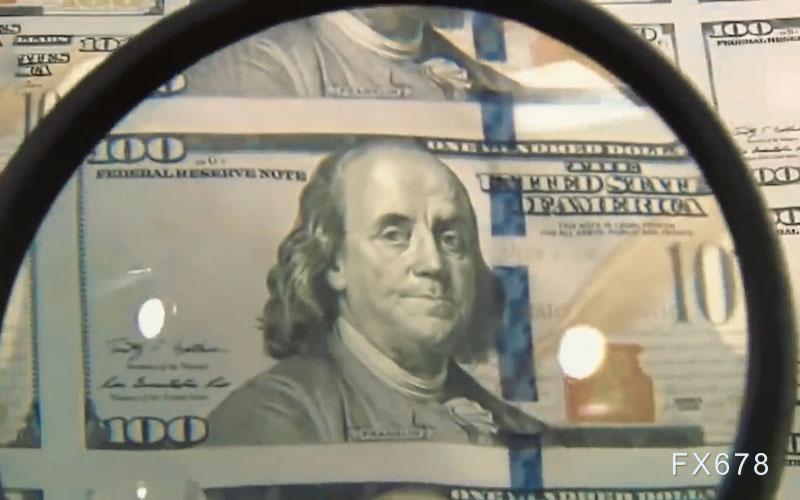
US Treasuries: The World’s Only “Super Capital Vacuum”
This means that even when the US abuses financial sanctions (e.g., freezing foreign reserves), the world’s main pools of wealthy funds and surplus nations (even potential adversaries) have no alternative asset pools with the same depth or liquidity as Treasuries, forcing them to keep their enormous funds locked in the US bond market.
The US government can simultaneously implement rule-breaking tariff policies and leverage geopolitics to ensure that allies (such as Japan, Korea, Europe) continue to buy US Treasuries, securing the privilege of low-cost financing.
But when foreign central banks start increasing gold and physical assets and reducing their allocations to Treasuries, this framework may break. Coincidentally, long-term US Treasuries (10Y/30Y) have seen their auction bid-to-cover ratios plummet recently — a sign of diminishing appeal.
Should countries holding US Treasuries collectively sell due to dollar shortages or in retaliation, the yield curve will steepen, causing US government interest expenses to skyrocket.
US Equities: The Global Beta Premium “Safe Haven”
US stock markets continue to absorb global profits while maintaining valuation monopolies, reaching their highest weighting in global equity indices in 50 years, supported mainly by powerful macro capital flows, not just fundamentals.
Often, fundamentals and capital flows are disconnected. When the US imposes tariffs and trade barriers on the world, overseas multinationals and domestic manufacturers see profit expectations hit.
This dynamic allows US equities to sustain robust inflows despite high rates and lofty valuations.
However, if anti-globalization sentiment leads to harsh breakups of tech giants or extreme tax policies, or if tariff-induced inflation spirals out of control — forcing the Fed to raise real rates high enough to choke the real economy — the game changes.
The strength of US equities heavily relies on “nowhere else to go” for global capital. Once domestic political strife erodes the US competitive or property rights environment, ending this “black hole” appeal, US equities may face a brutal mean reversion of decades-long valuation bubbles.
Commodities: Returning from “Financial Attributes” to “Physical Control”
In commodities, the US lacks absolute resource monopolies (especially for certain key minerals and rare earths), but does have the world’s largest, most powerful end-consumer demand.
By weaponizing this “demand,” the US can forcibly reshape global supply chains.
Russia maintained four years of fighting capacity heavily sanctioned, thanks to oil exports, proving that control over physical assets far outweighs the digital numbers on Wall Street.
Summary:
Currently, the US builds economic hegemony on the dollar, Treasuries, equities, and consumption demand. In times of geopolitical and trade friction, the dollar strengthens, US Treasuries absorb global safe-haven funds, US equities attract ongoing foreign inflows, and commodities are driven by US demand.
But the inflection point for this hegemony is emerging — with allies seeking autonomy, a push for de-dollarization, weakening appetite for Treasuries, rising concerns about US equities, and the growing value of physical assets.
Disclaimer: The content of this article solely reflects the author's opinion and does not represent the platform in any capacity. This article is not intended to serve as a reference for making investment decisions.
You may also like
AI demand drives TSMC to accelerate capacity expansion, 2nm monthly production aims for 120,000 wafers by year-end
According to reports, industry giants such as Apple, Nvidia, and AMD have collectively increased their orders by 10% to 20%, directly boosting TSMC's 2nm monthly production capacity to 120,000 wafers by the end of the year, which exceeds the previous estimate by more than 20% and brings forward the 2027 target by two years. For the first time in history, five factories will ramp up production simultaneously, and the annual compound growth rate of capacity from 2026 to 2028 will reach as high as 70%.
Long-term US Treasury Sell-off Continues! 10-Year Treasury Yield Breaks 5.2% Again, “AI Boom vs. Rising Financing Costs” Narrative Showdown Intensifies
On Monday, oil prices rose and US Treasury bonds were sold off again as former US President Donald Trump rejected Iran's latest proposal to reopen the Strait of Hormuz, heightening concerns about inflation.
Banks Have Been Earning Effortlessly from Idle Funds for Years—Will AI Agents Change Everything?
For years, banks have profited from customers' idle funds, but AI agents may be about to change this situation.
Goldman Sachs: US stocks are showing a "strong index, weak confidence" pattern; catch-up rally may become the main theme of the next phase
Goldman Sachs stated that the current U.S. stock market is showing an unusual pattern: while index performance is strong, investor confidence remains weak. This suggests that the market still has further upside potential, and stocks that previously lagged behind leading AI stocks may soon experience a catch-up rally.

Crypto prices
More


