
Crypto Lobbying Groups Spent 11X More on Republicans Than Democrats

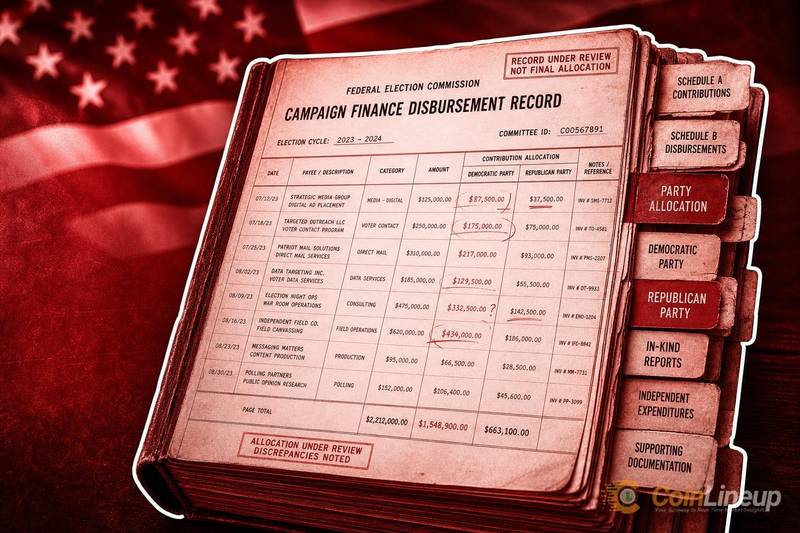

Crypto lobbying groups have reportedly spent 11 times more supporting Republican candidates than Democrats, exposing a stark partisan tilt in the digital asset industry’s political spending strategy.
The 11-to-1 ratio highlights how concentrated crypto industry dollars have flowed toward one side of the aisle. The figure covers spending by crypto-aligned political action committees and lobbying organizations across federal races.
Why an 11-to-1 Partisan Split Stands Out
Industry lobbying typically skews toward the party in power or splits contributions to maintain access on both sides. An 11X gap in favor of Republicans suggests crypto groups are making a deliberate bet on one party’s regulatory posture rather than hedging.
That kind of lopsided spending risks turning crypto regulation into a purely partisan issue. If lawmakers associate digital asset advocacy with opposition funding, bipartisan cooperation on stablecoin frameworks or market structure bills becomes harder to achieve.
The timing matters. The U.S. Senate Banking Committee has been weighing landmark crypto legislation, and how each party perceives the industry’s loyalty could shape votes on those bills. Lobbying dollars do not guarantee policy outcomes, but they do influence which lawmakers take meetings and which proposals get floor time.
This dynamic echoes broader tensions in crypto’s relationship with regulators. Cases like the SEC’s recent enforcement action against a Texas man who allegedly misused $6.2 million in investor funds show that the industry faces scrutiny from both parties, regardless of where campaign money flows.
What This Means for Markets and Industry Sentiment
Political spending patterns do not move token prices directly. But they shape the regulatory environment that investors price into long-term positions. A crypto sector perceived as aligned with one party faces different risks depending on election outcomes.
If Republicans hold or expand power, the spending could pay off through lighter-touch regulation. If Democrats gain ground, the industry may find fewer allies willing to champion its priorities, a scenario that could weigh on sentiment around regulatory frameworks being developed globally.
For traders, the signal is less about immediate price action and more about the policy landscape shaping up for 2026 and beyond. Crypto’s political alignment is becoming a factor that institutional investors watch when assessing regulatory risk, alongside developments like security incidents that test industry credibility.
Detailed breakdowns of 2026 crypto political spending show how individual committees have allocated funds across races, offering a granular look at where the industry is placing its bets.
The 11X gap is a clear signal: crypto’s Washington strategy is partisan by design, not by accident. Whether that approach strengthens or weakens the industry’s position depends on outcomes no lobbying budget can fully control.
Disclaimer: The content of this article solely reflects the author's opinion and does not represent the platform in any capacity. This article is not intended to serve as a reference for making investment decisions.
You may also like
AI demand drives TSMC to accelerate capacity expansion, 2nm monthly production aims for 120,000 wafers by year-end
According to reports, industry giants such as Apple, Nvidia, and AMD have collectively increased their orders by 10% to 20%, directly boosting TSMC's 2nm monthly production capacity to 120,000 wafers by the end of the year, which exceeds the previous estimate by more than 20% and brings forward the 2027 target by two years. For the first time in history, five factories will ramp up production simultaneously, and the annual compound growth rate of capacity from 2026 to 2028 will reach as high as 70%.
Long-term US Treasury Sell-off Continues! 10-Year Treasury Yield Breaks 5.2% Again, “AI Boom vs. Rising Financing Costs” Narrative Showdown Intensifies
On Monday, oil prices rose and US Treasury bonds were sold off again as former US President Donald Trump rejected Iran's latest proposal to reopen the Strait of Hormuz, heightening concerns about inflation.
Banks Have Been Earning Effortlessly from Idle Funds for Years—Will AI Agents Change Everything?
For years, banks have profited from customers' idle funds, but AI agents may be about to change this situation.
Goldman Sachs: US stocks are showing a "strong index, weak confidence" pattern; catch-up rally may become the main theme of the next phase
Goldman Sachs stated that the current U.S. stock market is showing an unusual pattern: while index performance is strong, investor confidence remains weak. This suggests that the market still has further upside potential, and stocks that previously lagged behind leading AI stocks may soon experience a catch-up rally.

Crypto prices
More


