

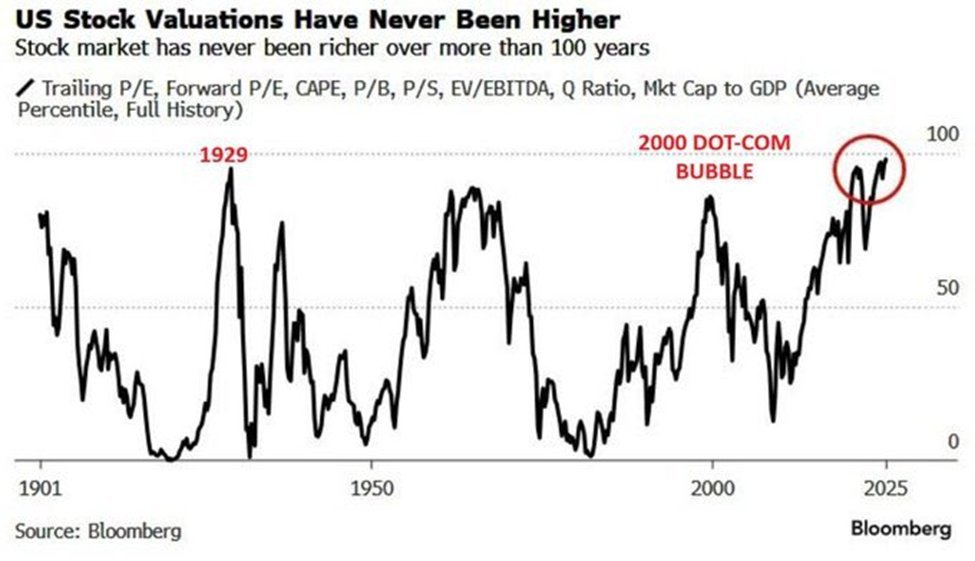
U.S. stock market valuations have risen above levels seen before the 1929 crash, placing equities in one of the most expensive stretches in modern history. Key indicators, including the S&P 500’s Shiller CAPE ratio, now sit well above long-term averages as stock prices continue to climb.
The Shiller CAPE ratio recently stood between 39 and 41, more than double its historical average of about 17. The measure remains below the peak reached during the dot-com bubble in 2000, but it now exceeds levels recorded before the Great Depression.
The rise has largely followed strong gains in a small group of AI-focused technology companies, whose earnings growth has helped drive major U.S. indexes to record highs.
The Shiller CAPE ratio remains one of the most widely followed measures of stock market valuations. The indicator has historically averaged about 17. Recent readings between 39 and 41 place it more than twice that level.
Other long-term valuation measures tell a similar story. Metrics that track earnings, assets, and market prices show investors paying some of the highest premiums seen in decades despite ongoing economic and geopolitical uncertainty.
Several risks could still weigh on the stock market’s recent gains. Inflation remains a concern as it may keep interest rates higher for longer, raising borrowing costs for households and businesses and slowing spending.
Investors are also watching fiscal pressures and stress in private credit markets, which could push bond yields higher and reduce the appeal of equities. At the same time, a softer labour market may weaken consumer spending, a key driver of growth.
Energy prices add further uncertainty. Oil has risen on geopolitical tensions, raising the risk of stickier inflation. That could delay interest rate cuts and weigh on corporate earnings expectations.
Wall Street opened lower Monday after reports indicated Iran suspended communications with the United States over Israel’s Lebanon offensive. Oil prices jumped sharply following the news, with Brent crude nearing $96 per barrel.
(adsbygoogle = window.adsbygoogle || []).push({});However, technology stocks limited broader losses. Nvidia gained more than 4%, while Microsoft rose over 2%. Investors responded positively after both companies announced a partnership during GTC Taipei 2026.
Cryptocurrencies traded lower even as technology stocks advanced. Bitcoin fell below $73,000, while Ether moved near $1,980 during the session.
The weakness came after continued withdrawals from U.S. spot Bitcoin exchange-traded funds. The funds recorded one of their longest streaks of outflows on record, adding pressure to the market.


