
The strongest cross AUD/NZD trend reversal

Morning FX
Recently, the US Dollar Index has been trading within a narrow range, but there are still many trading opportunities in the cross market. For example, AUDNZD has become a key focus in the FX market.
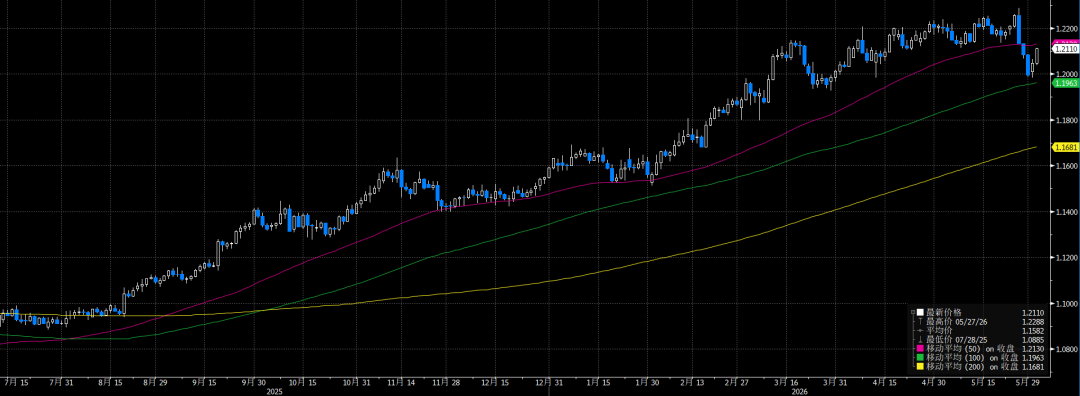
Since the second half of last year, AUDNZD started a trend-driven bull run, and the recent US-Iran geopolitical tension has acted as a catalyst, driving the exchange rate sharply higher. Last week, the pair strongly touched 1.2280, marking a new high since 2013.
However, a reversal appeared as expected. After the Reserve Bank of New Zealand’s decision last Wednesday, AUDNZD quickly weakened, falling by a cumulative 2.5% in three trading days. This week, it stabilized at the 100-day moving average and rebounded strongly back above 1.21.
Figure: AUDNZD finds support at the 100-day moving average
I. Fundamental Drivers Behind AUDNZD’s Bull Run
Both AUD and NZD are commodity currencies, but due to the differences in the Australian and New Zealand economic structures, they diverge under the current geopolitical tensions.
1. AUD: Resource Safe-Haven Currency in a High Oil Price Environment
Australia is an energy exporter, including LNG, coal, and uranium. After the Hormuz Strait was blocked, major energy importers such as China, Japan, South Korea, and Europe increased their purchases of Australian energy, driving both volume and price of Australia’s energy exports higher.This directly led toa widening trade surplus and a significant improvement in trade terms, with energy companies’ profits and fiscal revenues rising as well.
2. NZD: A Vulnerable High-Beta Commodity Currency
New Zealand’s economic structure is single-track—it is a typical pure energy importer + agriculture-driven economy. Rising oil prices are fully passed through to the domestic market, and its core sectors of farming, animal husbandry, and dairy products are highly dependent on fuel and Middle Eastern gas-based fertilizers. Rising energy prices substantially increase production and shipping costs, squeezing corporate profits.
II. Signs of a Turning Point: Breaking the Oil Logic Chain
1. The Reversal of Monetary Policy Divergence
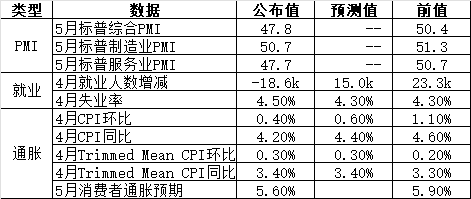
Australia was one of the first G7 countries to hike rates in this cycle. But after three consecutive hikes, markets expect the RBA to pause rates. Meanwhile, core data such as the Australian PMI, employment, and inflation have all been weakening.
Table: Recent Australian economic data show weakness
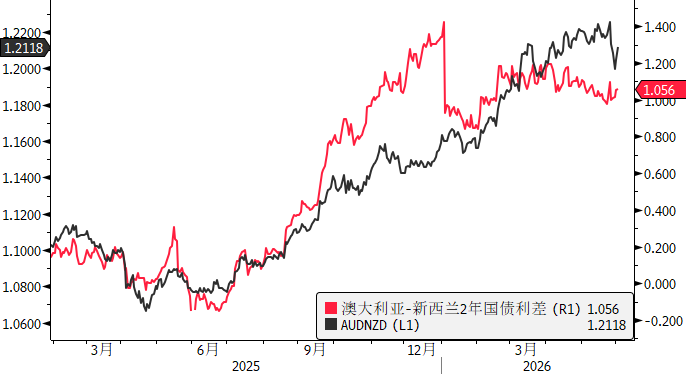
Meanwhile, the Reserve Bank of New Zealand turned significantly hawkish at its May meeting: three out of six committee members supported a hike, andall committee members agreed a further hike was likely. The RBNZ raised its inflation forecast substantially, estimating a Q3 2026 CPI peak of 4.3%, highlighting persistent inflation pressures. The market is currently pricing in an85% probability of a hike in July, with three rate hikes expected before year-end.
Figure: AUDNZD and 2-Year Yield Spread
2. US-Iran De-escalation Cools AUD Advantages
Previously, key drivers for AUDNZD’s bull run were Middle East tensions and high oil prices. But recently, signs of negotiation between the US and Iran have emerged, and the market is pricing in a resumption of shipping through the Strait of Hormuz. A drop in oil prices would directly reduce Australia’s energy export windfall.
3. Crowded Position Liquidation
The overnight policy rates for Australia and New Zealand are 4.35% and 2.25% respectively. At present,the annualized carry from going long AUDNZD can reach 1.5%. This fundamental support combined with positive carry makes AUDNZD a crowded long trade. When market sentiment reverses, a rush to exit can easily trigger sharp drops.
III. Summary
1. AUDNZD upside logic: Geopolitical tensions push up oil prices → Australia enjoys energy windfalls while New Zealand faces economic headwinds → yield spread divergence draws continuous long positions in AUDNZD;
2. AUDNZD downside logic: US-Iran tension eases, RBNZ turns hawkish, Australian economic data weakens → original logic breaks down, triggering sharp unwinding of long positions;
3. The two key variables to watch ahead are: 1) US-Iran negotiations and oil price trends, which will determine if AUD’s resource premium returns; 2) Australian and New Zealand inflation and employment data, and implementation of New Zealand rate hikes in July and September.
Disclaimer: The content of this article solely reflects the author's opinion and does not represent the platform in any capacity. This article is not intended to serve as a reference for making investment decisions.
You may also like
X-Art turns XRP Ledger’s creation into sitcom parody with “The One Without Mining”
US Stocks Lower Pre-Bell as Traders Await Chinese President's US Visit, Monitor Iran War Developments
KB Home Lowers Full-Year Housing Gross Profit Margin Guidance; Shares Down Pre-Bell
London is no longer the sole stage for central bank rate meetings! The Bank of England is set to "move north" to Leeds, and the market bets on returning to the rate hike path in November.
Starting next year, the Bank of England's Monetary Policy Committee will share its responsibilities with Leeds, and the nine committee members will travel to the North to make interest rate decisions. This move coincides with Prime Minister Andy Burnham's push to prioritize the development of Northern England, and aligns with the bank's longstanding connections to Leeds, where it opened its first branch in 1827.
Crypto prices
More


