
S. Korea’s largest chemical company LG Chem is pivoting to AI, Robotics, others

South Korea’s largest chemical company LG Chem is looking to pivot from its petrochemical business toward AI-driven growth areas, citing slow profitability.
In a town hall meeting Monday, LG Chem disclosed it’s allocating 15 trillion won ($9.74 billion) in research and development to expand its business portfolio. About 70% of the fund will target semiconductor, mobility, and robotics materials.
The company also plans to acquire leading technologies and develop AI-based applications, according to the report.
LG Chem cites weakening business
LG Chem’s plans to diversify the business come amid the prolonged margin squeeze across the global petrochemical sector.
Traditional petrochemical businesses have been faced with declining profitability due to global events and intensifying competition. This has been a business that has historically defined LG Chem’s revenue base.
“We will upgrade our business portfolio by fostering semiconductor, mobility, and robotics materials, as well as anticancer drugs, as our core future growth businesses,” said LG Chem CEO Kim Dong-chun.
Earlier this month, LG Chem established a CEO-led new business development unit to accelerate the move.
In semiconductors, the company intends to focus on advanced packaging materials, as well as expand development of adhesives and low-dielectric materials, among other things. LG Chem targets a 2 trillion won (roughly $1.3 billion) revenue for its electronic materials division by 2030.
In mobility and robotics, LG Chem plans to move beyond electric vehicle battery materials into robot structural components and high-precision motion and bonding materials.
The leading Korean chemical company aims to hit a double-digit operating margin by 2030 from all of these moves.
AI drives South Korea’s export by 44%
LG Chem’s interest in semiconductors, AI, and robotics is not surprising. Korea currently sees a growing demand for semiconductors, largely driven by AI growth.
Earlier in February, Cryptopolitan reported that South Korea’s exports soared by a record 44% year-over-year, reaching $21.4 billion, following a massive surge in demand for semiconductors.
Disclaimer: The content of this article solely reflects the author's opinion and does not represent the platform in any capacity. This article is not intended to serve as a reference for making investment decisions.
You may also like
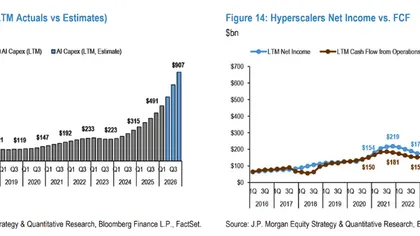
From the Token Frenzy to the $1.3 Trillion AI Server Blue Ocean: AI Inference Computing Power Fully Explodes, Industry Leaders like Dell Usher in the Golden Era of "Volume, Price, and Market Share"
Leading global AI server cluster manufacturers such as Dell are simultaneously benefiting from two major growth dividends: the accelerated expansion of the AI server market and a significant increase in the order shares from core AI cloud computing customers, including large enterprises and new cloud providers. They are not merely passively profiting from hardware price increases.

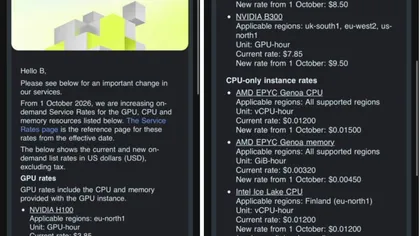
GPU Cloud Services Surge in Price: Nebius Raises Prices Again by 20%, Computing Power Supply Side Gains Bargaining Power
From October 1st, Nebius will raise prices for its entire GPU cloud service line by approximately 20%, with multiple chips from H100 to B300 seeing increases. This marks the second round of price hikes in recent months, and the cumulative increase for B300 has reached 56%. Demand visibility extends beyond 24 months, with customers eager to purchase Blackwell computing power, even willing to pay a premium in auctions. The supply-demand imbalance for AI computing power is reshaping the entire industry’s negotiation landscape, as bargaining power is quietly shifting to the supply side.
Crypto prices
More


