
Bitcoin drops to $58K on high US PCE inflation as trader sees 'manipulation'

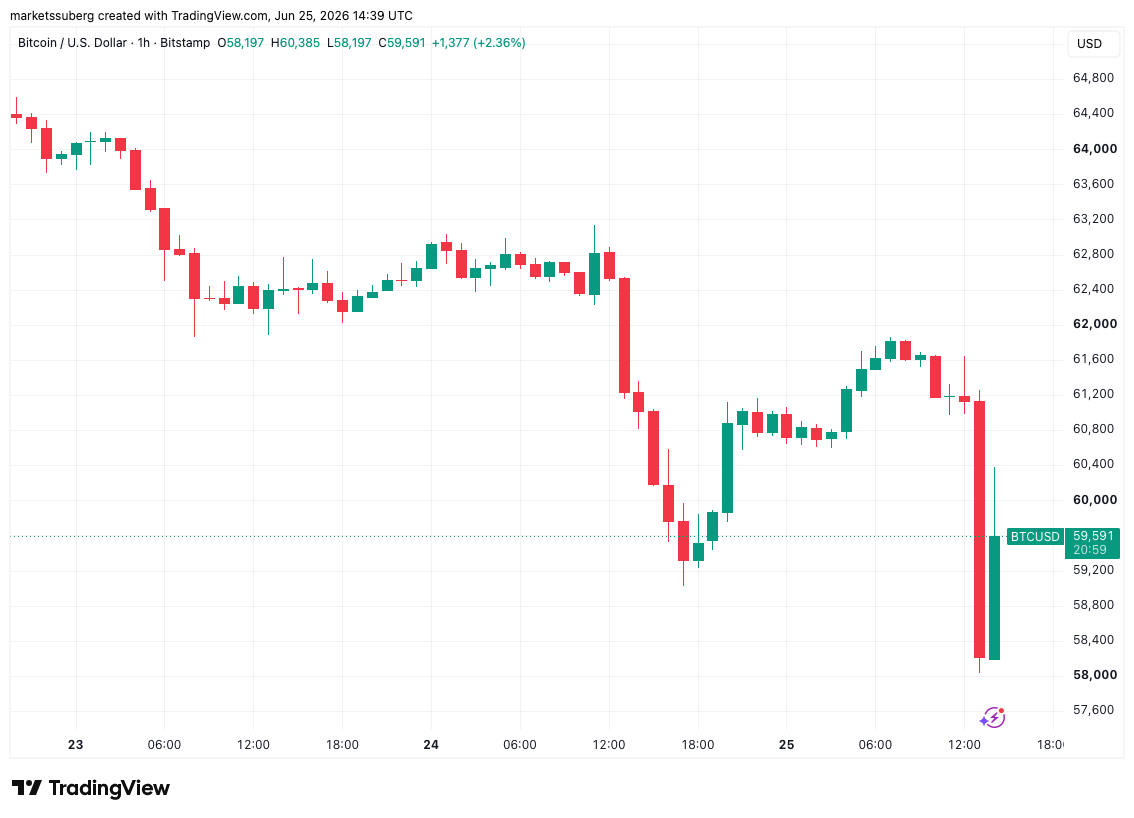
Bitcoin (BTC) hit new 21-month lows at Thursday’s Wall Street open as high US inflation unsettled stock markets.
Key points:
- Bitcoin returns to its lowest level since September 2024, dropping to $58,000.
- US PCE inflation rocks equities, with the Nasdaq 100 shedding 2% in just 30 minutes.
- BTC's correction mirrors the price action seen throughout the 2022 bear market.
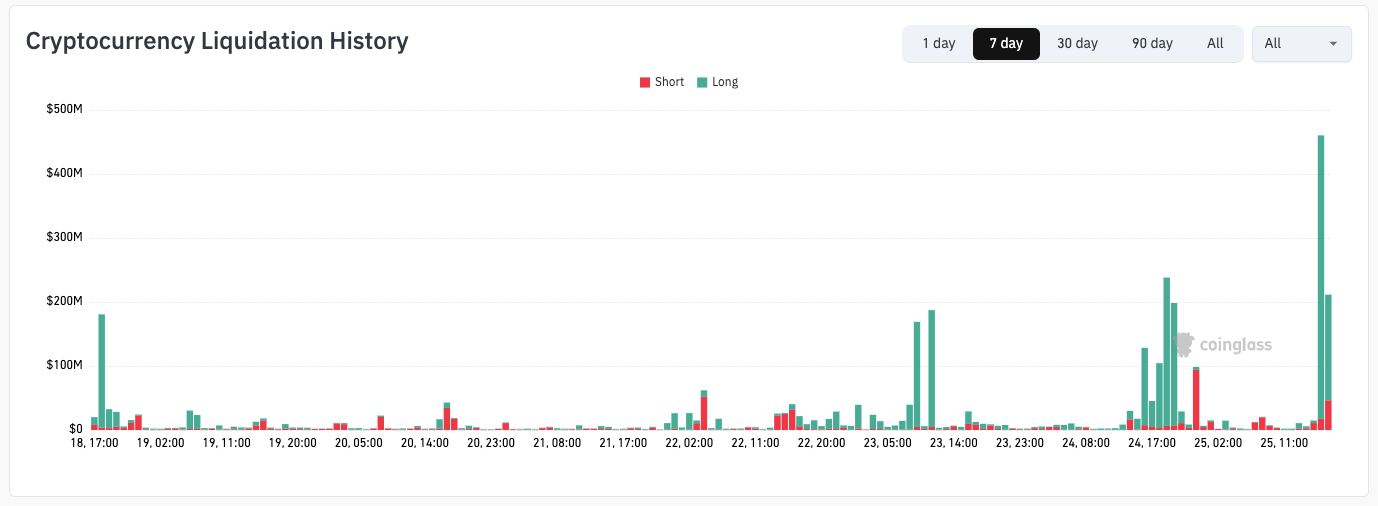
Crypto liquidations pass $600 million in an hour as BTC price drops
Data from TradingView showed BTC/USD dropping to $58,035 on Bitstamp — a level it last traded at in September 2024.
BTC/USD one-hour chart. Source: Cointelegraph/TradingView
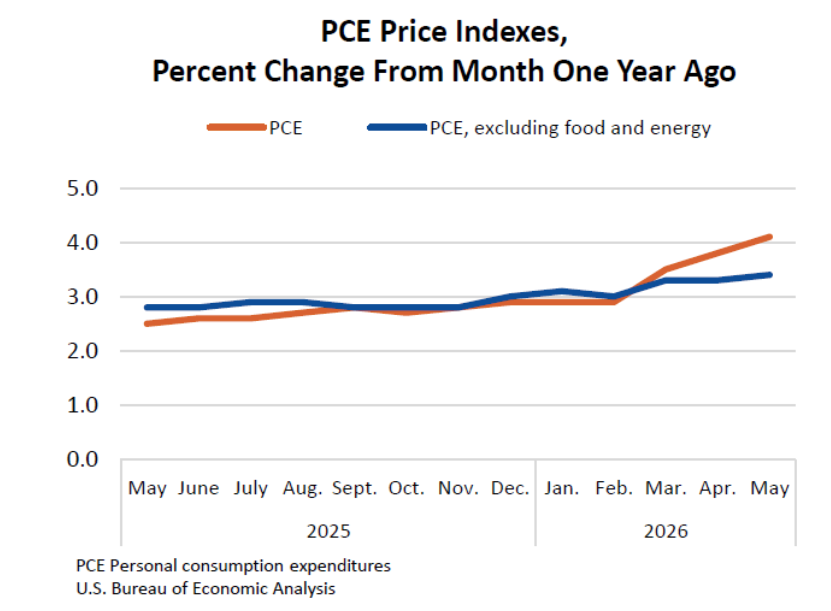
The May print of the US Personal Consumption Expenditures (PCE) index came in at 4.1%, setting a new three-year record.
“From the preceding month, the PCE price index for May increased 0.4 percent. Excluding food and energy, the PCE price index increased 0.3 percent,” a data release from the Bureau of Economic Analysis (BEA) stated.
“From the same month one year ago, the PCE price index for May increased 4.1 percent. Excluding food and energy, the PCE price index increased 3.4 percent from one year ago.”
US PCE one-month % change (screenshot). Source: BEA
Stocks reacted with volatility, with the Nasdaq Composite Index down 0.5% at the time of writing, while the S&P 500 managed to eke out a gain.
The Nasdaq 100, meanwhile, saw a larger snap decline of 2% in just 30 minutes at the open.
“What a chart,” trading resource The Kobeissi Letter responded on X.
Bitcoin itself sparked considerable long position liquidations, with CoinGlass putting the cross-crypto liquidation total at $600 million over a single hour.
Crypto liquidation history (screenshot). Source: CoinGlass
Commenting, market participants suggested that price moves were being artificially managed to squeeze positions.
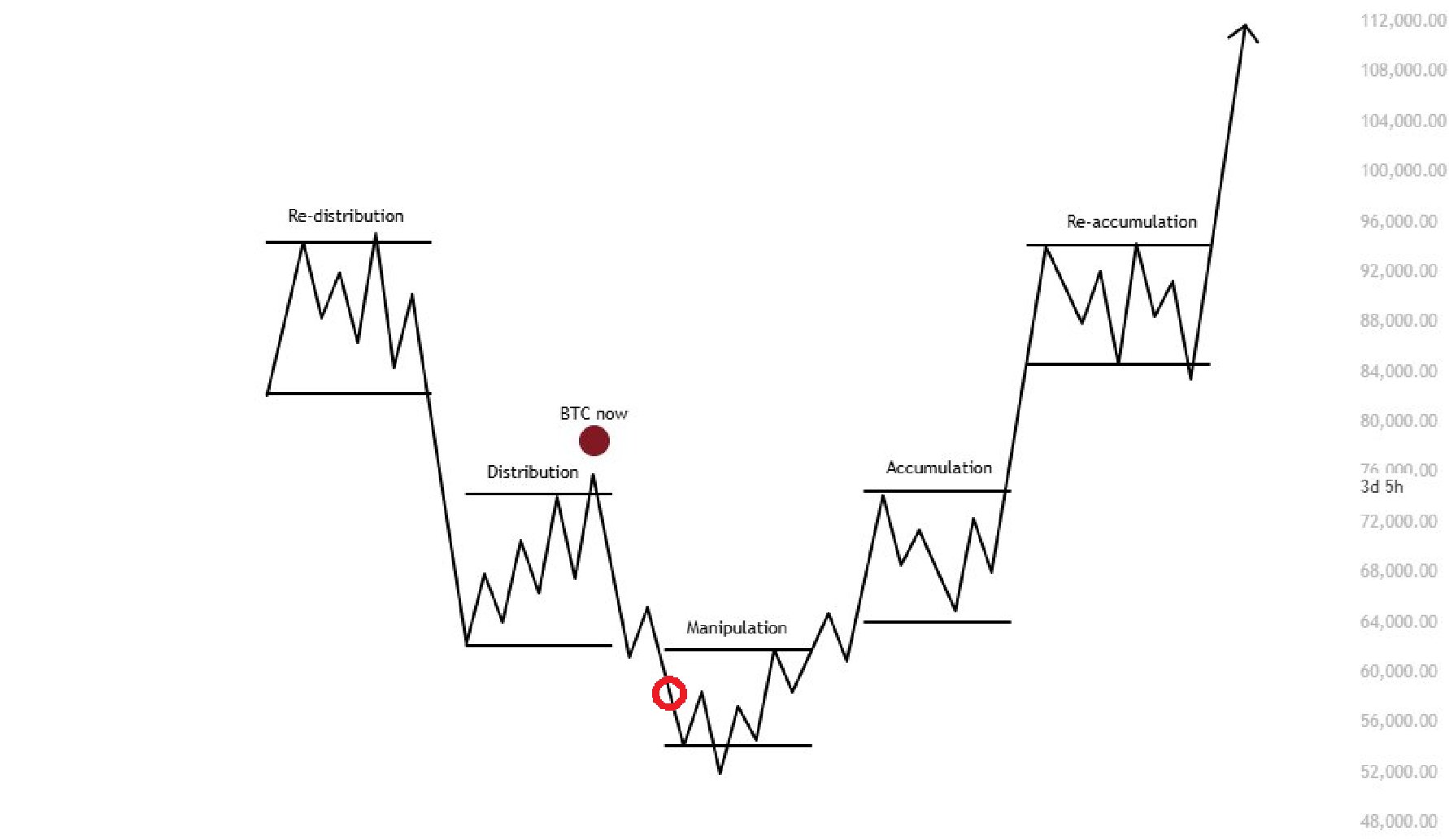
“$BTC is in the manipulation phase,” pseudonymous trader Killa told X followers.
“Every time $BTC trades sub-$60K, that is our manipulation beneath the significant $60K swing low on the weekly and quarterly. Precisely the reason why the orderbook is stacked below us.”
Source: Killa/X
Niels Klaver, cofounder of crypto platform STABL Agency, suggested that BTC/USD “seems to be going for its final leg down of this bear market.”
“$55K remains the target,” he added, referring to an increasingly popular short-term price goal.
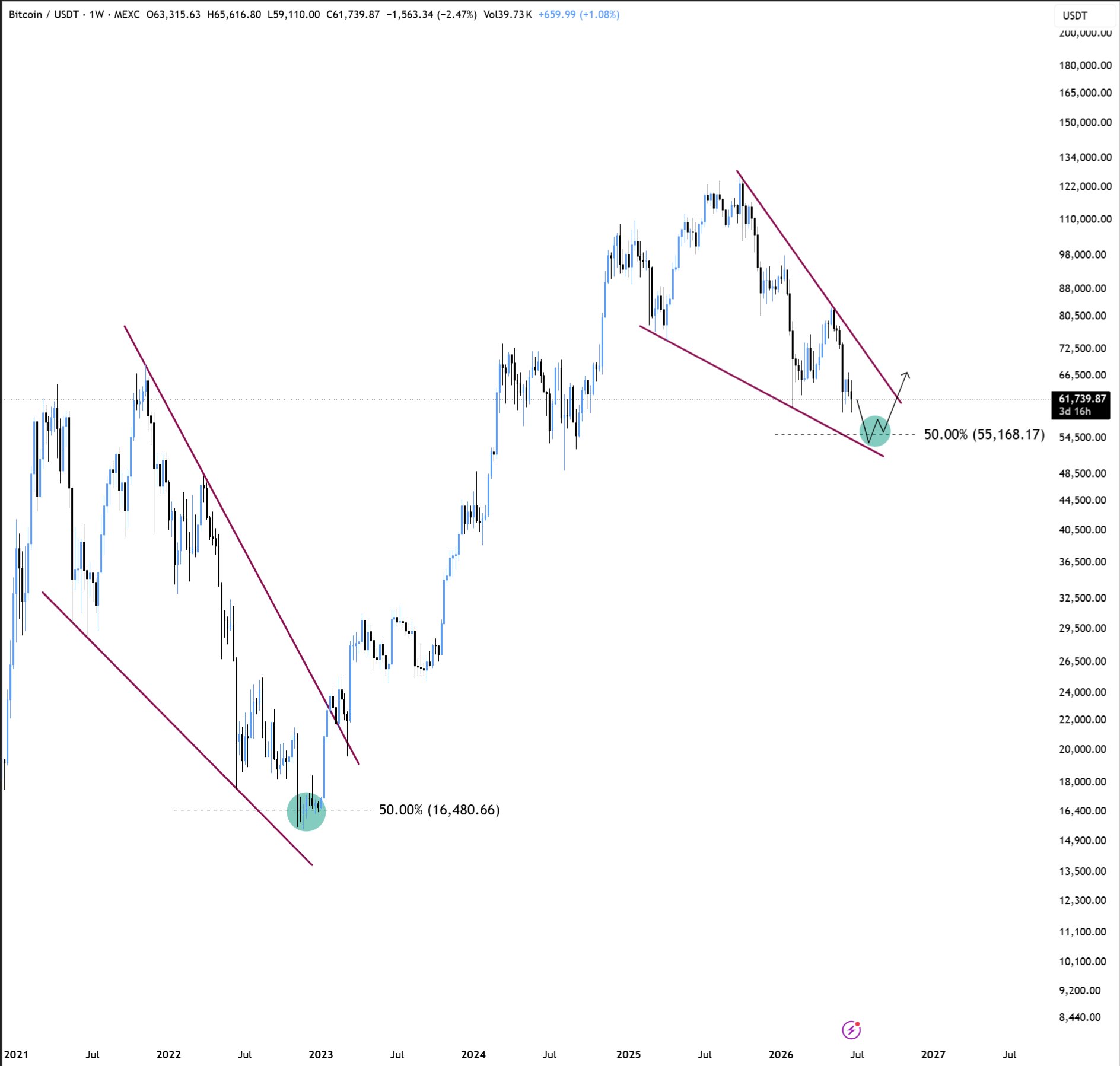
BTC/USDT one-week chart. Source: Niels Klaver/X
Bitcoin analysis sees new resistance near $65,000
As BTC price action attempted a modest rebound, trader and analyst Rekt Capital had already described $60,000 support as “clearly weakening.”
Related: BTC price four-year trend calls for $76K as analysis says Bitcoin 'not broken'
“Once June Monthly Closes, we'll know from which price July will be able to potentially spring into a post-breakdown relief rally,” an X post read.
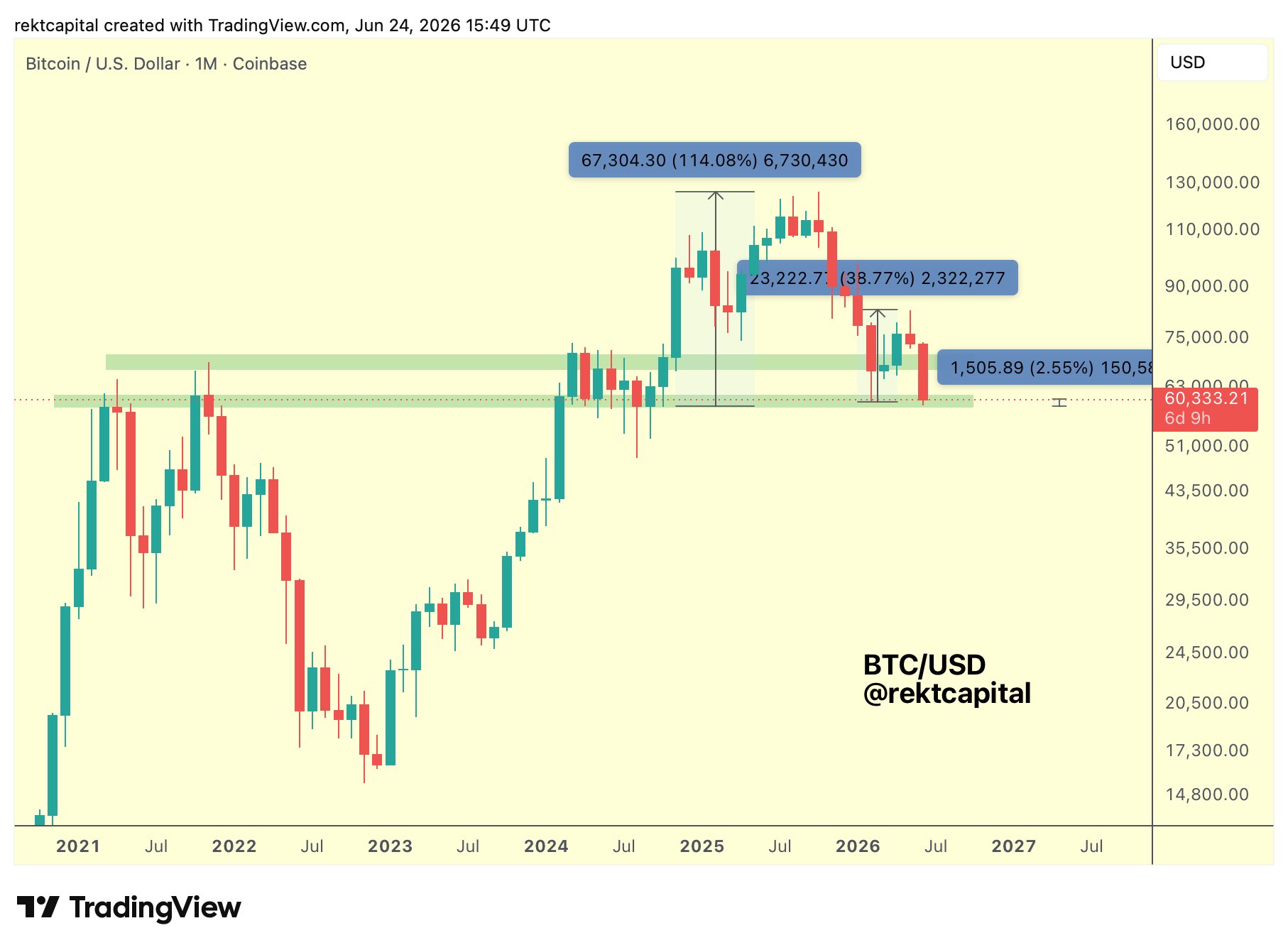
BTC/USD one-month chart. Source: Rekt Capital/X
Rekt Capital maintained that the market was acting similarly to 2022, with the 50-month exponential moving average (EMA) tipped to become new resistance next.
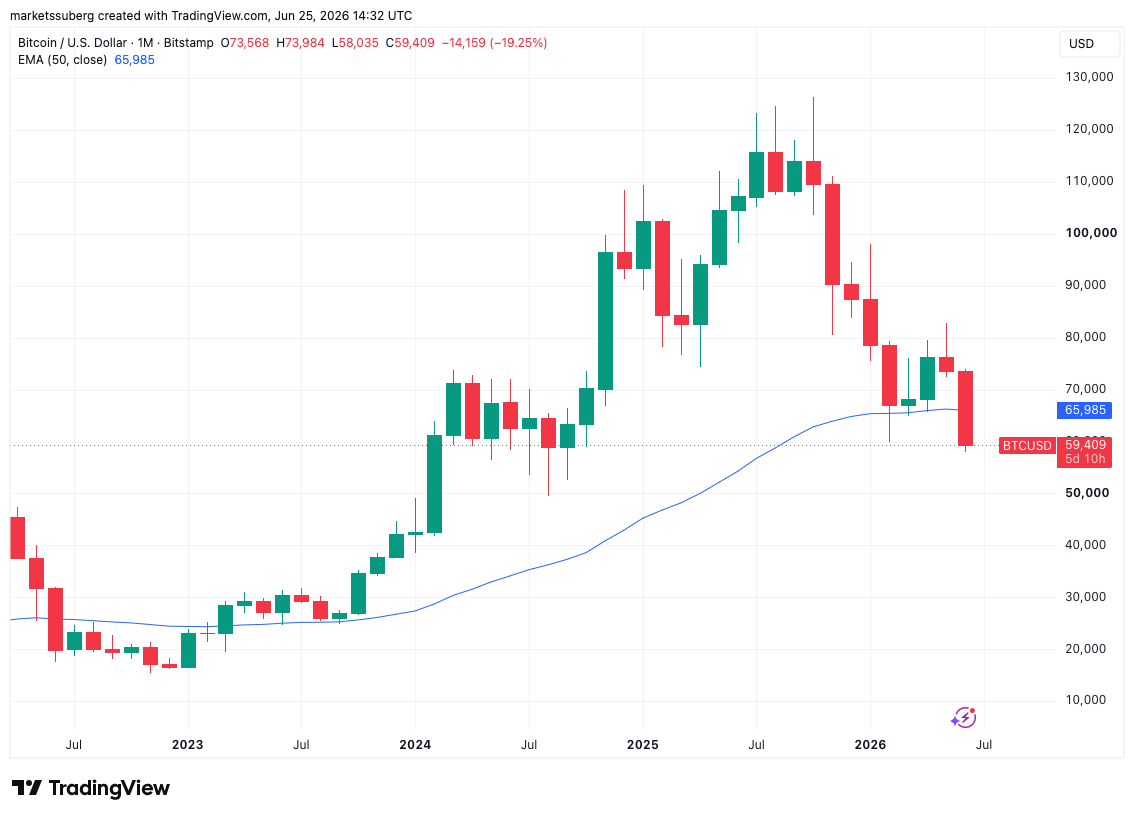
BTC/USD one-month chart. with 50EMA. Source: Cointelegraph/TradingView
Disclaimer: The content of this article solely reflects the author's opinion and does not represent the platform in any capacity. This article is not intended to serve as a reference for making investment decisions.
You may also like
Will Pi Network face further losses? Why THESE signals say yes
Fed’s Hawkish Talons Shine, Bond Market Believes: US Treasury Yield Curve Flattens as Rate Hike Bets Heat Up
The bond market is showing increasing confidence that Federal Reserve Chairman Kevin Walsh will fulfill his commitment to curb inflation—currently, the inflation rate has exceeded policymakers' target level for five consecutive years.

"Hawkish Rate Hike"! Walsh's "Major Shift"
The Federal Reserve unanimously raised interest rates by 25 basis points in September, with Waller fulfilling his hawkish commitments through decisive action and making it clear that current financial conditions are not tight, and this hike only removes "some accommodation," using strong language. UBS believes that Waller's policy response function has undergone a substantial shift compared to his predecessor—he is more sensitive to inflation and supply shocks, less concerned about the labor market, and has set a higher threshold for restrictive policy. The risks are clearly tilted toward interest rates remaining elevated for a longer period.
Crypto prices
More


