Bitget App
Trade smarter
Buy cryptoMarketsTradeFuturesEarnAISquareMore
What’s the Latest Situation in the Expected Altcoin Season? Will it Come, and if So, What Will it Be Like? Analysts Reveal Their Expectations!

What’s the Latest Situation in the Expected Altcoin Season? Will it Come, and if So, What Will it Be Like? Analysts Reveal Their Expectations!

CryptoNewsNetCryptoNewsNet2026/06/25 15:58
By:CryptoNewsNet
Back to the list

What’s the Latest Situation in the Expected Altcoin Season? Will it Come, and if So, What Will it Be Like? Analysts Reveal Their Expectations!

  en.bitcoinsistemi.com 3 m
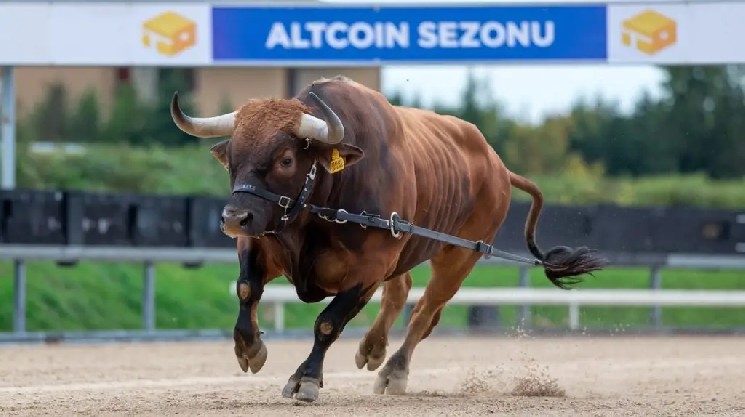
What’s the Latest Situation in the Expected Altcoin Season? Will it Come, and if So, What Will it Be Like? Analysts Reveal Their Expectations! image 0

While Bitcoin set numerous records on its journey to an all-time high of $126,000 in 2025, many altcoins remained below their previous peaks.

While many altcoin investors were expecting a major altcoin season like those seen in previous cycles, the rallies did not live up to that expectation.

At this point, expectations for the altcoin season are being reshaped, and this year’s altcoin market may be more selective rather than exhibiting the widespread rallies seen in past cycles.

According to the renowned American magazine Forbes, the largest altcoins by market capitalization—Ethereum, BNB, XRP, Solana, and Tron—are trading, on average, approximately 60% below their all-time highs.

Although the number of cryptocurrency investors worldwide has exceeded 740 million, the altcoin market has not yet fully recovered.

In this context, Forbes’ analysis argues that the new bull run will be led by projects with real-world use cases and profitability. Accordingly, among altcoins, projects with real revenue, an established user base, and clear use cases are attracting, and will continue to attract, relatively more interest.

At this point, Forbes analysts cited Hyperliquid (HYPE) and SOL as examples of these altcoins.

Speaking to Forbes, Jason Lindal, CEO of tokenization company Nebula DeFi, argued that money in the market will first flow into Bitcoin, then into altcoins with large market capitalization like Ethereum and Solana, and finally selectively into altcoins considered to be higher risk.

Speaking to Forbes, Stansberry Research analyst Eric Wade stated that the altcoin season is happening and will continue. However, he said the biggest mistake is treating altcoins as a single asset class.

Avalanche Treasury CEO Bart Smith also took a similar approach, stating that altcoins will not experience a traditional season and that the key questions in altcoin rallies are “What is its purpose and what problem does it solve?”. According to Smith, altcoins that cannot answer these questions will continue to struggle regardless of the macroeconomic environment.

Finally, Bitget CEO Gracy Chen also stated that it might be difficult for a traditional altcoin season to occur in this cycle, as in previous cycles.
0
0

Disclaimer: The content of this article solely reflects the author's opinion and does not represent the platform in any capacity. This article is not intended to serve as a reference for making investment decisions.

Understand the market, then trade.
Bitget offers one-stop trading for cryptocurrencies, stocks, and gold.
Trade now!

You may also like

Fed’s Hawkish Talons Shine, Bond Market Believes: US Treasury Yield Curve Flattens as Rate Hike Bets Heat Up

The bond market is showing increasing confidence that Federal Reserve Chairman Kevin Walsh will fulfill his commitment to curb inflation—currently, the inflation rate has exceeded policymakers' target level for five consecutive years.

智通财经2026/09/17 00:51
Fed’s Hawkish Talons Shine, Bond Market Believes: US Treasury Yield Curve Flattens as Rate Hike Bets Heat Up

"Hawkish Rate Hike"! Walsh's "Major Shift"

The Federal Reserve unanimously raised interest rates by 25 basis points in September, with Waller fulfilling his hawkish commitments through decisive action and making it clear that current financial conditions are not tight, and this hike only removes "some accommodation," using strong language. UBS believes that Waller's policy response function has undergone a substantial shift compared to his predecessor—he is more sensitive to inflation and supply shocks, less concerned about the labor market, and has set a higher threshold for restrictive policy. The risks are clearly tilted toward interest rates remaining elevated for a longer period.

华尔街见闻2026/09/17 00:41