
Federal Reserve's latest statement: Economic resilience supports prolonged high interest rates, but no need for further rate hikes

Forex Network, June 26 —— On June 25 local time, John C. Williams, President of the New York Federal Reserve Bank and a permanent FOMC voting member, released his latest monetary policy statement.
This statement was prepared for the Kran Currency Fund Seminar and released officially on schedule. It also marks the first systematic policy stance from a key Fed official following the June FOMC meeting, clarifying the current status of the US economy, the logic behind easing inflation, and the operation framework for monetary policy, thus providing important guidance for market interest rate expectations.
John C. Williams, currently serving as the President of the New York Federal Reserve Bank, is a core decision-maker within the Federal Reserve system, often referred to as the Fed's number three, ranking just after the Fed Chair and Vice Chair.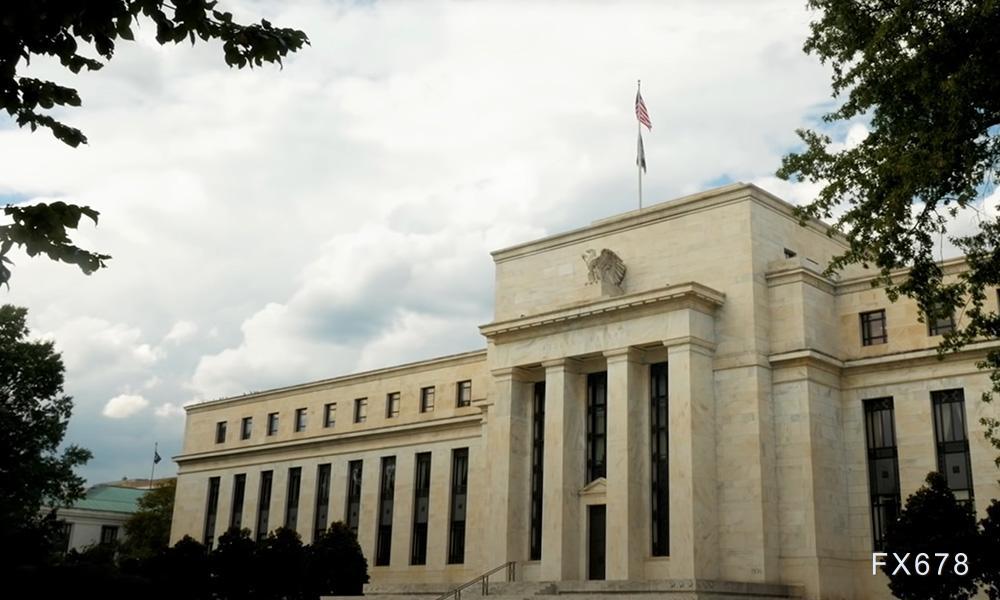
The Resilience of the US Economy and a Robust Labor Market
Facing global supply chain and commodity risks due to geopolitical tensions in the Middle East, the US economy has shown strong resilience and has fully absorbed external shocks.
Currently, US consumer spending remains solid, corporate investment is growing robustly, and particularly, the investment boom in artificial intelligence has become a core driver underpinning economic growth, helping the economy operate steadily amid uncertainty.
Key indicators previously flagged as risks, such as the New York Fed's "job security gap," have also stabilized. Labor market risks have largely cleared, and overall conditions are sound.
Core Drivers of High Inflation
Inflation continues to be the central constraint for current monetary policy, with US inflation still significantly above the Fed's long-term target of 2%.
The current round of high inflation is mainly driven by three factors:
Though inflation remains elevated, Williams clearly presented
Supply chain disruptions in the Strait of Hormuz are likely to ease, with energy prices expected to stabilize and retreat within the year; rental increases are slowing, leading to cooling in housing inflation, which carries significant weight in indices; and there is no evidence of a wage-price spiral in the labor market, minimizing further upward pressure on prices.
Lengthy Disinflation Cycle Carries Risks, but Rates Are Appropriate for Now
Medium- to long-term inflation expectations in the market remain well anchored and there is no sign of panic overrun.
According to data from the New York Fed,
According to Fed projections, US inflation is expected to drop to 3.5% by the end of this year, steadily approach the 2% target by 2027, and formally reach the policy goal in 2028, making the inflation recovery a long and gradual process.
Based on current economic fundamentals, the Fed decided at its June rate-setting meeting to keep the benchmark rate range unchanged at 3.5%–3.75%
Institutions forecast US GDP growth at about 2.25% this year and over the next two years, slightly above potential growth. The job market continues to improve and unemployment is expected to return to a healthy 4% level by 2028.
At the same time
The Federal Reserve's Monetary Policy Operating Framework
This speech detailed the Fed's mature monetary policy operational framework as it stands today.
the Standing Repo Facility (SRF) serves as the last resort (institutions can borrow from the Fed using eligible Treasuries/MBS as collateral at the SRF rate), preventing rates from breaching the top of the "corridor."
Currently, the Fed operates an ample reserves system, stabilizing the rate corridor with a dual toolkit: the interest rate on reserve balances and the overnight reverse repo facility establish the lower bound, while the standing repo facility caps the upper bound, flexibly hedging market liquidity swings and ensuring smooth federal funds rate operation.
For liquidity management, the Fed uses reserve management purchases (RMP, actively buying Treasuries with maturities under three years to inject liquidity), sometimes referred to as "light QE," to offset seasonal or policy-driven reserve fluctuations.
Since predicting liquidity withdrawal risk during last year's tax season, the Fed launched monthly $40 billion Treasury purchases; later, as markets stabilized, it tapered the buying down to $25 billion, and then $10 billion, flexibly maintaining ample market liquidity and efficient policy transmission.
Overall Policy Tone and Key Tracking Indicators
Overall, the Fed's policy approach is clear: maintaining the dual mandate of "controlling inflation and supporting employment," and, as long as inflation has not sustainably and firmly returned to the 2% target, policy remains steady with no scope for easing.
The current rate range matches the state of the US economy and can steadily suppress inflation. With the cooling path for inflation now clear,
Key metrics to monitor going forward: core PCE inflation, housing and rental data, nonfarm payroll wage growth, international energy prices, Middle East supply chain risks, and AI investment enthusiasm. These indicators will directly determine the Fed's pace and timing of minor rate adjustments—a factor that also supports long-duration assets like gold.
Disclaimer: The content of this article solely reflects the author's opinion and does not represent the platform in any capacity. This article is not intended to serve as a reference for making investment decisions.
You may also like
Oil prices and interest rates are rising, but US stocks still trust TACO
Oil prices have surpassed $100, the Federal Reserve is raising interest rates, and tensions in the Strait of Hormuz persist—Wall Street's bet on the "Trump will always back down" TACO trade is facing its most dangerous moment. The unexpected resilience of US stocks has actually reduced Trump's motivation for reconciliation; the real pressure valve lies in bond yields approaching the 4.946% warning line. Behind-the-scenes negotiations are reportedly ongoing, but this time, can the market's patience last until Trump changes course?
Claude leads 26% of R&D, Anthropic raises heated discussion on "AI developing AI" with its "AI slowdown theory"! The RSI training paradigm is catalyzing a major expansion in computing power demand.
Anthropic PBC's Claude chatbot has driven more than a quarter of the company's AI research and development work. The company found that Claude "led" 26% of Anthropic's R&D efforts and collaborated with employees to complete about 90% of the work. Anthropic plans to introduce third-party evaluators within the company and grant them access to internal processes, systems, and data to help track the progress of AI development.
U.S. business growth drops to lowest in a year, stock price plunges 19% year-to-date! McDonald's (MCD.US) urgently changes leadership to rebuild "cost-effectiveness" defense line
Same-store sales growth in the United States fell to 0.8%, reaching a new low in over a year. McDonald's is urgently adjusting its strategy, planning to implement long-term affordable pricing, temporary discounts, and suspension of random inspections to optimize the service experience, making every effort to restore customer traffic and stock price.
Crypto prices
More


