
Have gold and silver hit their lowest points of the year? Institutions: A recovery trend may emerge in the second half, and "rate hike panic" may be nearing its end

Since the outbreak of the Iran war, surging energy prices have pushed up inflation expectations and prompted the market to once again bet on Fed rate hikes. Gold and Silver investors have experienced a difficult four months. However, Sprott Money analyst Craig Hemke believes that this period of weakness for precious metals may be coming to an end.
Hemke stated that the annual lows for gold and silver prices have most likely already occurred. As geopolitical tensions ease and oil prices fall, concerns about inflation and rate hikes are expected to gradually subside, allowing precious metals to once again benefit from the core drivers of the long-term bull market.
Hemke noted that at the beginning of 2026, the market had originally expected the Fed to cut rates further. With inflation consistently falling from its 2022 highs, investors generally believed that the Fed and its new chairperson succeeding Powell might start a rate-cut cycle around mid-year, with possibly up to two rate cuts within the year.
But this expectation was completely overturned with the outbreak of the Iran war. The war caused energy prices to soar, with crude oil spiking from around $65 per barrel to $110 at one point. The market’s inflation worries surged quickly, and expectations for Fed rate hikes escalated accordingly.
This presented clear pressure for gold and silver. Higher inflation expectations coupled with stronger bets on rate hikes drove up real interest rates and the dollar, weakening the short-term appeal of precious metals.
"Hawkish Peak" May Have Passed
However, Hemke believes the market may have already witnessed the so-called "hawkish peak" within days of the June Fed meeting.
He explained that the "hawkish peak" essentially means that expectations for multiple rate hikes have become excessive. Although it’s not impossible for a symbolic rate hike to occur later this year, the idea of the Fed hiking rates several times consecutively is probably unrealistic.
Hemke pointed out that after the Iran war erupted, the surge in oil prices did rationally push up inflation expectations. But as most hostilities ceased last month, oil has dropped back from its highs, now trading at around $68 per barrel—essentially back to pre-war levels.
He further noted that within the Fed’s preferred inflation measures, the energy component rose 21% during March to May. But now that crude oil prices have returned to pre-war levels, why couldn’t energy inflation decline significantly in the coming months?
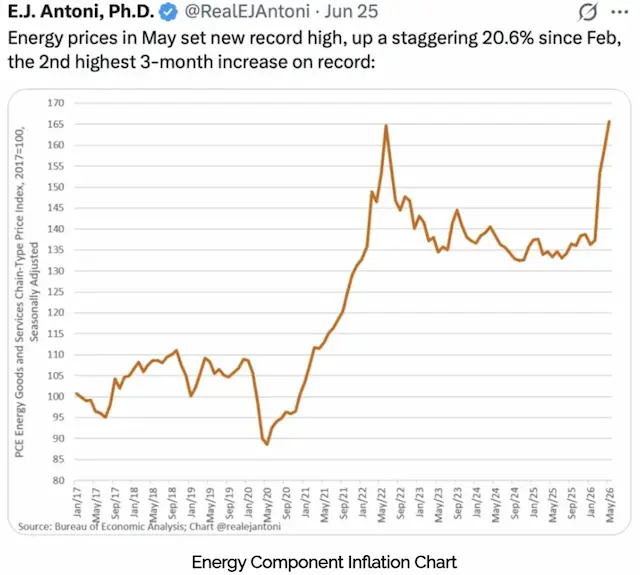
Hemke believes that as energy prices fall, inflation fears will further ease and the risk of Fed rate hikes will decrease accordingly.
He mentioned that while a symbolic rate hike could still occur in the coming months, Fed policy will likely return to the path initially expected under new chairman Kevin Warsh—lowering U.S. net interest costs through rate cuts and pushing real rates into negative territory.
If this scenario unfolds, Hemke asserts that the lows for gold and silver reached at the end of June could very well be the lowest points for all of 2026.
This outlook is significant for precious metals investors. Over recent months, the core variables depressing gold and silver prices have been inflation and rate hike expectations, and if those pressures abate together, the market’s focus will shift back to structural factors like fiscal deficits, currency devaluation, central bank reserve diversification, and long-term declines in real interest rates.
No V-shaped Rebound, but a Period of Sideways Consolidation
However, Hemke also reminds investors not to expect a sharp V-shaped reversal in gold and silver prices.
He points out that recent technical damage has been significant; gold and silver remain in a bearish technical pattern and are trading below several key moving averages. So even if the annual low is in, the market may still need to move sideways for a while to absorb bearish indicators and gradually heal investor sentiment.
Hemke suggests investors should keep a close eye on the 20-day moving average. If gold and silver reclaim this initial trend indicator, the market will gain confidence that "the low for the year has passed."
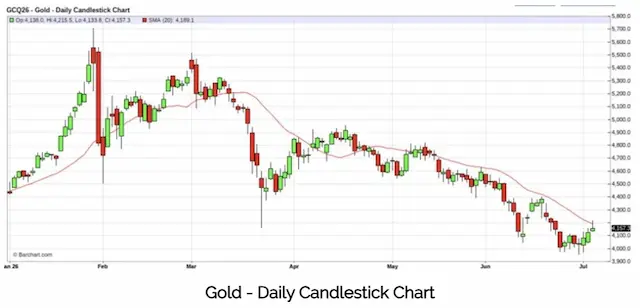
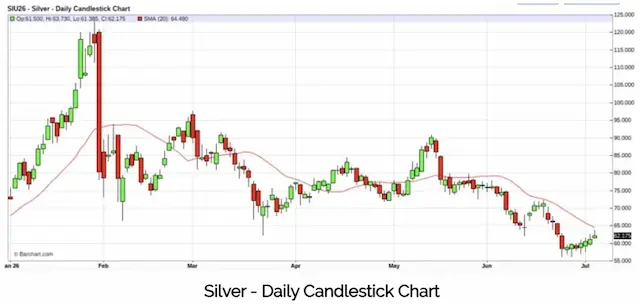
In other words, the precious metals market may not be immediately entering a powerful rally, but rather transitioning from a downtrend to a bottom-building and consolidation phase. Sideways movement itself may not necessarily be a sign of weakness; instead, it could mark the process of bearish technicals losing validity and market sentiment rebalancing.
Hemke concludes that with the end of the Iran war and the pullback in energy prices, U.S. CPI and PCE inflation data in the second half of 2026 are likely to come in lower than market expectations. This will signal that the "hawkish peak" has passed, and gold and silver investors will soon be able to focus again on the long-term fundamentals that drove price increases in 2024 and 2025.
For gold and silver, these long-term drivers include expanding fiscal deficits, limited real interest rates, declining currency purchasing power, central bank asset diversification, and ongoing global geopolitical and macroeconomic uncertainty.
Disclaimer: The content of this article solely reflects the author's opinion and does not represent the platform in any capacity. This article is not intended to serve as a reference for making investment decisions.
You may also like
AI boom reshapes the wafer foundry landscape! UBS: Explosive demand accelerates advanced process expansion, mature process enters upward cycle
UBS stated in a recent research report that within the foundry market, the Total Addressable Market (TAM) for the N2 (2nm) node far exceeds expectations, A14 (1.4nm) production expansion is accelerating, and the upcycle for mature process nodes has already begun.
$1,999 Foldable iPhone Is Ready, but Apple (AAPL.US) Faces Over $5.7 Billion Patent Penalty
As Apple intensifies its efforts in foldable displays and AI business, it faces a haptic technology patent compensation ruling exceeding $5.7 billion. On September 25, a federal jury in California found that Apple's Taptic Engine, used in certain iPhone and Apple Watch models, infringed on two patents held by Taction Technology.
Prospects for the opening of the Hormuz Strait are overshadowed, Asian bonds under pressure: 2Y Japanese bond yield approaches 2%, 3Y Korean bond yield rises to highest level since 2022
With high oil prices, short-term bond yields in South Korea and Japan have risen.
5% US Treasury pressure weighs on global assets, while Australian government bonds open up a window for allocation? Fixed income giant Pimco calls the rate hike expectations too aggressive
Pacific Investment Management Company (Pimco) holds a constructive view on Australian bonds, believing that market expectations for rate hikes are too high. Pimco stated that the rate hike cycle in Australia has been "fully priced in," and cracks are beginning to appear in the economy, making Australian bonds look attractive, especially in the 5- to 10-year segment of the yield curve.
Crypto prices
More


