
U.S. initial jobless claims edged down to 215,000 last week, layoff rate remains near historic lows

The US labor market continues to display notable resilience, but its internal structure is undergoing changes. Companies are still reluctant to lay off employees, yet are clearly slowing down their hiring pace—“slow hiring without layoffs” has become the most distinctive feature of the current economic cycle.
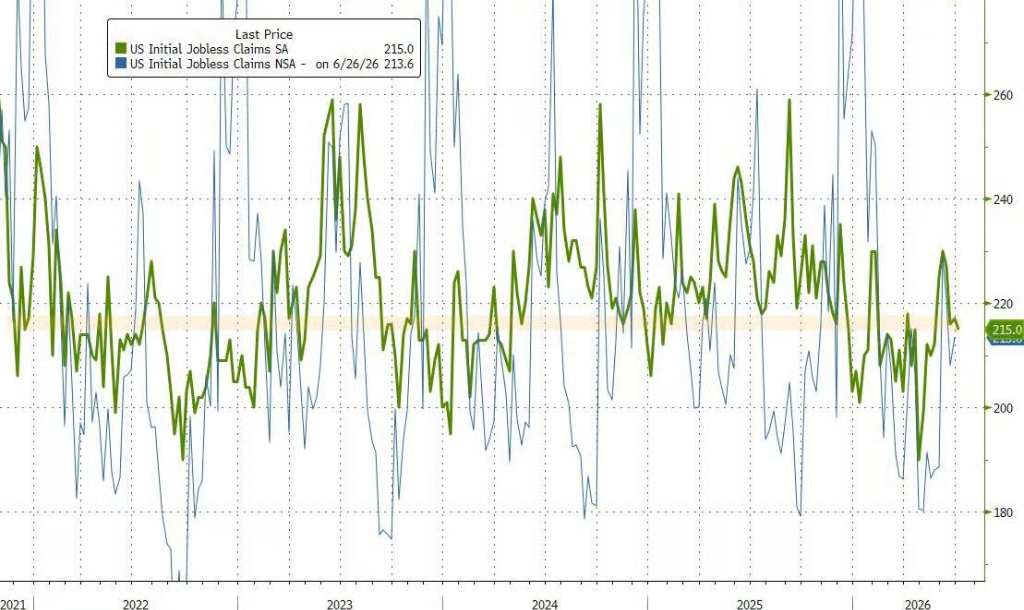
Latest data shows that for the week ending July 4 (including the US Independence Day holiday), initial jobless claims fell by 2,000 to 215,000, lower than the market expectation of 217,000, and have remained near historic lows for consecutive weeks.
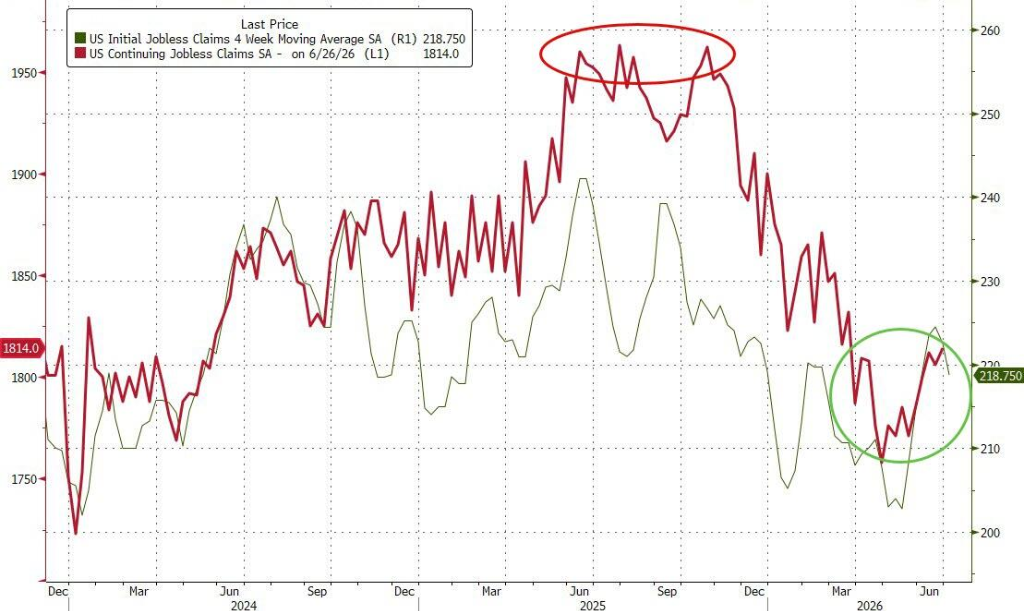
However, the number of continuing jobless claims, which reflects the status of reemployment among the unemployed, rose to 1.81 million, reaching the highest level since March.
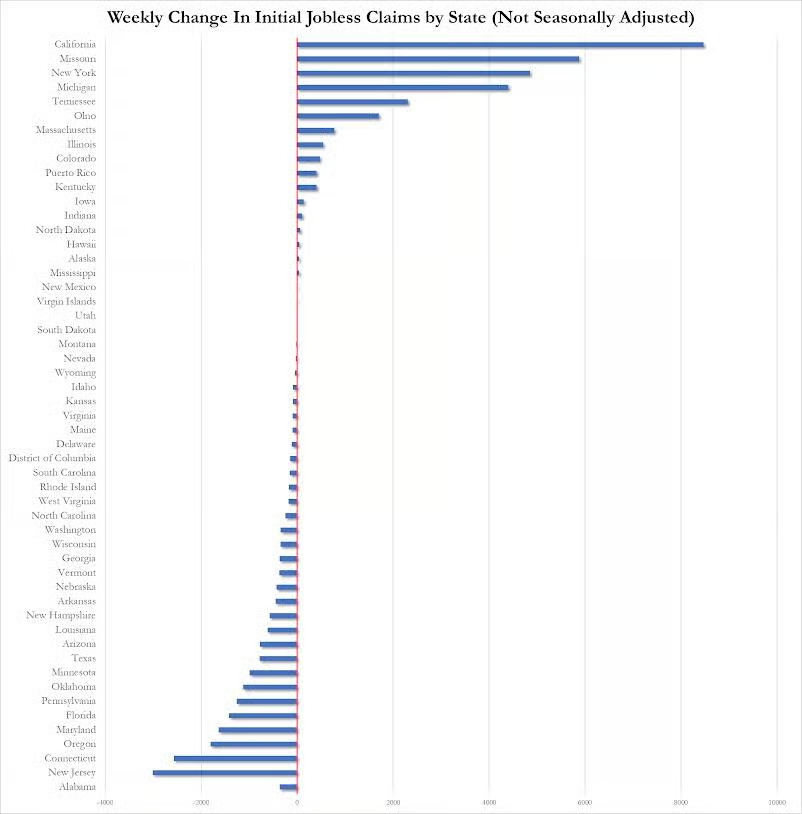
From a state perspective, California and Missouri saw the largest increases in initial claims, while New Jersey and Connecticut led in terms of decreases.
“Slow Hiring Without Layoffs” Emerges as the US Labor Market Trademark
The continued low level of initial jobless claims, together with recent nonfarm payroll data, jointly sketch out the pattern of “layoff contraction and slower hiring” in the US labor market.
After years of struggling to hire, businesses now generally prefer to keep existing employees, resulting in suppressed layoff numbers; however, their hiring appetite has clearly cooled. June's nonfarm payroll report revealed a slowdown in job creation and a decline in labor force participation, with some workers exiting the market—which also partly explains the subdued level of jobless claims.
Overall, the US job market has entered a phase of “slow hiring without layoffs”: the risk of layoffs remains low, but job growth momentum is weakening. For markets, persistently lower-than-expected initial claims continue to support expectations of a “soft landing” for the economy—companies are not conducting mass layoffs, the foundation for household income and consumption remains solid, and the risk of near-term recession is relatively limited.
However, the cooling down of hiring efforts combined with a rise in continuing jobless claims also show that the labor market is gradually weakening. In the coming months, indicators such as nonfarm payroll growth, continuing jobless claims, and the labor force participation rate will become key variables in assessing the employment market trend and the Federal Reserve’s policy direction.
Disclaimer: The content of this article solely reflects the author's opinion and does not represent the platform in any capacity. This article is not intended to serve as a reference for making investment decisions.
You may also like
Indian Rupee starts the week negatively amid higher oil prices
AI demand drives TSMC to accelerate capacity expansion, 2nm monthly production aims for 120,000 wafers by year-end
According to reports, industry giants such as Apple, Nvidia, and AMD have collectively increased their orders by 10% to 20%, directly boosting TSMC's 2nm monthly production capacity to 120,000 wafers by the end of the year, which exceeds the previous estimate by more than 20% and brings forward the 2027 target by two years. For the first time in history, five factories will ramp up production simultaneously, and the annual compound growth rate of capacity from 2026 to 2028 will reach as high as 70%.
Long-term US Treasury Sell-off Continues! 10-Year Treasury Yield Breaks 5.2% Again, “AI Boom vs. Rising Financing Costs” Narrative Showdown Intensifies
On Monday, oil prices rose and US Treasury bonds were sold off again as former US President Donald Trump rejected Iran's latest proposal to reopen the Strait of Hormuz, heightening concerns about inflation.
Banks Have Been Earning Effortlessly from Idle Funds for Years—Will AI Agents Change Everything?
For years, banks have profited from customers' idle funds, but AI agents may be about to change this situation.
Crypto prices
More


