
Behind the apparent cooling of PCE in August: Will methodology revisions shake the Federal Reserve's rate hike path?

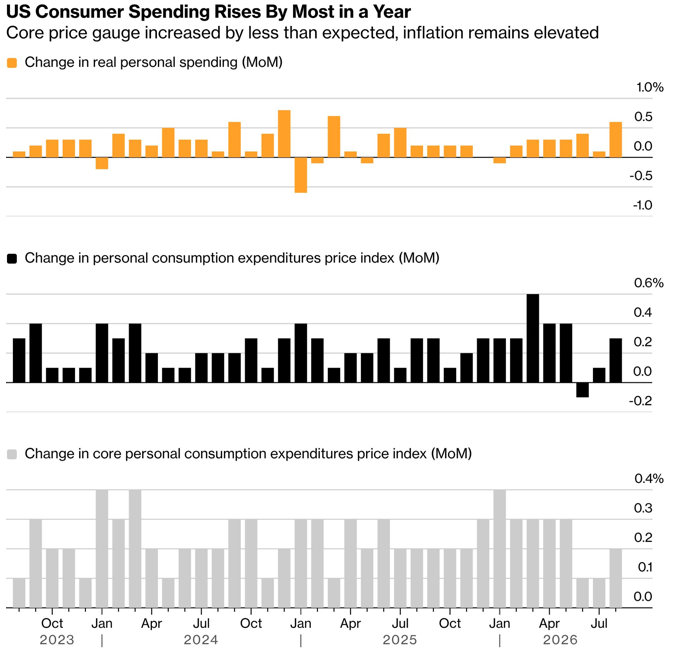
On September 30, the US Department of Commerce Bureau of Economic Analysis (BEA) released the August PCE data: core PCE rose 3.01% year-on-year, significantly below the market expectation of 3.3%, and increased 0.25% month-on-month, also missing the expected 0.3%. Overall PCE rose 3.4% year-on-year, a notable downward revision from the previously reported 3.7%.
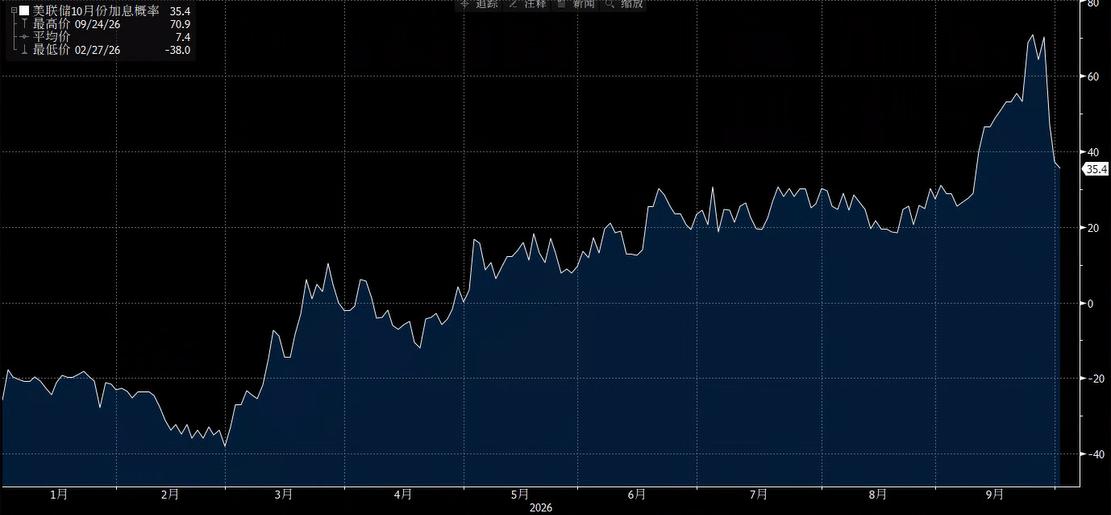
Following the data release, the market quickly lowered its bets on a Federal Reserve rate hike in October. OIS market data shows the probability of a rate hike in October has dropped sharply, from over 70% previously to around 35%.
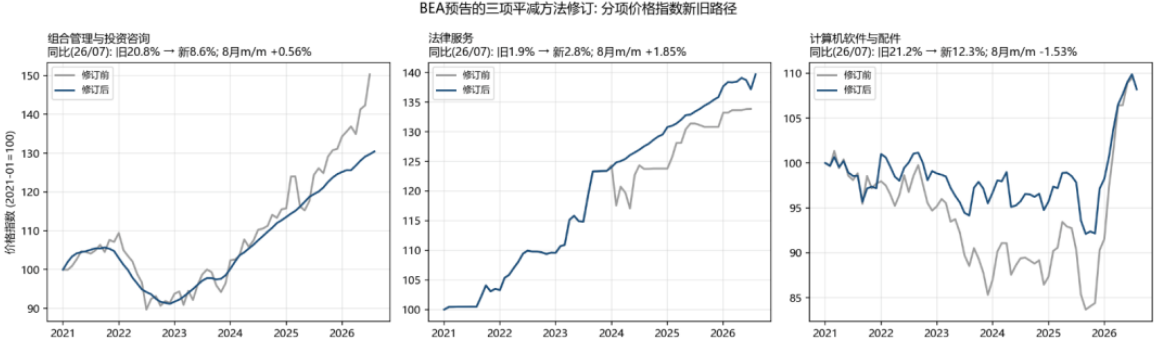
However, this lower-than-expected PCE reading mainly stems from the BEA's annual revision of its PCE price index calculation method, rather than a sudden easing of inflation pressure. This time, the BEA retroactively revised historical data since 2021, adjusting the price deflation methods for three components: portfolio management and investment advisory, computer software and accessories, and legal services.
After the revision, July’s core PCE was sharply revised down from 3.34% to 2.98% year-on-year, a decrease of 36 basis points, far exceeding market expectations. Specifically, the portfolio management component was revised down from 20.8% to 8.6%, software and accessories from 21.2% to 12.3%, and legal services was slightly revised up from 1.9% to 2.8%. On a three-month annualized basis, the August core PCE inflation rate has slowed to 2.0%, directly hitting the Federal Reserve's long-term target.
If this adjustment is applied to August, reverting to the old calculation method, the year-on-year core PCE would be about 3.31%, basically consistent with the market expectation of 3.3%. Compared with the market expectation, the revised figure is about 0.29 percentage points lower: the portfolio management method adjustment contributed about -0.17 percentage points, software and accessories about -0.12 percentage points, legal services about +0.02 percentage points, other revisions about -0.03 percentage points, and the true excess generated by the economic fundamentals in the month was only about +0.01 percentage points.
Only the yardstick changed, inflation has not cooled
This indicates that the lower-than-expected August core PCE was almost entirely due to changes in statistical methodology. The BEA adjusted deflation methods in three key components: the old portfolio management method included asset price increases in service prices, while the new method uses employment and work hours to extrapolate quantity, so asset scale changes no longer enter the price; more PPI synthetic indicators were introduced for software, reducing the weight of previously abnormal price increases; legal services saw a reverse adjustment, but with minimal impact.
Disclaimer: The content of this article solely reflects the author's opinion and does not represent the platform in any capacity. This article is not intended to serve as a reference for making investment decisions.
You may also like
UBS: iPhone 18 Pro series wait time shows average performance, rates Apple (AAPL.US) as “Neutral”
Apple is benefiting from the iPhone Duo craze, but UBS expects the iPhone Pro wait time to "remain steady".
NEAR Intents Hacked for $3.8 Million: Is NEAR Protocol Safe?
Sky Harbour CFO Francisco Gonzalez acquires $14,535 of common shares
Crypto prices
More


