
Deutsche Bank: Gold's resilience supports a positive outlook, silver faces supply surplus, copper may become the biggest winner

Huitong Financial, October 3 — Daniel Ghali, Head of Metals Research at Deutsche Bank, released a major analysis of the metals market in a recent interview: In the context of high yields suppressing the market, the resilience of gold prices stands out with a promising outlook; the silver market, which previously soared sharply, has seen its fundamentals completely reversed and entered a cycle of oversupply, likely to remain weak in the future; meanwhile, the copper market is facing a supply shortage unseen in decades, making it the metal with the greatest upside potential in the short to medium term sector.
Daniel Ghali, Head of Metals Research at Deutsche Bank, released a major analysis of the metals market in a recent interview: In the context of high yields suppressing the market, the resilience of gold prices stands out with a promising outlook; the silver market, which previously soared sharply, has seen its fundamentals completely reversed and entered a cycle of oversupply, likely to remain weak in the future; meanwhile, the copper market is facing a supply shortage unseen in decades, making it the metal with the greatest upside potential in the short to medium term sector.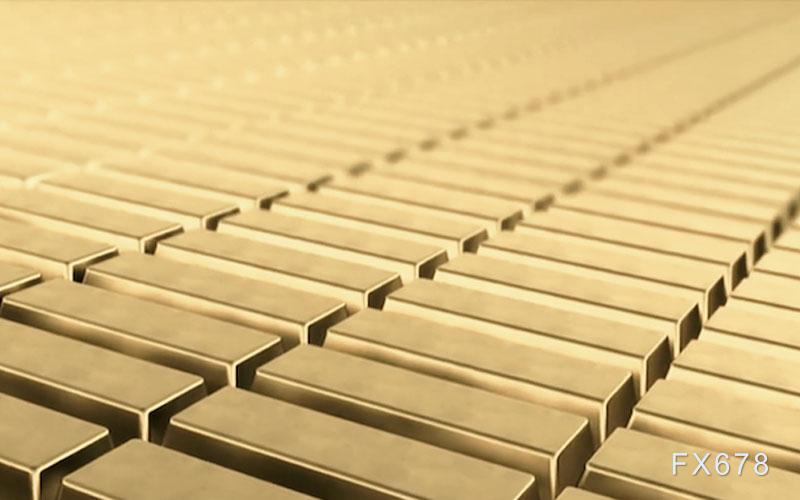
On the performance of the gold market, Ghali pointed out that the market currently faces multiple negative pressures: the U.S. 10-year Treasury yield has surged above 5%, international crude oil prices have remained firmly above $100 per barrel, and with significant volatility in Federal Reserve policy outlook, these combined pressures should have heavily impacted gold prices. However, actual performance has shown strong resilience; since July this year, gold prices have not hit new period lows, and the extent of this correction has been very limited.
He analyzed that the current pattern of the gold market is highly similar to that of 2022. Market positioning sentiment is at its most pessimistic since October 2021, but the underlying logic of the market has fundamentally turned favorable. On one hand, official global institutions have dramatically increased their gold purchases, with the scale more than doubling compared to 2021; on the other hand, the community of institutional investors in gold continues to expand, with the number of participating institutions growing by about 70% compared to 2021, and the capital available for asset allocation by national reserve management agencies is expanding in sync. Additionally, in recent months, the investment logic for increasing gold allocations has continuously strengthened.
Addressing market caution, Ghali explained that gold's safe-haven performance under the Iran geopolitical conflict did not meet expectations, causing some investors to take a wait-and-see attitude, but this is only a short-term factor. Looking ahead to 2027, the advantages of positioning in the gold market are significant: market positioning is low, gold prices deeply oversold, institutional allocation ratio is low, and with many tailwinds, gold is ushering in an excellent allocation window.
Regarding the commonly discussed “how to choose between gold and bonds,” Ghali gave a clear answer: there is no need to choose between the two. The current market largely ignores a core logic—the U.S. Treasury bear market is forcing global institutional investors to accelerate their diversification of assets.
Over the past two decades, large institutions such as global pension funds, endowment funds, trusts, and insurance companies have significantly increased their allocations to alternative assets, but most alternative assets are still highly sensitive to market returns. As Treasury yields continue to fall in a bear market, the value of traditional fixed income asset allocation declines, and gold, as a low-correlation, volatility-resistant, high-quality alternative asset, becomes the core choice for institutions to diversify risk, with market allocation demand continuing to rise.
In the first half of 2026, silver soared to historic highs, then, affected by the Iran war, its price fell back sharply by 50%. For the future of silver, Ghali frankly stated that its fundamentals have undergone a disruptive reversal, and the market has completely moved away from the previously tight situation.
From the inventory side, the physical inventory shortage in silver last year was as severe as the peak of the Hunt Brothers' monopoly of the silver market half a century ago, but now inventories are very loose. The freely circulating silver inventory in London commercial vaults has rebounded to the highest level since November 2024; inventory levels at the U.S. New York Commodity Exchange are severely oversupplied, far exceeding the open interest in the market, and can offset any supply fluctuations in the London market at any time; meanwhile, inventories in Shanghai are also increasing, and the global supply is ample.
From the demand side, the high price of silver has triggered a clear collapse in demand. Data shows that in 2026, industrial silver demand in China’s photovoltaic sector fell by one-third compared to last year. The current silver market shows a dual weakness of “rising inventories and shrinking demand;” the annual supply-demand gap continues to narrow, and by 2027 it will likely turn into an outright physical oversupply.
Ghali predicted that silver will continue to underperform gold in the future, and the gold-silver ratio will further deteriorate. At the same time, a relaxed supply-demand balance will greatly reduce silver’s price volatility, and the dramatic price movements of previous years are unlikely to be repeated. Overall, the trend will become more stable and continue to be weak.
Copper: Extreme Supply Shortage in Decades, the Sector’s Largest Potential Opportunity
Among all metals, Ghali is most optimistic about the short- and medium-term prospects for copper, believing copper will become the metal with the greatest upside potential, with price elasticity far surpassing that of gold and silver.
He pointed out that the current global copper market is at its tightest since the 1980s, and copper prices are becoming increasingly sensitive to supply-demand gaps. The main driver is long-term strategic stockpiling by China and the U.S., which has locked up the vast majority of global spot inventory. Currently, the combined above-ground copper stocks locked by China and the U.S. account for 70% of the global total, making freely tradable spot extremely scarce.
In this context of extreme supply-demand mismatch, global copper inventories remain low, demand is steadily supported, scarcity continues to intensify, and as a result, copper prices are expected to rise robustly, driven by tight fundamentals, with very strong explosive upside potential.
Disclaimer: The content of this article solely reflects the author's opinion and does not represent the platform in any capacity. This article is not intended to serve as a reference for making investment decisions.
You may also like
Analyst Jordi Visser Predicted What Might Happen to the Bitcoin Price for the Rest of the Year
Bitcoin price to $90K? BTC/Gold ratio signals a key liquidity shift
Famous Crypto Analyst Says, “I Was Wrong”: “Bitcoin’s Four-Year Cycle Is a Complete Illusion”
Crypto prices
More


