
80% of Samsung's storage production for next year has already been locked in by long-term contracts

Approximately 80% of Samsung Electronics' memory chip production capacity for next year has already been secured in advance through long-term supply agreements, reflecting the intensifying arms race for AI infrastructure as tech giants compete for the remaining capacity.
According to a report earlier this week by Korea Economic Daily, global tech giants such as Nvidia, Google, and Microsoft have signed chip supply agreements with Samsung covering more than five years, while companies yet to finalize deals are secretly vying for the roughly 20% of capacity still available. In its Q2 earnings call, Samsung Electronics stated, "Almost all major customers are applying for long-term contracts," and admitted that it is "difficult to meet all of the demand."
This trend has spread from memory chips to the entire AI infrastructure industry chain, covering multilayer ceramic capacitors (MLCC), flip chip ball grid array substrates (FC-BGA), transformers, electrical equipment, and cooling systems. Bargaining power in the market is increasingly shifting towards suppliers, with 20%-25% advance payments and mandatory purchase clauses becoming commonplace. However, analysts warn that if the semiconductor market reverses, long-term agreements could also become a risk exposure for suppliers.
Battle for Memory Capacity: 80% Already Claimed
The report states, citing industry sources, that about 80% of Samsung Electronics' memory chip output for next year (including high-bandwidth memory, HBM) has been secured by buyers through long-term supply agreements. This means that tech companies that have not yet signed contracts with Samsung can only compete for the remaining 20% or so of capacity.
Samsung is not an exception. SK Hynix has completed long-term contracts with major clients; the number of strategic customer agreements at Micron Technology increased from 16 in Q2 to 26 in Q3; NAND flash manufacturer SanDisk has also signed long-term deals with eight clients, including several large tech companies.
This shift has historical roots. Quarterly contracts or spot price trading had long been the norm in the semiconductor industry, making it difficult for chip manufacturers to predict future pricing and demand trends. As global tech companies ramp up AI data center investments this year, a chip shortage has emerged, turning stable memory supply into a top strategic priority for tech giants and accelerating the adoption of long-term contract models.
Expansion of Long-Term Agreements: From Chips to the Entire AI Infrastructure Chain
The wave of long-term agreements has already crossed the boundaries of memory chips, spreading throughout the AI infrastructure industry chain.
Samsung Electro-Mechanics is about to sign a 700 billion KRW (approximately $507 million) long-term MLCC supply contract with Delta Electronics, which will be its seventh such deal completed this year. The total cumulative orders for Samsung Electro-Mechanics are expected to reach 4.6 trillion KRW (about $3.33 billion) this year. LG Innotek is also in long-term negotiations regarding FC-BGA supply agreements.
Similar dynamics are appearing in the power and cooling infrastructure sectors. LS Cable & System has signed a five-year busbar supply agreement with U.S. tech companies such as Meta and Google; HD Hyundai Electric is in long-term contract negotiations for data center transformers; LG Electronics has signed a 5 trillion KRW (about $3.62 billion) chiller supply contract with U.S.-based AI data center infrastructure company Air.
An industry insider noted that, given the expected ongoing shortage of AI-related components, tech giants are willing to accept unfavorable terms to secure their supplies at any cost.
Bargaining Power Shift: Suppliers Secure Advance Payments and Mandatory Purchase Clauses
Suppliers hold a clear advantage in this wave of long-term agreements. As manufacturers are unable to expand production fast enough to keep up with demand growth, the supply-demand gap is widening and bargaining power is significantly shifting in favor of suppliers.
In the memory sector, five years has become the standard base period for long-term contracts, generally including rolling one-year extension clauses. To strengthen contract enforceability, high advance payments of 20% to 25% have become industry practice, together with strict mandatory purchase clauses—even if clients do not take delivery, they are required to pay as agreed. Suppliers sometimes use these prepayments to help fund large-scale wafer fab construction.
This model reflects the deep alignment of interests between tech giants and component manufacturers: the former seek supply chain stability, while the latter hedge against capital expenditure risks.
Potential Risks: Cooling AI Boom Could Turn Long-Term Agreements Into a Double-Edged Sword
Although long-term contracts provide suppliers with greater revenue visibility, risks remain.
Choi Woo-young, a professor at the Department of Electrical and Computer Engineering at Seoul National University, pointed out, "If the memory market slumps and clients request renegotiation, suppliers will have no choice but to relax existing terms."
If the semiconductor market takes a sharp downturn, clients may opt for breach of contract and merely pay penalties, leaving component manufacturers who have aggressively expanded production based on long-term agreements facing severe impacts. While these agreements enhance supply chain stability, they also tie suppliers' fates increasingly to the persistence of AI demand—a current competitive advantage, but also a source of potential systemic risk.
Disclaimer: The content of this article solely reflects the author's opinion and does not represent the platform in any capacity. This article is not intended to serve as a reference for making investment decisions.
You may also like
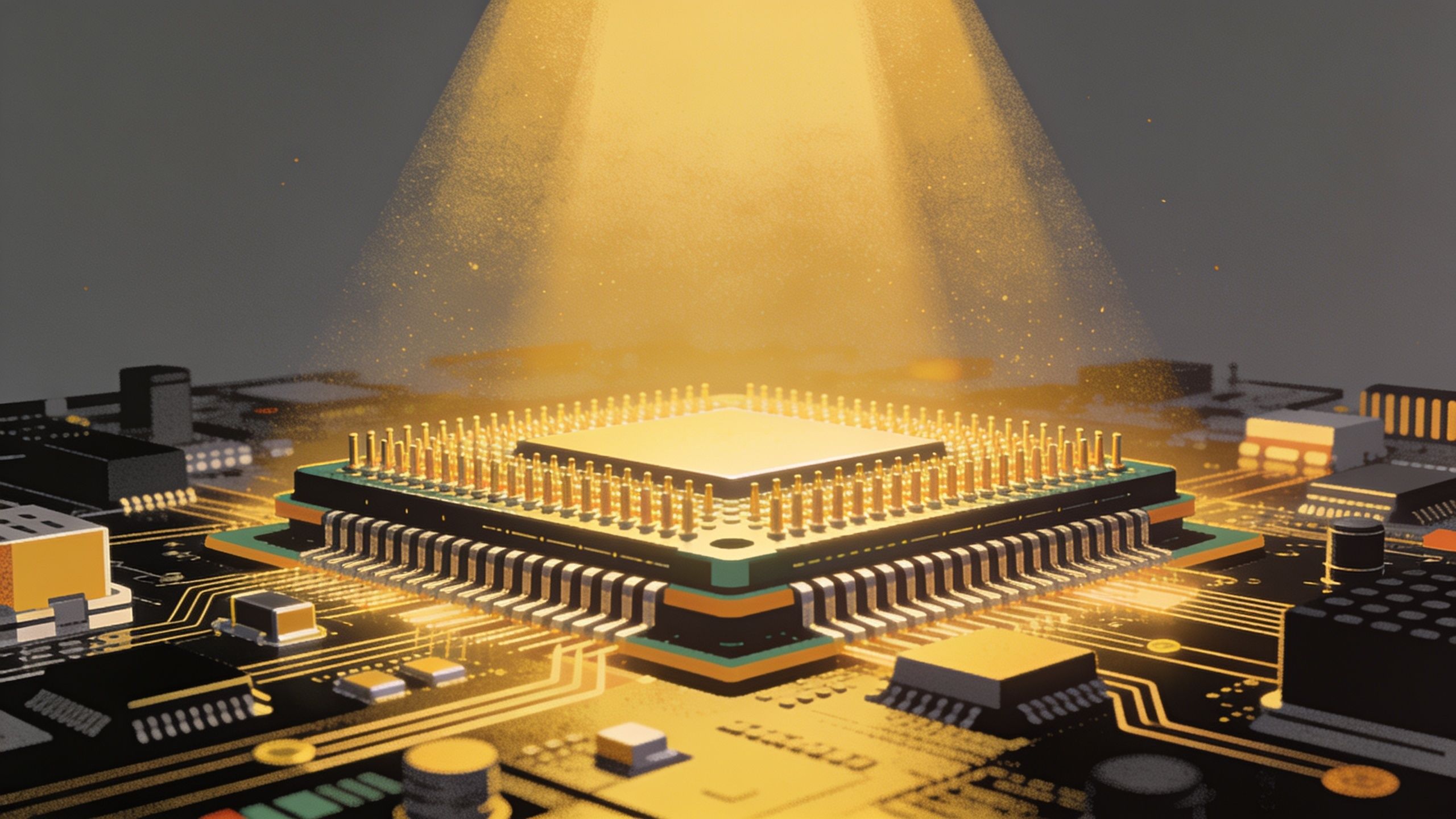
The US market narrative undergoes a "dramatic reversal": shifting from "AI-driven deflation and controllable US debt" to "AI squeezing the bond market, and Bassen unable to control long-term interest rates"
Deutsche Bank points out that the market narrative regarding the U.S. economy has shifted from "AI drives down inflation" to "AI-related bond issuance pushes up U.S. Treasury yields," but pessimism may be overdone. The bank believes that the real risks underestimated by the market are security incidents in the AI ecosystem, failed IPOs, or underwhelming revenues, which could undermine the dollar and support the bond market. In addition, France's fiscal difficulties are putting new pressure on the euro.
Deutsche Bank: The "fifth wave of tech stock rally" in US stocks since late July has peaked, prepare for a "V-shaped reversal"
Deutsche Bank has downgraded its rating on US technology stocks from overweight to neutral, noting that the fifth round of tech stock rally since July 29 is approaching the upper boundary of the long-term trend channel. The current upside potential is only about 4 percentage points, while historical trends indicate downside risks could reach 16 percentage points. Funds are expected to rotate into other sectors, and the European market, with its lower tech exposure, is likely to benefit relatively. However, Deutsche Bank emphasized that the long-term outperformance trend of technology stocks remains unchanged.
How expensive is AI computing power rental in the US? "Spot price" is twice that of long-term contracts, and four times the return threshold for cloud service providers.
The short-term spot leasing price for AI computing power reaches as high as $40 to $50 billion per gigawatt per year, while the price for long-term contracts is only $20 billion per year, and the breakeven threshold for supercomputing cloud operators is around $12 billion per year. However, according to Goldman Sachs, the fundamental reason why hyperscale cloud providers like Google rent computing power at such significant premiums is that their in-house capacity cannot keep up; once their own capacity catches up, the spot premium will disappear.
Crypto prices
More


