
US Treasuries and gold stabilize simultaneously! Cooling AI trading and waning rate hike expectations become key drivers

As the sustainability of the artificial intelligence (AI) investment boom is being questioned and bets on further Federal Reserve rate hikes cool, U.S. Treasury bonds saw their best weekly performance since February this week. Following another decline in technology stocks, investors shifted toward safe-haven assets like government bonds, temporarily halting the months-long global sell-off in bonds.
On Friday, the yield on the U.S. 10-year Treasury fell to 5.08%, a weekly decline of 0.17 percentage points. Last week, this benchmark rate briefly exceeded 5.3%, the highest since 2002; before the war in Iran broke out in late February, it was still below 4%. Bond yields move inversely to prices, so a drop in yields means bond prices rebounded.
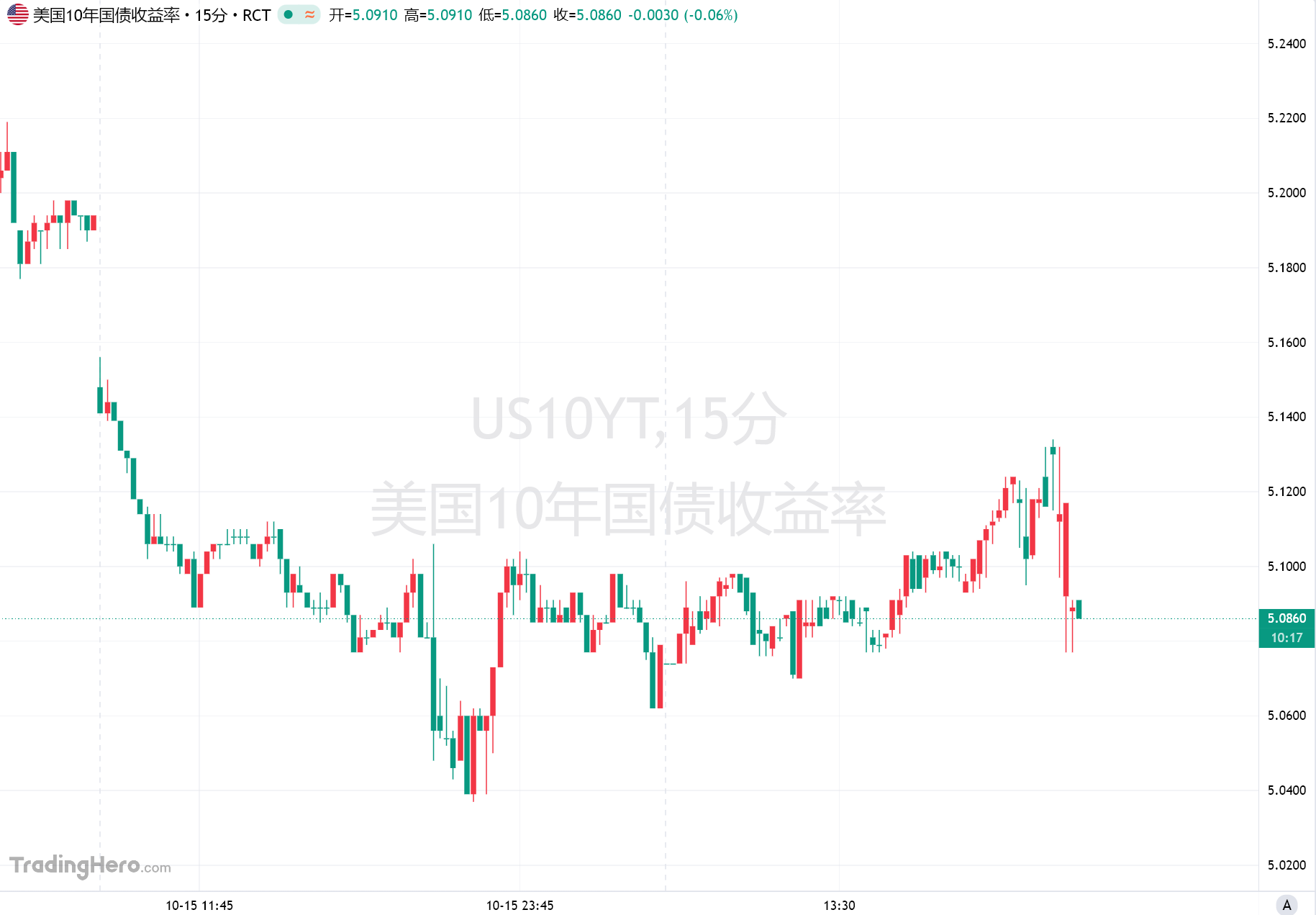
Trevor Greetham, Head of Multi Asset Investments at Royal London Asset Management, stated that higher yields are attracting buyers to government bonds, while risk aversion around technology stocks and the market’s expectation that the Federal Reserve may keep rates unchanged in October are also supporting the bond market.
AI Investment Concerns Drive Capital Back to the Bond Market
The latest fall in U.S. bond yields occurred as the sell-off in technology stocks intensified. On Friday morning, the Nasdaq 100 index slipped 1%, increasing its weekly loss to 4%; chipmakers and so-called "neocloud" firms continued to lead declines. Micron Technology (MU) dropped 3.6%, while cloud infrastructure firm CoreWeave (CRWV) fell another 7.5%, and bonds issued by the company also faced significant sell-offs lately.
Bonds related to data centers fell this week, deepening investors' concerns about the sustainability of the AI investment boom. Richard Saldanha, Head of Global Equities at Aviva Investors, commented that tech stocks’ earlier ascent “was indeed defying gravity for a period,” but the pressure of persistently rising borrowing costs is finally starting to show.
Mohit Kumar, an analyst at Jefferies, attributed the rebound in the bond market to investors’ worries about the AI investment cycle and a repositioning in the market. He noted that a typical risk-aversion pattern emerged recently, with some investors forced to unwind previous short positions on government bonds.
Rising borrowing costs have continued to squeeze global borrowers since the start of this year, with lower-rated companies feeling the most pressure. One investor described the predicament for AI-related borrowers as a “Darwinian moment,” referring to how market stress is testing these companies’ survival.
Additionally, the higher yields on U.S. Treasuries have attracted large capital inflows into the bond market. Major bond investment institutions, including Pacific Investment Management Company (Pimco), believe that compared to high stock valuations and tight credit spreads, bond yields have become “more attractive.” This week’s rally in the bond market has also eased some of the funding pressure facing European economies.
The yield on the UK’s 10-year government bond has pulled back from over 5.5% earlier this month to 5.37%; Italy’s 10-year yield has decreased from nearly 4.75% to 4.48%. When global bonds were being sold off previously, long-term borrowing costs in Europe soared to multi-decade highs.
Inflation Data and Fed Policy Expectations Fluctuate
The rebound in the bond market has not been driven by easing inflationary pressures. This week’s data showed that U.S. CPI for September increased 3.7% year-on-year. In addition to Middle East conflicts pushing up fuel costs, inflationary pressures are spreading from energy into other goods and services.
After Wednesday’s CPI release, traders briefly sold off bonds, betting the Fed would hike rates more aggressively than previously expected. At one point, the market was pricing in four hikes of 25 basis points each over the next year.
But as the sell-off spilled over into stocks, investors bought back safe-haven assets, triggering a reversal in bonds. Fed Chair Kevin Warsh, speaking at an International Monetary Fund (IMF) event in Bangkok on Friday, expressed optimism about the U.S. economy but gave no indication of whether additional hikes were needed or provided a specific timetable.
Futures markets now anticipate three Fed hikes over the next twelve months, down from four previously. Traders have also lowered expectations for an October rate hike. At one point, the chances for a hike this month were about one-third; after Warsh’s comments, this dropped to 15%. Most traders now expect the Federal Reserve to keep rates unchanged in October.
Gerald Gan, Chief Investment Officer at Reed Capital Partners, stated that Warsh is trying to temper hawkish expectations for rate hikes and restore some stability to the U.S. Treasury market. He also noted that inflation remains a concern and further tightening can’t be ruled out, but Warsh’s recent remarks indicate the Fed is not in a hurry for consecutive hikes.
Rally in U.S. Treasuries Supports Gold Prices
The drop in bond yields has also provided support for gold. On Friday, international spot gold approached $4,200 an ounce, nearly erasing all its losses for the week. Gold prices rose 1.6% on Thursday, marking the largest single-day gain in more than two weeks.
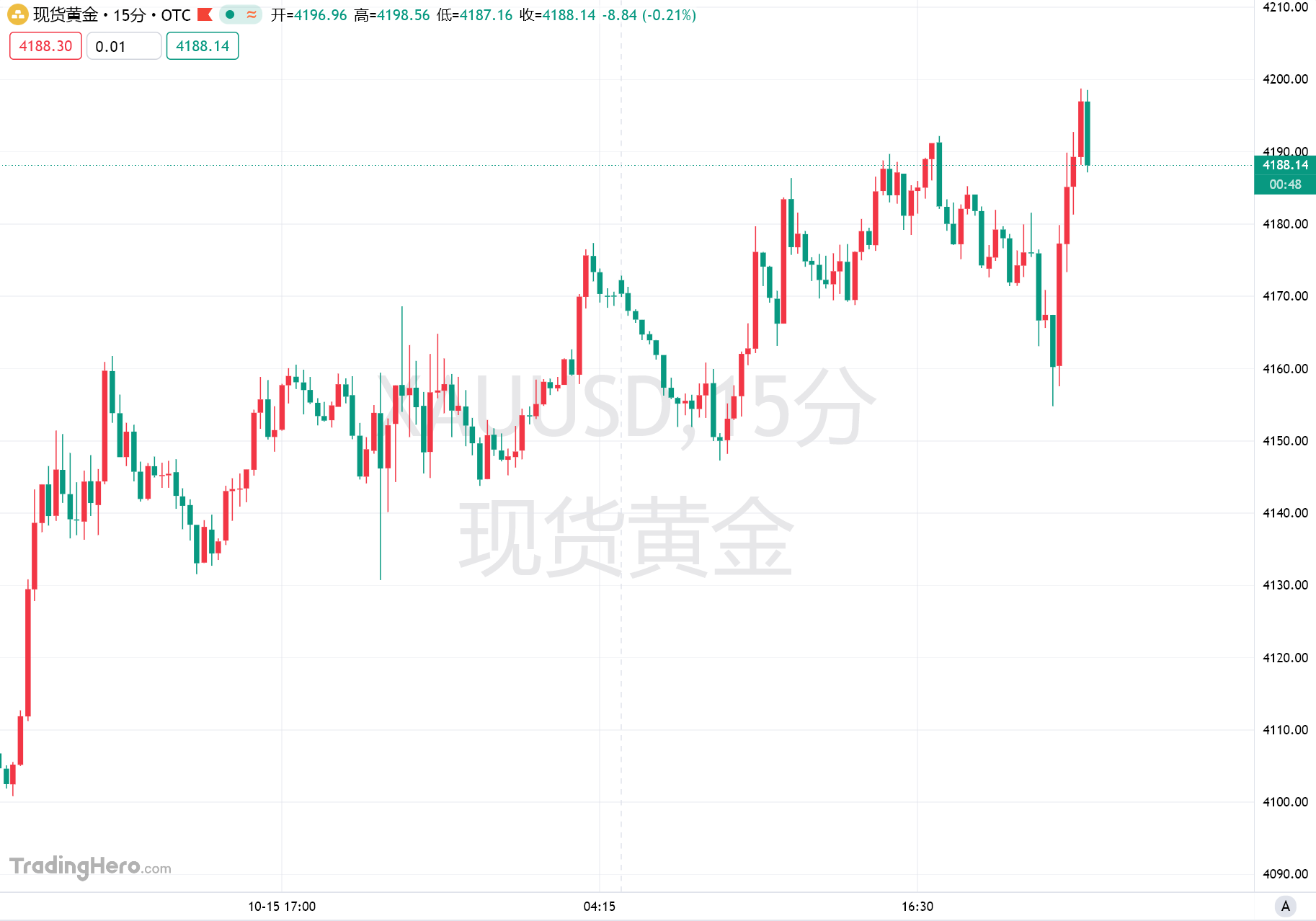
The dollar’s weakness further supported gold prices. The U.S. dollar is set to post its first weekly decline in five weeks, making gold, priced in dollars, less expensive for holders of other currencies. Independent financial market analyst Nikos Tzabouras noted that Warsh’s IMF comments didn’t offer new policy cues, and the market still expects the Fed to stand pat in October, creating short-term room for further gold gains.
Nevertheless, the interest rate outlook remains a key factor for gold's movement. Gold is typically seen as a hedge against inflation, but since it does not generate income, rising interest rates diminish its attractiveness.
Throughout this year, expectations of higher borrowing costs have weighed on gold prices, which have fallen by about one-fifth since the U.S.-Iran war broke out in late February. The war disrupted energy markets and pushed inflation higher, prompting central banks to tighten monetary policy, and last month the Federal Reserve enacted its first hike since 2023.
Analysts at ANZ Bank said in a report that if bond yields and the dollar decline, gold could break above $5,000 per ounce again by 2027. However, several large mutual funds in India announced on Thursday night that they would suspend large purchases of gold exchange-traded funds, introducing a new dynamic to the gold market.
Disclaimer: The content of this article solely reflects the author's opinion and does not represent the platform in any capacity. This article is not intended to serve as a reference for making investment decisions.
You may also like
The U.S. 2026 fiscal year budget deficit is $1.99 trillion, up 12%, with interest expenses reaching a record high.
U.S. fiscal year 2026 expenditures are projected to grow by 6% to $7.4 trillion, while revenues are expected to increase by 3% to $5.4 trillion, resulting in a widening fiscal gap. Net interest spending will rise by $81.4 billion to $1.05 trillion, marking a new record high. The Trump tax cuts have caused corporate income tax revenue to decrease by more than $70 billion. Besant has identified tariff refunds as one of the key factors contributing to the expanding deficit. The IMF, European Central Bank, and CBO have all questioned the logic of “growth to solve deficits.”
Gold looks to housing, PMI and consumer sentiment data for direction next week

Inflation Shocks Wall Street as Selling Pressure Builds: 5 Altcoins to Try Before the Next Major Rally

Analytics Firm Says, “There’s a 90% Chance We’re at the Start of a Bull Market,” and Reveals Its Favorite Altcoins
Crypto prices
More


